

Home · Therapy
Therapy guides
Eight medicines and one way of caring: prepare, support and integrate. Each guide explains what that therapy is, how it is experienced, what a process is like and where it comes from.
- Eight guides
- One for each medicine
- What they share
- Preparing, supporting and integrating
- The outlook
- Humanistic and transpersonal
Reviewed on
The guides
Eight medicines, eight guides
They all follow the same order: what it is, how it is experienced, what a process is like, where it comes from and what is known about it. They are written for anyone who wants to understand these therapies, for their families and for those who provide support.
- MDMAOpen heart, clear mindHalf a day
- PsilocybinInwards, with musicHalf a day
- LSDA long journey, in stagesA whole day
- KetamineDistance from what weighs on youOne or two hours
- AyahuascaVisions, emotion and purgingOne night
- IbogaineA review of one’s own lifeA day and a half
- MescalineLuminous, tied to beautyA whole day
- 5-MeO-DMTUnity and dissolutionA few minutes
At a glance
Each has its own time
What most distinguishes them is how long the experience lasts, how it is lived and how it is supported. It is meant to help you find your bearings, not to choose a medicine on your own.
From a few minutes to more than a day: each arc is a journey, from the ascent to the return.
- A few minutes5-MeO-DMT
- One or two hoursKetamine
- Half a dayMDMA · Psilocybin · Ayahuasca, at night
- A whole dayLSD · Mescaline
- A day and a halfIbogaine
Indicative drawing, not to scale. Duration varies with the person, the amount and the way it is taken.
| Medicine | How it is experienced | How it is supported | How long it lasts |
|---|---|---|---|
| 5-MeO-DMT | In seconds, the self and time dissolve. Many people speak of unity, light or love. | The person lies down, with someone beside them. The session is the shortest part; integration is the longest. | A few minutes |
| Ketamine | The body feels far away and problems are seen from the outside, as in a dream. | With an eye mask and music, over several short sessions. | One or two hours |
| MDMA | Fear softens and trust grows. There are usually no visions: the person remains themselves. | In a quiet place, with music and someone beside you the whole time. At times you talk; at times you go inwards. | Half a day |
| Psilocybin | With closed eyes, images, memories and emotions appear, and one’s own life is seen from another place. | In a quiet room, with an eye mask and chosen music, and whoever provides support close by. | Half a day |
| Ayahuasca | Highly elaborate visions, intense memories and, often, the purge: a cleansing of the body and of emotion. | At night and almost always in a group, with songs, music or silence. | One night |
| LSD | A journey with a beginning, a central part and a slow return. What was already inside becomes visible. | In a quiet place, with company throughout the day. | A whole day |
| Mescaline | Intense colours and, above all, beauty: a warm sense of connection with the earth and with others. | In its tradition, in ceremony: with intention, songs and community. | A whole day |
| Ibogaine | Scenes from one’s own life, like a film, and then many hours of reflection. It is long and demanding for the body. | The person lies down, in a safe place, with continuous care and several days of rest afterwards. | A day and a half |
What they share
What they have in common
The medicines are very different, but the way of working with them is very similar everywhere. Every process is organised in three stages.
- 1Preparation
Getting to know each other and building trust. Talking about health, history and medication; clarifying the intention and agreeing the limits and the care.
- 2The session
A quiet, protected place, with someone beside you the whole time. Depending on the medicine, it lasts a few minutes, a few hours or more than a day.
- 3Integration
In the following days and weeks, making sense of what was lived and bringing it into life: into relationships, the body and decisions.
- Set and context
The state of the person having the experience (the set) and the place and company (the setting) weigh as much as the substance. Traditional ceremonies look after this and research looks after it, in just as much detail1. We explain it in Set and setting.
- Supporting without directing
Whoever provides support does not tell the person what they have to experience or what it means. They hold the space, care and trust the process. If something difficult appears, they help the person move towards it instead of running away. More in The sitter.
The medicine opens a door. The work of crossing it and coming back belongs to the person, supported.
What good support looks after
- Everything is discussed beforehand: health, medication, history and intention.
- It is known what the substance is and in what amount.
- Limits are agreed beforehand and respected: touch is for support, never sexual.
- Nobody promises cures or applies pressure, and you can stop whenever you wish.
- Whoever provides support is present the whole time.
- There is integration afterwards, not just the session.
When all of this is in place, the experience has something to rest on.
Roots
Where they come from
Seeking relief and meaning in an expanded state of consciousness, with someone who looks after the process, is one of humanity’s oldest practices. Some medicines have been in healing ceremonies for centuries, or millennia; others were born in a 20th-century laboratory.


- About 5,700 years ago
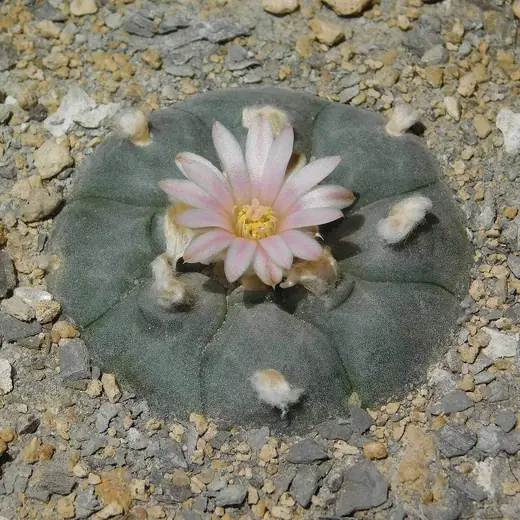
Remains of peyote of that age have been found in caves in northern Mexico and Texas. From it and from the San Pedro cactus comes mescaline.
- For centuries
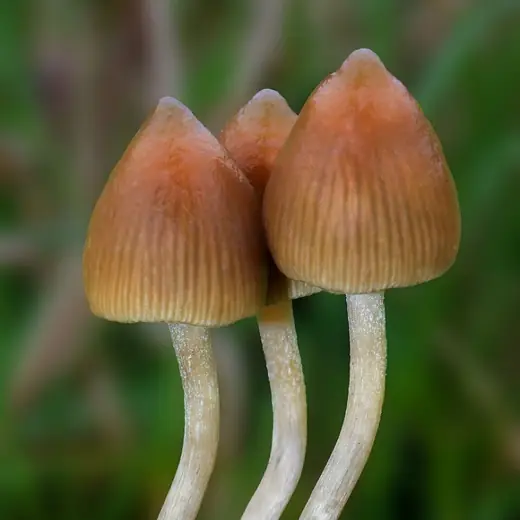
Mushrooms in Mesoamerica (psilocybin), ayahuasca in the Amazon and iboga in the Bwiti tradition of central Africa (ibogaine) are taken in healing ceremonies.
- 1943
Albert Hofmann discovers in Switzerland the effects of LSD, which he had synthesised five years earlier.
- 1962
Ketamine is synthesised and begins its life as an anaesthetic.
- 1977
MDMA, synthesised in 1912, reaches the consulting rooms of the first therapists.
- Today
Age-old ceremonies, therapy and research exist side by side. Very ancient medicines, such as the South American snuffs that contain 5-MeO-DMT, are now reaching the studies.
A humanistic and transpersonal outlook
What follows is not a research finding, but a way of understanding these experiences from two currents of psychology that place the person at the centre.
- HumanisticThe relationship as a foundation
Carl Rogers described three conditions that make change possible: empathy, unconditional acceptance and the authenticity of whoever provides support. In these therapies they are the basis of safety: they make it possible to let go of control and let what needs to appear appear.
- GestaltBecoming aware, here and now
Gestalt therapy puts attention on what is happening now, in the body and in what was left unfinished. Many experiences with these medicines are, at heart, a very vivid becoming aware, and integration consists in bringing it into daily life.
- TranspersonalBeyond biography
Transpersonal psychology, with Stanislav Grof, welcomes experiences of unity, meaning or contact with the sacred without reducing them at the outset to a symptom. Grof spoke of an inner healer: a wisdom of one’s own that knows where to go when it is given space.
“Awareness, by itself, can be curative.”
What the studies have seen
Over the past twenty years, hospitals and universities have returned to studying these medicines with the methods of science. With MDMA, psilocybin and LSD there are already large trials; a derivative of ketamine, esketamine, is already used as a medicine; with the others, the research is younger. Research has also observed that experiences of unity and meaning are often associated with a better outcome2.
Therapeutic researchQuestions
Frequently asked questions
Those about each medicine are in its guide. These apply to all of them.
Which is the best?
There is no best one. Each medicine has its character, its duration and its care, and what is suitable depends on the person, their history and their moment. It is a decision to take calmly and well supported, not from a table.
Are they for everyone?
No, and not for any moment either. There are bodies, histories and medications that call for something else, and each medicine has its own care: ibogaine, for example, calls for heart monitoring. That is why in a good process everything is discussed beforehand. Each guide explains this calmly.
Is the medicine enough?
No. The medicine opens a space; what helps the change to stay is what is done before and after: preparing, talking it over and bringing it into life. That is why all the guides give so much space to preparation and integration.
Is a therapy the same as a ceremony?
Not quite, although they share a root. Ceremony is the oldest form: a community, a ritual and someone with experience who looks after the space. Therapy is a more recent form, with conversation before and after each session. In both, what provides care is the same: preparation, trust and integration.
How is it different from taking a substance on your own?
In almost everything that surrounds it: preparation, place, company and integration. With these medicines, the person’s state of mind and the context weigh as much as the substance.
Why do you not give doses?
Because these guides explain what a therapeutic process is like, not how to take a substance. The amount is one of the things looked after in each process, with each person.
Does APDER offer these therapies?
No. APDER is an association for public information: it gathers and explains what is known. It does not offer therapies or sessions, nor does it recommend anything to anyone.
Read on here
To keep reading
- Therapeutic researchWhat has been studied with each medicine, by health problem.
- Set and settingState of mind and surroundings: what influences most.
- The sitterWho provides support and how to do it well.
- Where to trainTraining in therapy, support and integration, around the world.
- Books on therapy and clinical practiceIn the Library, with search and filters.
- Medicine guidesHow each one acts, its effects, interactions and harm reduction.
References
- Johnson MW, Richards WA, Griffiths RR. Human hallucinogen research: guidelines for safety. J Psychopharmacol. 2008;22(6):603-620. DOI
- Griffiths RR, Johnson MW, Carducci MA, et al. Psilocybin produces substantial and sustained decreases in depression and anxiety in patients with life-threatening cancer: a randomized double-blind trial. J Psychopharmacol. 2016;30(12):1181-1197. DOI
Each guide cites its own sources. Page reviewed on 26 November 2026; we review it every three months. Photos: their authors and licences are in Photo credits.
Before you go on. This information is for general information. We prepare it carefully from scientific sources, but it may contain errors or become out of date. It is not medical advice and does not replace a health professional, above all if you take medication or have a health problem. APDER does not offer therapies or sessions, does not encourage the use of any substance and is not responsible for the use made of this information. If you spot an error, write to us at info@apder.org.