

Home · The experience
The experience
Before, during and after. What surrounds a psychedelic experience matters as much as the substance: the question you arrive with, who supports you, how you move through what is difficult, and what you do afterwards with what you have lived.
A guide to moving through it with care, drawing on what the traditions know and on the outlook of humanistic and transpersonal psychology.
Before · 1 of 6
Prepare
An experience begins long before you take anything: in the question that drives it, in the moment of life in which it arrives and in the place chosen for it.
-
The intention What for
It is not a goal to achieve but a direction. A sincere question (“What do I need to see?”, “What weighs on me?”) is a better guide than an expectation. It is written down, said aloud and then let go: the experience tends to answer in its own way.
-
The disposition The set
How the person arrives: their body, mood, history and what they expect. Tiredness, a recent crisis or a fear that has not been spoken about travel too. Sometimes the wisest thing is to wait for another time.
-
The surroundings The setting
The place, the company, the music, the light, nature. A quiet, sheltered spot, with no rush and no obligations the next day. And the wider surroundings: the culture and the meaning given to what is about to be lived.
That disposition and surroundings weigh as much as the substance has had a name since the 1960s: set and setting, an expression popularised by Timothy Leary1. Two decades later, the psychiatrist Norman Zinberg showed, by studying people who used drugs in a controlled way, that the effect depends as much on the person and their context as on what is taken2.
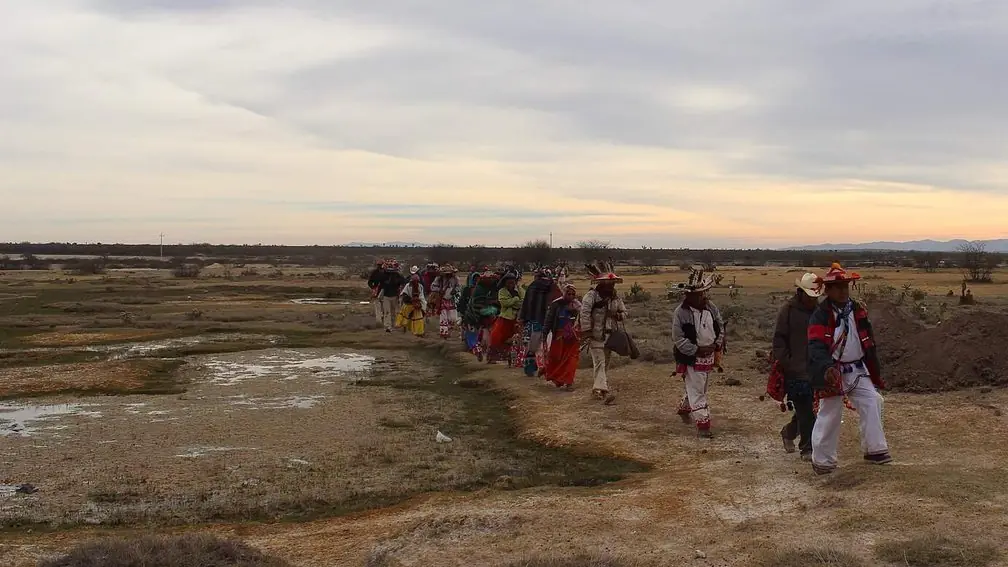
The traditions took care of this long before. The Amazonian healer asks for a diet and days of retreat before ayahuasca; the Mazatec mushroom vigil is held at night, in the dark and with chanting; the Wixárika pilgrimage to Wirikuta begins weeks earlier, with offerings and renunciations3.
In practice, preparing is simple: sleep well in the days before, eat lightly, settle any obligations, talk with whoever will be supporting you about what worries you and what you expect, and choose the place and the music calmly.
Before · 2 of 6
Look after yourself
Looking after the body and the mind does not take the mystery out of the experience: it gives it ground. These are guidelines that apply to any medicine; the guide to each one adds its own.
Know what it is
Outside the medical setting, what is sold is not always what is there. A substance-checking service can tell you what a sample contains.
Watch for mixtures
The most delicate combinations are MAOIs (ayahuasca or Syrian rue) with antidepressants, MDMA or stimulants, and lithium with the classic psychedelics. With any medication, it is wise to ask a professional first.
Know your own history
People with a personal or family history of psychosis or bipolar disorder are more vulnerable to a crisis. And some medicines, such as ibogaine, call for a healthy heart.
Do not go alone
The first time, and whenever possible, with someone sober and trusted who is present the whole time.
Give yourself time
A whole day ahead and another quiet one afterwards. No driving and no decisions that cannot wait.
Go gently
With a medicine you do not know, start cautiously: you can always come back another day.
During · 3 of 6
Support
The person who supports you does not guide the journey: they hold it. Their task is to be present, take care of the practical matters and trust the other person’s process.
Ideally it is someone trusted and sober, who knows these states from the inside and who does not leave at any point. They do not need to speak much: almost all their work is invisible. They make sure there is water, blankets and a pleasant temperature, look after the music and the light, and are available without imposing themselves4.
Before starting, agreements are talked through: what kind of contact is wanted (supportive, never sexual), what to do if the person wants to get up or go out, and a simple signal for asking for help. What has been agreed is respected throughout the experience.
What helps
- A calm presence, within sight.
- Listening more than speaking.
- Reminding them, if needed, that everything passes and that they are safe.
- Taking care of the practical things: water, warmth, music, light.
- Respecting silences and agreements.
What does not help
- Interpreting what the other person is going through.
- Pushing for something to “happen”.
- Distracting from what comes up, even if it is hard to watch.
- Being on your phone or in a hurry.
- Touching without having agreed it beforehand.
During · 4 of 6
Challenging experiences
Sometimes the experience leads to dark places: fear, sadness, confusion, the feeling of being lost or of dying. It is not usually a mistake in the journey; often it is the way through.
If you are going through it
- Breathe slowly, into your belly.
- Remember that it comes from the medicine and that it will pass.
- Do not fight it: approach it with curiosity. What is looked at head-on tends to change.
- Change something small: your posture, the music, the light, a blanket.
- Ask for the hand or the voice of the person supporting you.
If you are supporting someone
- Calm in your voice and your body; fewer words.
- Remind them where they are, who you are and that they are safe.
- Do not argue with what they see or give it a meaning.
- A quieter place, water, warmth.
- Stay: your presence is what supports them most.
Trust, let go, open up.
Three words from the safety guidelines for psychedelic research6: a way of not running away.
Arnold Beisser called it the paradoxical theory of change: one changes by becoming what one is, not by trying to be what one is not7. In the face of what is difficult, ceasing to flee is often what transforms.
Stanislav Grof observed that many of these experiences follow an arc of death and rebirth: the darkest moment often precedes the opening8.
In a survey of nearly 2,000 people who had had a bad trip on mushrooms, more than eight in ten said afterwards that it had been of benefit to them; one in thirteen was left with symptoms for which they sought help9.
When to ask for help. If a serious physical problem arises, such as chest pain, great heat with confusion, convulsions or loss of consciousness, call 112 without waiting. If the person is unconscious and breathing, they are laid on their side, in the recovery position.
After · 5 of 6
Integrate
What opens in a few hours can take months to settle. Integrating is bringing what was lived into life: into the body, into relationships and into decisions.
The first days
- Rest, eat simply and spend time in nature.
- Write or draw what you remember, without interpreting it yet.
- Do not make big decisions in the heat of the moment.
The following weeks
- Tell someone who will listen without judging.
- Return to the intention: what did the experience answer?
- If something has been stirred up, look for an integration circle or a professional who knows these states.
Over time
- Small, sustained changes count for more than the revelation.
- Practices that keep the door open: meditation, breathwork, movement, art.
- Let the meaning mature: sometimes it comes years later.
An intense experience can leave clarity, tenderness and a wish to change; also tiredness, open questions or a raw sensitivity. All of this is material for integration10. There is no need to understand it straight away: what matters is not to let it fall into oblivion nor to turn it into an obsession.
In the traditions, what is lived returns to a community that knows how to listen to it and to myths that give it a place. Outside them, that support has to be built: people, practices and time.
If it is hard to come back. If after a few days the anguish does not ease, you cannot sleep or thoughts of harming yourself appear, it is wise to seek professional help at once. In Spain, 024 answers at any hour and, in an emergency, 112.
After · 6 of 6
Go deeper
Many people come back speaking of what does not fit into words: unity with everything, the dissolution of the self, dying and being reborn, a love without an object. These are the experiences that transpersonal psychology takes seriously, without reducing them to symptoms or taking them as proven.
The biographical
Memories, emotions and unfinished business from one’s own life, often with a new vividness.
The perinatal
Birth, death and rebirth: the struggle, the surrender and the release.
The transpersonal
Beyond the self: unity with others and with nature, other times and cultures, the sacred.
In 1902, the philosopher William James described four features of mystical experience that still help us to recognise it12:
- IneffableIt does not fit into words: whoever lives it feels unable to tell it.
- NoeticIt is lived as knowledge, not as opinion.
- TransientIt lasts a short time, but leaves its mark for years.
- PassiveIt cannot be manufactured: it arrives, and the person feels held by something greater.
Abraham Maslow called them peak experiences and found them far from any substance too: in love, in art, in nature13. William Richards, who supported these experiences through decades of research, devoted Sacred Knowledge14 to them.
These states are not the preserve of substances. They can be reached by other paths:
- Holotropic breathwork
- Meditation
- Fasting and retreat
- Ceremonial song and dance
- Nature
Library
To read slowly
Ten books for going deeper into each part of the journey. Each spine leads to its entry in the Library.
- Drug, Set, and SettingZinberg
- The Psychedelic
Explorer’s GuideFadiman - La experiencia
psicodélicaLeary and others - The Secret ChiefStolaroff
- Emergencia espiritualS. and C. Grof
- Integración psiquedélicaAixalà
- Conocimiento sagradoRichards
- The Doors of PerceptionHuxley
- La respiración
holotrópicaS. and C. Grof - The Healing JourneyNaranjo
More than 800 books, with search and filters, in the Library.
Questions
Frequently asked questions
Is a supporter needed?
It is what looks after you most. Especially the first times and with the medicines that are lived most intensely, having someone sober and trusted at your side changes the experience. Many traditions do not conceive of it any other way.
Is a bad trip a bad experience?
Not necessarily. What is difficult is often what teaches most, especially if it is gone through with support and integrated afterwards. But it should not be sought out or forced: the care taken before and during gives the difficult something to lean on.
How long does integration last?
It has no deadline. The first days are the most delicate; what matters settles over weeks or months, and sometimes an experience goes on giving meaning years later.
What is a transpersonal experience?
One that goes beyond everyday identity: feeling at one with nature or with others, living death and rebirth, finding something that feels sacred. Transpersonal psychology studies them without reducing them to symptoms or taking them as proven.
Can these states be reached without substances?
Yes. Holotropic breathwork, meditation, fasting and retreat, ceremonial song and dance, or nature itself lead to similar states. Maslow found peak experiences in love, in art and in everyday life.
What is the difference between this page and PsychonautWiki?
This page is APDER’s guide to before, during and after. PsychonautWiki is the Spanish translation of the original wiki: an encyclopedia of effects and substances, with its own look, for consulting in depth.
At APDER
Continue here
Sources
References
- Leary T, Metzner R, Alpert R. The Psychedelic Experience: A Manual Based on the Tibetan Book of the Dead. New York: University Books; 1964.
- Zinberg NE. Drug, Set, and Setting: The Basis for Controlled Intoxicant Use. New Haven: Yale University Press; 1984.
- Myerhoff BG. Peyote Hunt: The Sacred Journey of the Huichol Indians. Ithaca: Cornell University Press; 1974.
- Fadiman J. The Psychedelic Explorer’s Guide: Safe, Therapeutic, and Sacred Journeys. Rochester (Vermont): Park Street Press; 2011.
- Rogers CR. The necessary and sufficient conditions of therapeutic personality change. J Consult Psychol. 1957;21(2):95-103.
- Johnson MW, Richards WA, Griffiths RR. Human hallucinogen research: guidelines for safety. J Psychopharmacol. 2008;22(6):603-620.
- Beisser AR. The paradoxical theory of change. In: Fagan J, Shepherd IL, eds. Gestalt Therapy Now. Palo Alto: Science and Behavior Books; 1970.
- Grof S. Realms of the Human Unconscious: Observations from LSD Research. New York: Viking Press; 1975.
- Carbonaro TM, Bradstreet MP, Barrett FS, et al. Survey study of challenging experiences after ingesting psilocybin mushrooms: acute and enduring positive and negative consequences. J Psychopharmacol. 2016;30(12):1268-1278.
- Aixalà M. Psychedelic Integration: Psychotherapy for Non-Ordinary States of Consciousness. Santa Fe: Synergetic Press; 2022.
- Grof S, Grof C, eds. Spiritual Emergency: When Personal Transformation Becomes a Crisis. Los Angeles: Tarcher; 1989.
- James W. The Varieties of Religious Experience: A Study in Human Nature. New York: Longmans, Green; 1902.
- Maslow AH. Religions, Values, and Peak-Experiences. Columbus: Ohio State University Press; 1964.
- Richards WA. Sacred Knowledge: Psychedelics and Religious Experiences. New York: Columbia University Press; 2016.
- Grof S, Grof C. Holotropic Breathwork: A New Approach to Self-Exploration and Therapy. Albany: SUNY Press; 2010.
APDER shares information: it does not offer sessions or therapies, and does not encourage the use of any substance. Reviewed on .