

Contents
- In brief
- What it is and where it comes from
- How it works
- The experience
- Dose
- Interactions
- Who should not take it
- How to reduce risks
- If something goes wrong
- Research and therapeutic use
- Integration and personal growth
- Ethics and sustainability
- Myths and facts
- History
- Frequently asked questions
- Further reading and related guides
- References
In brief
- What it is. An Amazonian drink prepared by boiling the vine Banisteriopsis caapi with leaves that contain DMT.
- What it does. For about 4–6 hours it produces visions, intense emotions and introspection, almost always with nausea and vomiting.110
- The main risk. A very difficult psychological reaction and, in predisposed people, episodes of psychosis or mania.7
- The most dangerous interaction. With antidepressants and other serotonergic drugs: it can cause severe serotonin syndrome.5
What it is and where it comes from
Ayahuasca is a traditional drink of the Amazon basin. It is prepared by boiling two plants for hours:
- The vine Banisteriopsis caapi, which contains harmine, harmaline and tetrahydroharmine. These substances, called β-carbolines or harmala alkaloids, inhibit the MAO enzyme.
- The leaves of Psychotria viridis (chacruna) or of Diplopterys cabrerana (chaliponga), which contain DMT.9
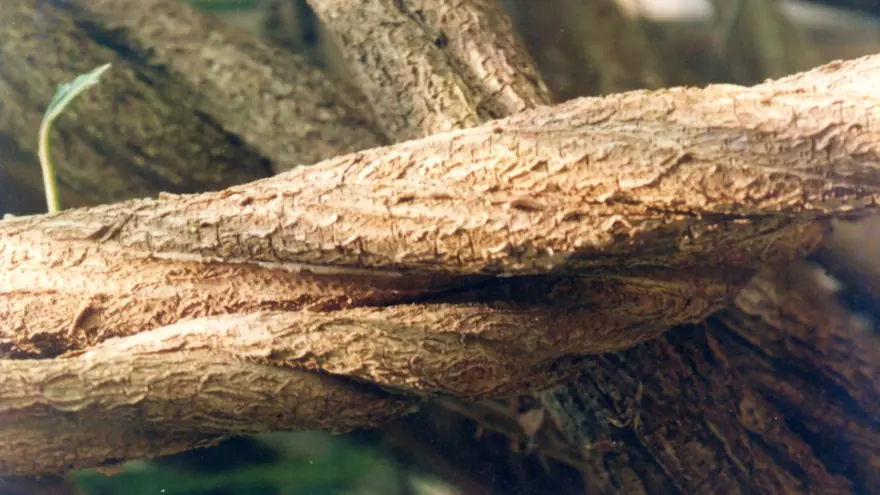
Taken on its own by mouth, DMT has no effect, because the MAO in the gut and liver destroys it. The vine prevents that from happening and allows an experience lasting several hours.1 The combination is an extraordinary example of Indigenous botanical knowledge.
Each preparation is different, and more than two hundred plants that can be added to the brew have been described.10 Some are dangerous: drinks adulterated with atropine and scopolamine have been documented, which caused a drop in blood pressure, high fever and respiratory failure.3 Those alkaloids do not come from ayahuasca, but from plants such as toé (Brugmansia) or datura. “Analogues” with other sources of DMT or β-carbolines, such as Syrian rue (Peganum harmala), also circulate.
How it works
Ayahuasca works through the sum of two actions:
- DMT activates the serotonin 5-HT2A receptors in the brain, like other classic psychedelics. This is where the visions and the changes in perception and thought come from.
- The β-carbolines selectively and reversibly inhibit MAO-A, the enzyme that destroys DMT and other monoamines.34 At the doses found in the drink, this inhibition occurs mainly in the gut and liver: it lets DMT pass into the blood.1 Tetrahydroharmine, in addition, weakly slows the reuptake of serotonin.3
That is why ayahuasca is at once a psychedelic and an MAOI: hence its interactions.
Timings. In a study with 18 volunteers, DMT reached its peak in the blood after an hour and a half, when the effects were most intense.1 The effects subside after about 4–6 hours.10
Heart. With the high dose in the Riba study, diastolic blood pressure rose by 9 mmHg and the pulse by somewhat less.1 This is moderate in healthy people, but not trivial with hypertension or heart disease.
Tolerance and addiction. In healthy volunteers, neither tolerance nor addictive behaviour has been observed.9
The experience
ExperienceAyahuasca is almost always taken in ceremonies, at night, guided by a healer (in Peru, often called an ayahuasquero) or by the leadership of a church. There are songs (ícaros), silence and rules.
- Coming up (30–60 min). Nausea, a sense of dizziness, visions that begin with the eyes closed.
- Peak (1–3 h). Intense visions, strong emotions, memories, sometimes vomiting or diarrhoea, which in the tradition are understood as “the purge” or cleansing.
- Coming down (3–6 h). Calm, reflection, tiredness.
Physical effects
- Nausea, vomiting and diarrhoea, very common. In the depression trial, 57% of those who took ayahuasca vomited.2
- Moderate rise in pulse and blood pressure.1
- Tremors, sweating, feeling cold or hot.
- Dilated pupils.
Mental effects
- Highly elaborate visions: landscapes, animals, beings, scenes.
- Reliving memories and emotions with great intensity.
- Introspection, sometimes a sense of teaching or of inner dialogue.
- Fear, anguish or a sense of dying in some experiences.
Challenging experiences
Fear and anguish are common and almost always pass.9 In a survey of more than 10,000 people, 69.9% reported adverse physical effects (mostly vomiting) and 2.3% needed medical attention. 55.9% noticed adverse psychological effects in the following weeks, which most experienced as part of a process of growth.8
Dose
There is no standard dose: each preparation has a different concentration of DMT and β-carbolines, and it is usually served “by the cup” at the discretion of whoever leads the ceremony. In scientific studies, analysed preparations with known amounts of DMT have been used, at around 0.5–1 mg per kilo of body weight.1 In the Brazilian depression trial a smaller dose was used, 0.36 mg per kilo.2
That is why it is important to know who prepares it, to start with a little and not to accept more doses without understanding what you are taking.
What changes the effect
- The preparation and the plants added.
- Repeating cups, which lengthens the experience.
- Weight, stomach and medication.
- Emotional state and setting: without support there are more adverse effects.89
Without testing, nobody knows how much DMT a cup contains: composition and purity are unknown. Doses and interactions pending expert review.
Interactions
Ayahuasca inhibits MAO. This makes it dangerous in combination with many medicines and drugs. Always tell whoever organises the ceremony about all your medication, and consult a doctor beforehand.
| Combination | Risk | What can happen |
|---|---|---|
| SSRI, SNRI, tricyclic and pharmaceutical MAOI antidepressants | Very dangerous | Serotonin syndrome, potentially fatal. Fluoxetine remains active for up to five weeks after stopping it.54 |
| MDMA, amphetamines, cocaine | Very dangerous | Serotonin syndrome and blood pressure crises.34 |
| 5-MeO-DMT or toad secretion | Very dangerous | Deaths have been described when they were taken together.34 |
| Tramadol, dextromethorphan, some cough suppressants | Dangerous | Serotonin syndrome.3 |
| Lithium | Dangerous | Risk of seizures, described with classic psychedelics.6 |
| St John's wort and ginseng | Dangerous | Added serotonergic effect.34 |
| A lot of nicotine (ingested tobacco, snuff) | Dangerous | Deaths have been described with preparations that combined them.3 |
| Medicines eliminated by the enzyme CYP2D6 (some antidepressants, beta-blockers, codeine) | Caution | Harmine inhibits that enzyme: the medicine may build up.4 |
| Antihypertensives and heart medication | Caution | Blood pressure and pulse rise: a medical assessment is needed.1 |
| Antipsychotics | Caution | No data; those who need them usually have an underlying contraindication. |
| Foods high in tyramine (aged cheeses, cured meats, fermented foods) | Caution | Possible rise in blood pressure; the risk is lower than with pharmaceutical MAOIs, but it exists.4 |
| Cannabis | Caution | More anxiety, panic and psychotic reactions have been described.4 |
| Other psychedelics (LSD, mushrooms) | Caution | No studies; a more intense and difficult experience. |
| Alcohol | Caution | No studies; it impairs judgement. Traditional diets exclude it. |
The diet: what is pharmacology and what is tradition
Many traditions recommend a diet in the days beforehand: no alcohol, no pork, no heavily processed foods, no sex. Part of these rules makes medical sense (avoiding foods rich in tyramine) and part is spiritual.
Tyramine, present in cured or fermented foods, is broken down by MAO; with MAO blocked, blood pressure can rise suddenly. As β-carbolines inhibit it reversibly, the risk is lower than with the old MAOIs, but it is not zero and it grows with repeated doses.4 As a precaution, on the day before and the day of taking it, it is best to avoid aged cheeses, cured meats, soy sauce, brewer's yeast, sauerkraut and alcohol. Beyond the pharmacological side, in the Amazon the diet is preparation and inward focus.
Who should not take it
- People with psychosis, schizophrenia or bipolar disorder, or with immediate family members who have them. Psychotic episodes are rare, but they are concentrated here and in those who mix substances or take it without supervision.79
- People being treated with antidepressants or other serotonergic drugs (see the table). Never stop an antidepressant suddenly in order to go to a ceremony: it must be done with a doctor and with time.5
- People with hypertension, arrhythmias or heart disease. In 538 cases dealt with by US poison centres there was tachycardia (34%), hypertension (16%) and four cardiac arrests.4
- Pregnancy and breastfeeding. Safety data are very scarce.3 It is advised against.
- Minors.
- Physical illnesses or anxiety disorders, associated with more adverse effects.8
- Driving and working afterwards. Do not drive or operate machinery until you have slept and feel completely well, the following day at the earliest.
How to reduce risks
Before
- Ask yourself what for. An acute crisis or a very recent bereavement is not a good time.
- Review your medication with a doctor well in advance. Be honest with whoever is organising: if they do not ask about your health and medication, that is a bad sign.
- Find out about who is leading: experience, number of people per facilitator and plan for an emergency.
- Know the rules. Nobody needs you to undress or to have “special” one-to-one sessions; sex presented as healing is manipulation.12
- Follow the part of the diet that reduces the tyramine risk (see above).
During
- Go with a trusted person who knows where you are. Use without supervision is associated with more adverse physical effects.8
- Do not accept added plants, snuff or other substances when you do not know what they are.
- Drink water in sips after vomiting.
Testing the substance
A drink cannot be tested by sight. If you have a sample, consult the Energy Control testing service. Colour reagents only indicate the presence of some families of compounds: they do not say how much DMT there is, nor do they detect all added plants.
Afterwards
Rest and give yourself time before deciding anything important, including before assessing a relationship with a facilitator.12
Warning signs specific to ayahuasca
Serotonin syndrome, especially if it has been mixed with antidepressants or other serotonergic drugs: it begins with euphoria, nausea and confusion, and progresses to tremors, heavy sweating, vomiting, rigidity, fever, seizures and loss of consciousness.5 At first it is mistaken for the usual effects: with marked tremors, rigidity, fever or intense confusion, call 112. Dry, red skin, very dilated pupils and confusion point to anticholinergic adulteration (see datura).
If something goes wrong
Call 112 if the person:
- does not respond or has lost consciousness;
- has seizures;
- has difficulty breathing or chest pain;
- is very hot, with dry or red skin, or is confused;
- is so agitated that they may hurt themselves or others;
- talks about harming themselves or taking their own life.
112 is free and operates throughout the European Union. Asking for help in time matters more than fear of the consequences.
While help is on its way
- Do not leave the person alone.
- If they are unconscious but breathing, put them on their side, in the recovery position.
- Find a quiet, cool, dimly lit place.
- Do not give them any more substances, or other ones to ‘counteract’ the effect.
- If they are conscious, give water in sips; drinking a lot of water at once is also dangerous.
What to tell the health staff
What they have taken, how much, when, whether they have mixed it with anything and what medication they take regularly. If any remains or the packaging, take it with you. Telling the truth helps the person to be treated properly. For questions about a poisoning, the Toxicology Information Service is available 24 hours a day on 91 562 04 20.
If it is a challenging experience, with no physical warning signs
Support them with presence and a calm voice. Remind the person that what they feel is the effect of the substance and that it will pass. If it does not ease or a risk appears, ask for help. If someone has thoughts of harming themselves, the Ministry of Health’s 024 Line is free, open 24 hours a day and confidential.
Before taking anything
Testing a substance is the only way to know what it contains. In Spain this is done by Energy Control, with offices in Andalusia, Catalonia, Madrid and Mallorca and a postal service from other regions. Also read the interactions section of each guide.
Research and therapeutic use
ResearchSpain has been a pioneering country: Jordi Riba's team at the Hospital de Sant Pau in Barcelona described in the 2000s how ayahuasca is absorbed and acts in the human body.1
Depression. In 2019, a trial in Brazil with 29 patients with treatment-resistant depression found that a single dose of ayahuasca reduced symptoms more than a placebo after a week: 57% responded compared with 20% on placebo on the main scale.2 Earlier, open-label studies without a control group had described rapid improvements in recurrent depression.10 The limits are clear: a small sample, a single centre, a single batch of the drink and imperfect blinding.2
Addictions. Observational studies describe lower use of alcohol, cocaine or tobacco after taking it. They are small and almost always without a comparison group.3
Clinical accessAs of 21 November 2026 we are not aware of any ayahuasca medicine approved in Spain or in the European Union: outside clinical trials, it is not a healthcare treatment. Ceremonies are not one either, even if they are presented as therapy.
What a therapeutic process is like, step by step, is explained in Therapy with ayahuasca.
Integration and personal growth
InterpretationWhat follows is a view from humanistic and transpersonal psychology, not a clinical finding. For Carl Rogers, change comes when the person can welcome their own experience without judging it; Stanislav Grof described how the intense experiences of an expanded state of consciousness may need time and support to find their place. From this view, what was lived gains value when it is carried into everyday life.
In practice, integrating is giving shape to what was lived: writing it down, talking about it with someone who listens without interpreting for you, noticing which emotions or memories have appeared and which small, concrete changes they ask for. There is no need to understand everything straight away. Nor is it advisable to make big life decisions in the following days.
Ask for professional support if, after a few weeks, insomnia, anguish, a sense of unreality, ideas of persecution, very low mood or unchecked euphoria persist, or if thoughts of harming yourself appear. In the global survey, one in eight people with adverse psychological effects sought professional help.8 Look for someone with healthcare training who knows these experiences and does not judge them.
Ethics and sustainability
Indigenous peoples. Ayahuasca belongs to the culture of dozens of Amazonian peoples. Its worldwide expansion commodifies traditional knowledge and erodes the sustainable management of the plants.11 Distinguishing the traditional from the contemporary and not calling what is new “ancestral” is a basic form of respect.
The vine. The IUCN has not assessed the species, but there are signs that Banisteriopsis caapi is declining in parts of the Amazon. Gatherers speak of scarcity, rising prices and ever younger vines; the plant needs at least five years to mature.11 More than a hundred Shipibo-Konibo shamans in Peru have expressed concern about overexploitation linked to tourism.11
What helps. Cultivation outside the forest, agroforestry, protecting the large vines and sharing benefits with the communities of origin according to the principles of the Nagoya Protocol.11
Abuse. Sexual abuse has been reported in ayahuasca settings. The power imbalance and the effects of the drink mean that “consent” in a ceremony is not reliable.12 Whoever facilitates has the responsibility not to have relationships with participants.
Myths and facts
- “It's natural, so it's safe.”
- As an MAOI, it can be dangerous with antidepressants and other substances.54
- “It's addictive.”
- In studies it does not produce tolerance or addiction; its risks are different.9
- “A ceremony cures depression.”
- There are promising results, but in small studies, with medical supervision and in controlled settings.2 They are not equivalent to a ceremony and do not replace a treatment.
- “The diet is just superstition.”
- In part it has a pharmacological basis: with MAO inhibited, foods rich in tyramine can raise blood pressure.4
History
Dozens of Amazonian peoples in Peru, Colombia, Ecuador, Brazil and Bolivia have used ayahuasca since times that cannot be dated precisely, to heal, to divine and as part of their worldview. The name comes from Quechua and is usually translated as “vine of the spirits” or “of the dead”.
- 1851. The English botanist Richard Spruce describes the vine in the Amazon.
- 1930s. In Brazil, Raimundo Irineu Serra founds Santo Daime, a religion that combines ayahuasca and Christianity.
- 1961. José Gabriel da Costa founds the União do Vegetal.
- 1990s onwards. “Ayahuasca tourism” and ceremonies spread in Europe and North America.
Frequently asked questions
Why do people vomit with ayahuasca?
Because of the action of its components on the digestive system and the nervous system. In the tradition, vomiting is understood as a physical and emotional purge or cleansing.
Can I take it if I take antidepressants?
Not without medical supervision. The combination with most antidepressants can cause severe serotonin syndrome. Never stop an antidepressant suddenly: it must be done with a doctor and with time.
How do I choose a safe ceremony?
Look for references, and ask about prior medical screening, about the experience of those who lead it, about the number of attendees per facilitator and about how they act in an emergency. Be wary of anyone who does not ask about your health or medication.
What is the diet beforehand for?
In part it is pharmacological: with MAO inhibited, foods rich in tyramine can raise blood pressure. In part it is traditional preparation and inward focus.
How long does the effect last?
It begins after 30–60 minutes, peaks at around two hours and subsides within 4–6 hours, sometimes longer depending on the preparation.
Is it addictive?
In studies it does not produce tolerance or addiction. Its main risks are interactions and difficult psychological reactions.
Can it be taken during pregnancy or breastfeeding?
It is not recommended. Safety data for pregnancy and breastfeeding are very scarce.
Further reading and related guides
Books from the APDER Library:
- Ayahuasca y salud, Beatriz Caiuby Labate and José Carlos Bouso (eds.), 2013. In Spanish.
- Ayahuasca: la enredadera del río celestial, Claudio Naranjo, 2012. In Spanish.
- Integración psiquedélica, Marc Aixalà, 2022. In Spanish.
References
- Riba J, Valle M, Urbano G, et al. Human pharmacology of ayahuasca: subjective and cardiovascular effects, monoamine metabolite excretion, and pharmacokinetics. J Pharmacol Exp Ther. 2003;306(1):73-83. doi:10.1124/jpet.103.049882. PMID: 12660312.
- Palhano-Fontes F, Barreto D, Onias H, et al. Rapid antidepressant effects of the psychedelic ayahuasca in treatment-resistant depression: a randomized placebo-controlled trial. Psychol Med. 2019;49(4):655-663. doi:10.1017/S0033291718001356. PMID: 29903051.
- Hamill J, Hallak J, Dursun SM, et al. Ayahuasca: psychological and physiologic effects, pharmacology and potential uses in addiction and mental illness. Curr Neuropharmacol. 2019;17(2):108-128. doi:10.2174/1570159X16666180125095902. PMID: 29366418.
- Ruffell S, Netzband N, Bird C, et al. The pharmacological interaction of compounds in ayahuasca: a systematic review. Braz J Psychiatry. 2020;42(6):646-656. doi:10.1590/1516-4446-2020-0884.
- Callaway JC, Grob CS. Ayahuasca preparations and serotonin reuptake inhibitors: a potential combination for severe adverse interactions. J Psychoactive Drugs. 1998;30(4):367-369. PMID: 9924842.
- Nayak SM, Gukasyan N, Barrett FS, et al. Classic psychedelic coadministration with lithium, but not lamotrigine, is associated with seizures: an analysis of online psychedelic experience reports. Pharmacopsychiatry. 2021. doi:10.1055/a-1524-2794. PMID: 34348413.
- dos Santos RG, Bouso JC, Hallak JEC. Ayahuasca, dimethyltryptamine, and psychosis: a systematic review of human studies. Ther Adv Psychopharmacol. 2017;7(4):141-157. PMCID: PMC5433617.
- Bouso JC, Andión Ó, Sarris JJ, et al. Adverse effects of ayahuasca: results from the Global Ayahuasca Survey. PLOS Glob Public Health. 2022;2(11). PMCID: PMC10021266.
- ICEERS. Perfil de seguridad de la ayahuasca (hoja informativa 1). iceers.org.
- ICEERS. Informe técnico 2017: ayahuasca. Barcelona: ICEERS; 17 August 2017. iceers.org.
- Ermakova AO, Gandy S. Of shrub, cactus, vine and toad: psychedelic species of conservation concern. Front Conserv Sci. 2025;6:1569528. doi:10.3389/fcosc.2025.1569528.
- Sinclair E, Labate BC. Ayahuasca community guide for the awareness of sexual abuse. Chacruna Institute; MAPS Bulletin. 2019;29(1). maps.org.
Last reviewed: 21 November 2026. Doses and interactions pending expert review.
Before you read on. This information is for general education. We prepare it carefully from scientific and harm reduction sources, but it may contain errors or become out of date. It is not medical advice and does not replace a health professional, especially if you take medication or have a health problem. APDER does not encourage the use of any substance and accepts no responsibility for how this information is used. If you spot an error, write to us at info@apder.org.
Canonical address: https://apder.org/sustancias/ayahuasca/