

Contents
- In brief
- What it is and where it comes from
- How it works
- The experience
- Dose
- Interactions
- Who should not take it
- How to reduce risks
- If something goes wrong
- Research and therapeutic use
- Integration and personal growth
- Myths and facts
- History
- Frequently asked questions
- Further reading and related guides
- References
In brief
- What it is. A tryptamine found in some plants and in the secretion of the Sonoran Desert toad; it is also made in laboratories.
- What it does. When inhaled, it dissolves the sense of self and surroundings within seconds for fifteen to forty-five minutes, with few visions.1
- The main risk. Complete loss of control of the body: vomiting, falls and knocks. A prepared person needs to be beside you.
- The most dangerous interaction. MAO inhibitors, including ayahuasca: the mixture has caused deaths.2
- Therapeutic use. First trials with an inhaled form in treatment-resistant depression; promising but preliminary results.3
What it is and where it comes from
5-MeO-DMT is a very fast-acting and very potent tryptamine. It is found in several South American plants and in the secretion of the glands of the Sonoran Desert toad (Incilius alvarius, formerly called Bufo alvarius), which is why it is known as “the toad”. It is also made in laboratories.
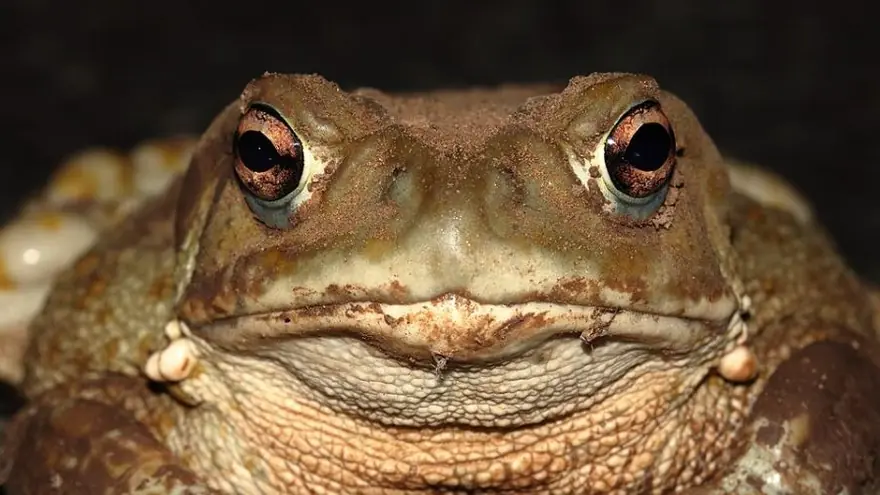
Although its name resembles that of DMT, its effect is different: it usually produces few visions and a total dissolution of the sense of self, which many people describe as an experience of unity or emptiness.
| Type | Psychedelic (tryptamine) |
|---|---|
| Main action | Serotonin receptors 5-HT1A and 5-HT2A |
| Route | Vaporised or inhaled |
| Starts to be noticed | Seconds |
| Total duration | 15–45 minutes |
| Addictive potential | Low |
Starts to be noticed: secondsTotal duration: 15–45 minutes
A rough diagram based on the table above; it varies with the dose, the route and the person.
It is sold in two forms: the dried secretion of the toad, which besides 5-MeO-DMT contains other substances such as bufotenine, and synthetic 5-MeO-DMT, a crystalline powder. It must not be confused with DMT, which produces a very visual experience, nor with ayahuasca.
How it works
5-MeO-DMT acts on several serotonin receptors. Unlike DMT, it has a strong affinity for 5-HT1A, in addition to the 5-HT2A that all classic psychedelics share. This mixture is thought to explain why it produces few visions and such a complete dissolution of the sense of self.1
Why it lasts such a short time. When inhaled, it reaches the brain in seconds and the MAO enzyme breaks it down within minutes. That is why the experience lasts fifteen to forty-five minutes.1 That same mechanism explains the danger of combining it with MAO inhibitors: the body can no longer eliminate it.
The toad's secretion also contains bufotenine and other substances, with their own effects and risks, especially for the heart. Its concentration varies greatly from one sample to another.1
The experience
ExperienceAfter inhaling it, within a few seconds the person usually loses awareness of their surroundings and body. There may be shouting, crying, involuntary movements, or the person may remain completely still. Many people do not remember what they experienced well; others describe it as the most intense experience of their life.
The return comes after 15–30 minutes. In the following days some people experience “reactivations”: brief moments in which part of the sensation comes back.
Effects
- Complete loss of the sense of self and of time.
- A sense of light, energy or unity.
- Few visions, unlike DMT.
- Rise in blood pressure and pulse; sometimes vomiting.1
- Involuntary movements and loss of control of the body.
- Intense fear or a sense of dying in some experiences.
Challenging experiences
Because it arrives all at once and switches off awareness of the body, the person cannot look after themselves during the experience. There may be terror, a sense of dying, shouting or sudden movements. It almost always passes within minutes. The person supporting must watch the breathing, protect the head and place the person on their side if they vomit, without trying to hold them down or speaking to them more than necessary.
Dose
It is active at very few milligrams, and the difference between a gentle dose and an overwhelming one is small. Doses of the toad's secretion are even more unpredictable because its concentration varies greatly. For this reason we do not recommend its use outside a clinical setting. In research it is given with inhalation devices that allow exact, increasing doses.
Interactions
Never combine it with MAO inhibitors (ayahuasca, Syrian rue, MAOI antidepressants). That mixture has caused deaths.1,2
| Combination | Risk | What can happen |
|---|---|---|
| MAOIs, ayahuasca, Syrian rue | Very dangerous | Severe serotonin toxicity; deaths have been recorded.2,4 Nor on the same day as an ayahuasca ceremony. |
| Lithium, tramadol | Very dangerous | Risk of seizures and of serotonin syndrome.4 |
| SSRI and SNRI antidepressants | Caution | A serotonergic interaction with consequences that are hard to predict. Consult your doctor and do not stop your medication on your own. |
| Stimulants (cocaine, amphetamines, MDMA) | Caution | More strain on the heart and, with MDMA, serotonin risk. |
| Other psychedelics or cannabis on the same day | Caution | A more unpredictable experience that is harder to support. |
This table is not complete. If you take any medication, consult a healthcare professional.
Who should not take it
- Mental health: people with a personal or family history of psychosis, schizophrenia or bipolar disorder. Research with psychedelics excludes them.5
- Heart and blood pressure: hypertension, arrhythmias or heart disease. The rise in blood pressure is abrupt, and the toad's secretion adds other substances that affect the heart.1
- Epilepsy or previous seizures.
- Pregnancy and breastfeeding: there are no safety data. It should not be taken.
- Age: not for minors.
- Medication: MAOIs, antidepressants, lithium, tramadol and any serotonergic drug; see the interactions table.
- A difficult moment in life or unresolved trauma: such an intense and sudden experience can overwhelm.
How to reduce risks
APDER does not encourage use and, in the case of 5-MeO-DMT, advises against using it outside a clinical setting. If someone decides to do so, these measures reduce the risks, although they do not eliminate them.
Before
- Find out about the person offering it. Facilitators without training have been described, who repeat doses, mix substances or do not know how to act in an emergency, as have cases of abuse. Ask what preparation they have, how they select participants and what they would do if something goes wrong.
- Tell them about all your medication and do not take anything with MAOIs that day or the days before.
- Have the substance tested if it is synthetic. In Spain this is done by Energy Control.6
- Do not eat in the hours beforehand: it reduces the risk of vomiting.
During
- Lying down or sitting on the floor, on a soft surface with no objects around.
- With a sober, prepared person beside you, who knows how to put someone in the recovery position.
- A single dose. Repeated doses lie behind many of the complications described.
Afterwards
- Rest and do not drive that day.
- Give yourself time to integrate. The reactivations of the following days are usually temporary; if they cause distress, seek support.
What is specific to 5-MeO-DMT: the toads
Extracting the secretion stresses the animals, and growing demand threatens their populations in the Sonoran Desert. The synthetic substance is the same main molecule, makes it possible to know the amount and harms no animal.
If something goes wrong
Call 112 if the person:
- does not respond or has lost consciousness;
- has seizures;
- has difficulty breathing or chest pain;
- is very hot, with dry or red skin, or is confused;
- is so agitated that they may hurt themselves or others;
- talks about harming themselves or taking their own life.
112 is free and operates throughout the European Union. Asking for help in time matters more than fear of the consequences.
While help is on its way
- Do not leave the person alone.
- If they are unconscious but breathing, put them on their side, in the recovery position.
- Find a quiet, cool, dimly lit place.
- Do not give them any more substances, or other ones to ‘counteract’ the effect.
- If they are conscious, give water in sips; drinking a lot of water at once is also dangerous.
What to tell the health staff
What they have taken, how much, when, whether they have mixed it with anything and what medication they take regularly. If any remains or the packaging, take it with you. Telling the truth helps the person to be treated properly. For questions about a poisoning, the Toxicology Information Service is available 24 hours a day on 91 562 04 20.
If it is a challenging experience, with no physical warning signs
Support them with presence and a calm voice. Remind the person that what they feel is the effect of the substance and that it will pass. If it does not ease or a risk appears, ask for help. If someone has thoughts of harming themselves, the Ministry of Health’s 024 Line is free, open 24 hours a day and confidential.
Before taking anything
Testing a substance is the only way to know what it contains. In Spain this is done by Energy Control, with offices in Andalusia, Catalonia, Madrid and Mallorca and a postal service from other regions. Also read the interactions section of each guide.
Research and therapeutic use
ResearchAn Irish company is developing an inhaled 5-MeO-DMT formulation for treatment-resistant depression. In an initial trial, several participants reached remission a few hours after a regimen of increasing doses in a single day.3 These are preliminary results, with few participants.
Surveys and observational studies. In a survey of 362 people who had taken it in a group, many described improvements in depression and anxiety.7 In a study of 42 people who inhaled the toad's secretion in a naturalistic setting, satisfaction with life increased and symptoms of depression and stress fell in the following weeks.8 These are studies without a comparison group: they cannot tell us how much is due to the substance.
Limits. Clinical research is very recent and small. There are still no large placebo-controlled trials.1
Regulated accessAs of 23 November 2026 there is no medicine containing 5-MeO-DMT authorised in Spain. It can only be received within clinical trials.
What a therapeutic process is like, step by step, is explained in Therapy with 5-MeO-DMT.
Integration and personal growth
InterpretationWhat follows is a view from humanistic and transpersonal psychology, not a laboratory finding. Many people describe the experience with 5-MeO-DMT as a complete dissolution into something formless: unity, light, emptiness. Contemplative traditions have words for such states; transpersonal psychology studies them as non-dual experiences.
That intensity has a flip side: if there is no stable personal structure to return to, the experience can disorganise rather than expand. That is why integration matters so much. From Carl Rogers' person-centred approach, it helps to have someone listen without judging; from Gestalt, to return to the body, the breath and the concrete details of daily life. There is no need to understand everything: sometimes it is enough to let what was lived settle.
It is advisable to seek professional support if anxiety, a sense of unreality, insomnia or distressing reactivations persist, or if the experience has stirred up something that needs attention.
Myths and facts
- “It's the toad's DMT”
- No. 5-MeO-DMT is a different molecule, with a different experience and different risks.
- “The toad's natural form is purer”
- The secretion also contains bufotenine and other substances, and its concentration is unpredictable. The synthetic form is more predictable and does not harm animals.
- “The more doses, the deeper it goes”
- Repeated doses lie behind many complications. One is enough.
- “If it's short, no preparation is needed”
- On the contrary: the suddenness of the experience makes a prepared person beside you essential.
- “Combined with ayahuasca, the healing is amplified”
- It is one of the most dangerous combinations there is. It has caused deaths.2
History
- Indigenous use of snuffs made from plants that contain it, such as the seeds of Anadenanthera and the resin of Virola.
- 1936. It is synthesised for the first time in Japan.
- 1965. It is identified in the secretion of the Sonoran Desert toad.1
- 1984. A pamphlet spreads the word on how to smoke the toad's secretion, and its use outside research begins.
- 2010s. Ceremonies with “the toad” become popular in the Americas and Europe.
- 2023. The first results of a clinical trial with an inhaled formulation in treatment-resistant depression are published.3
Frequently asked questions
Is it the same as DMT?
No. They share part of their structure, but 5-MeO-DMT acts more on the 5-HT1A receptor, produces fewer visions and is more potent.
Is the toad's or the synthetic form better?
They contain the same main substance. The synthetic form makes it possible to know the amount and does not harm animals; the toad's also carries other substances.
What is a reactivation?
A brief return of sensations from the experience in the following days or weeks. It is usually temporary; if it causes distress, it is advisable to seek support.
How long does it last?
When inhaled, fifteen to forty-five minutes. The most intense part usually lasts less than a quarter of an hour.
Why is it so dangerous with ayahuasca?
Because ayahuasca inhibits the MAO enzyme, which is the one that eliminates 5-MeO-DMT. Without it, the substance accumulates and can cause severe serotonin toxicity.
How do I choose a facilitator?
Ask about their training, how they select participants, whether someone is prepared for an emergency and whether they repeat doses. Be wary of anyone who promises cures or plays down the risks.
Further reading and related guides
- James Oroc, Tryptamine Palace (2009, in English). In the Library.
- Albert Most, Bufo Alvarius: The Psychedelic Toad of the Sonoran Desert (in English). In the Library.
- Gerardo Sandoval Isaac, The God Molecule (2016, in English). In the Library.
References
- Ermakova AO, Dunbar F, Rucker J, Johnson MW. A narrative synthesis of research with 5-MeO-DMT. J Psychopharmacol. 2022;36(3):273-294. doi:10.1177/02698811211050543.
- Sklerov J, Levine B, Moore KA, King T, Fowler D. A fatal intoxication following the ingestion of 5-methoxy-N,N-dimethyltryptamine in an ayahuasca preparation. J Anal Toxicol. 2005;29(8):838-841.
- Reckweg JT, van Leeuwen CJ, Henquet C, et al. A phase 1/2 trial to assess safety and efficacy of a vaporized 5-methoxy-N,N-dimethyltryptamine formulation (GH001) in patients with treatment-resistant depression. Front Psychiatry. 2023;14:1133414. doi:10.3389/fpsyt.2023.1133414.
- TripSit. Combinations chart, entries “5-MeO-xxT” and “MAOIs” (secondary harm-reduction source). https://raw.githubusercontent.com/TripSit/drugs/main/combos.json
- Johnson MW, Richards WA, Griffiths RR. Human hallucinogen research: guidelines for safety. J Psychopharmacol. 2008;22(6):603-620. doi:10.1177/0269881108093587. PMID 18593734.
- Energy Control. Analysis service. https://energycontrol.org/servicio-de-analisis/
- Davis AK, So S, Lancelotta R, Barsuglia JP, Griffiths RR. 5-methoxy-N,N-dimethyltryptamine (5-MeO-DMT) used in a naturalistic group setting is associated with unintended improvements in depression and anxiety. Am J Drug Alcohol Abuse. 2019;45(2):161-169. doi:10.1080/00952990.2018.1545024.
- Uthaug MV, Lancelotta R, van Oorsouw K, et al. A single inhalation of vapor from dried toad secretion containing 5-methoxy-N,N-dimethyltryptamine (5-MeO-DMT) in a naturalistic setting is related to sustained enhancement of satisfaction with life, mindfulness-related capacities, and a decrement of psychopathological symptoms. Psychopharmacology. 2019;236(9):2653-2666. doi:10.1007/s00213-019-05236-w.
Last reviewed: 23 November 2026. Doses and interactions pending expert review.
Before you read on. This information is for general education. We prepare it carefully from scientific and harm reduction sources, but it may contain errors or become out of date. It is not medical advice and does not replace a health professional, especially if you take medication or have a health problem. APDER does not encourage the use of any substance and accepts no responsibility for how this information is used. If you spot an error, write to us at info@apder.org.
Canonical address: https://apder.org/sustancias/5-meo-dmt/