

Preparation · Malpighiaceae · Amazon basin
Ayahuasca
Banisteriopsis caapi (Spruce ex Griseb.) C.V.Morton
In Quechua, aya means spirit or ancestor and waska means rope. The "rope of the spirits" is a liana, and it is also the drink that dozens of Amazonian peoples brew from it in order to heal, to see and to decide.8
Also known asyagé · caapi · natem · oni · kamarampi · nixi pae · hoasca · daime
- What it is
- A drink made from two plants: a liana and the leaves of a shrub
- Territory
- Amazon basin: Peru, Brazil, Colombia, Ecuador and Bolivia
- Part used
- Stem of the liana and chacruna leaves
- Active principles
- Harmine, harmaline, tetrahydroharmine and DMT
- Onset and duration
- 30–60 min · 4–6 hours
- Who keeps its memory
- Shipibo-Konibo, Tukano, Shuar, Asháninka, Huni Kuin and many others
Botany
A rope that climbs to the canopy
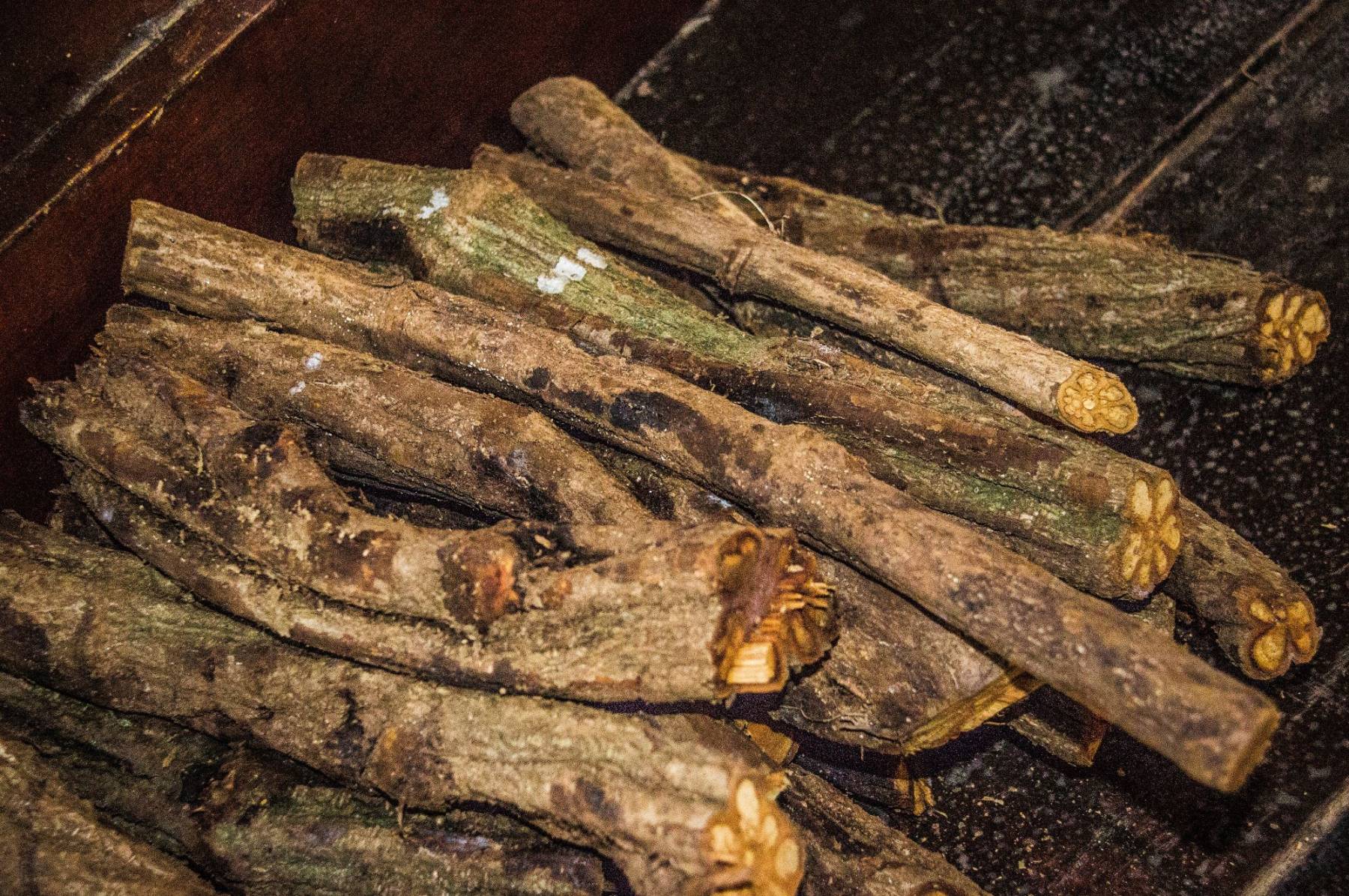
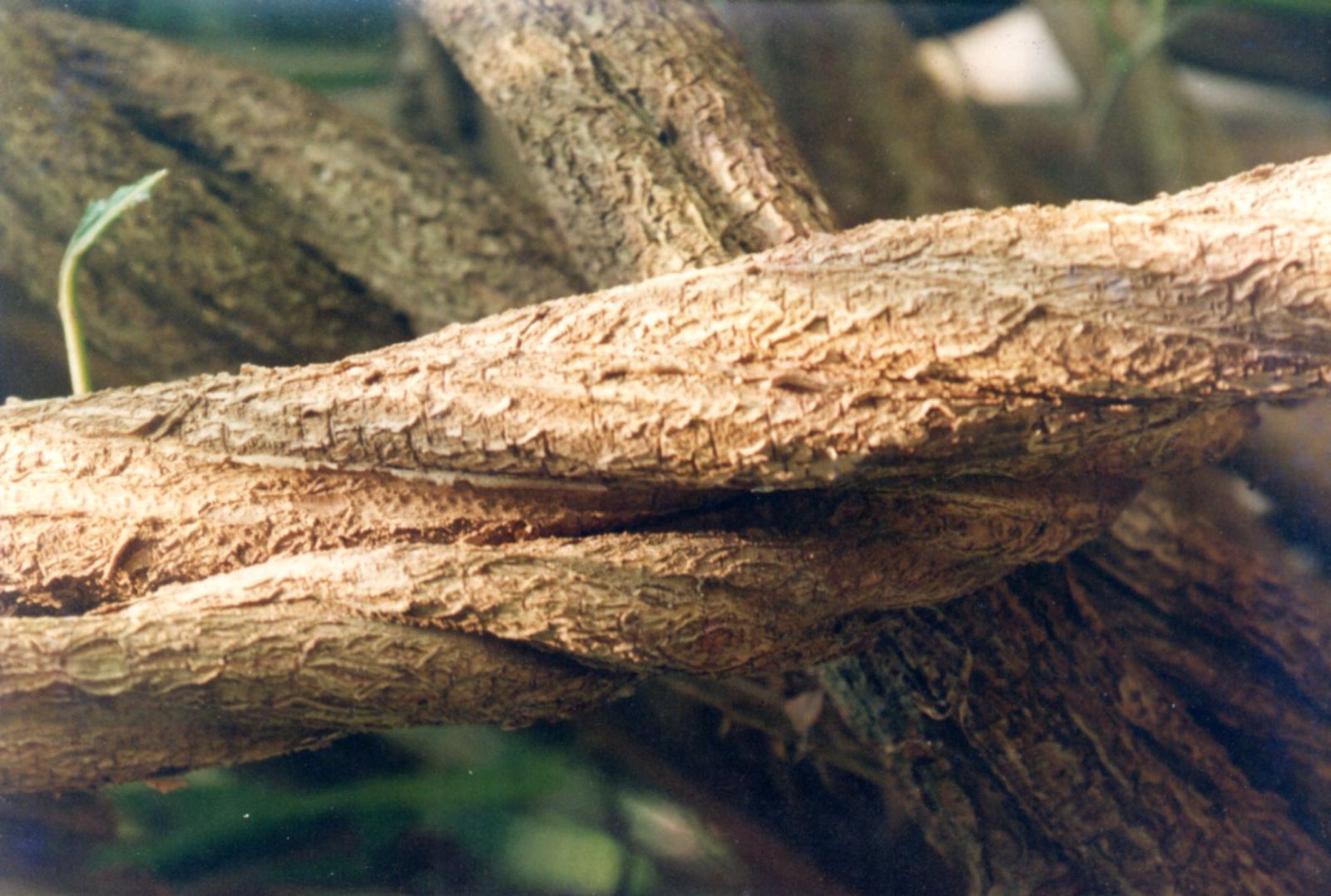
Ayahuasca is a woody liana of the Malpighiaceae family. Its stems twist over one another like a rope and climb the trees towards the light. When they are cut, a pattern of lobes appears that recalls a flower: it is the image that opens this entry.8
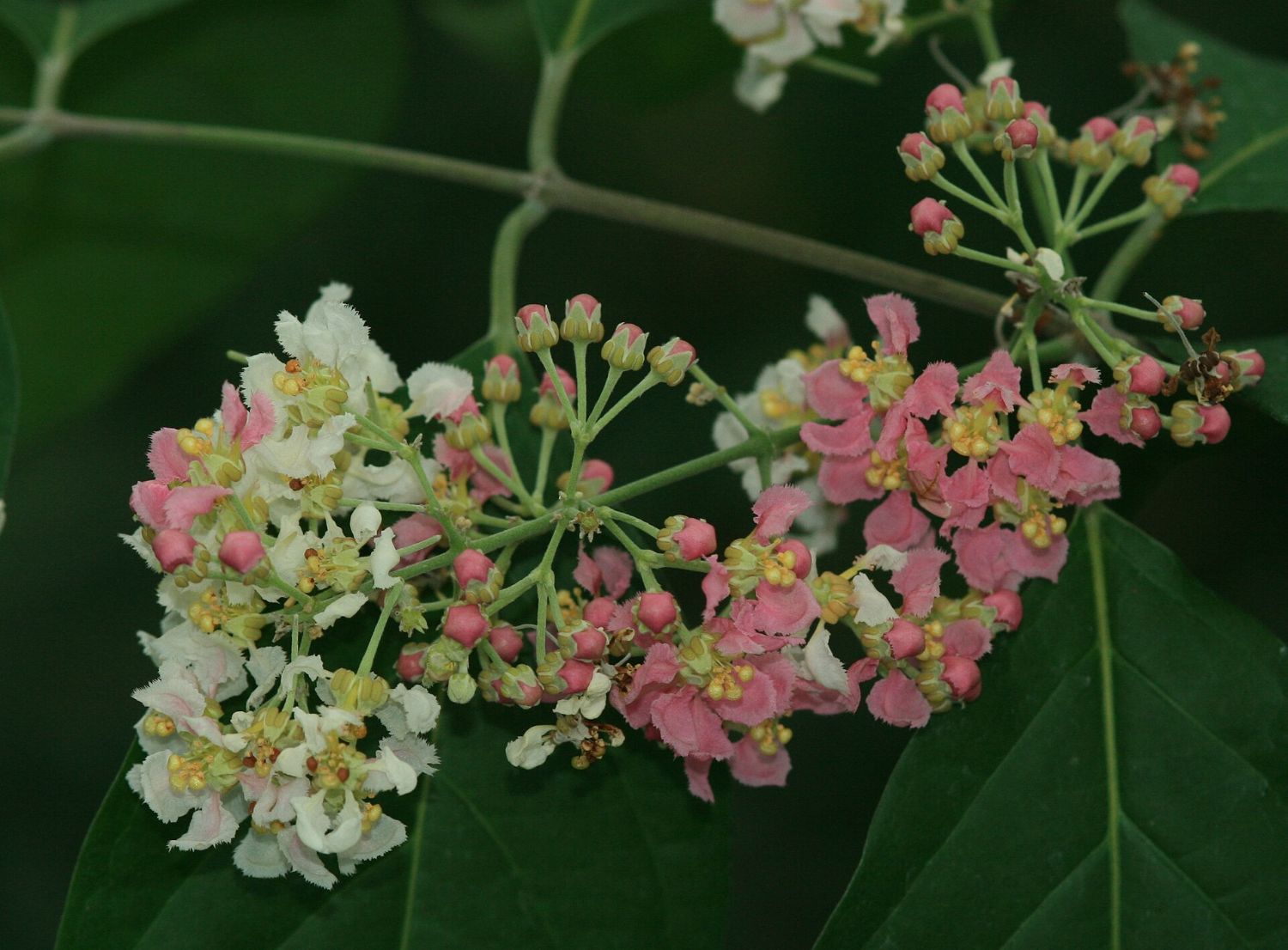
The leaves grow in pairs, oval and ending in a point. The flowers, small and pink, fade to white, and the fruit is a samara, a winged seed that the wind sets spinning. The peoples who use it plant it beside their houses and gardens (chacras), so much so that it is now hard to know where it is wild.2
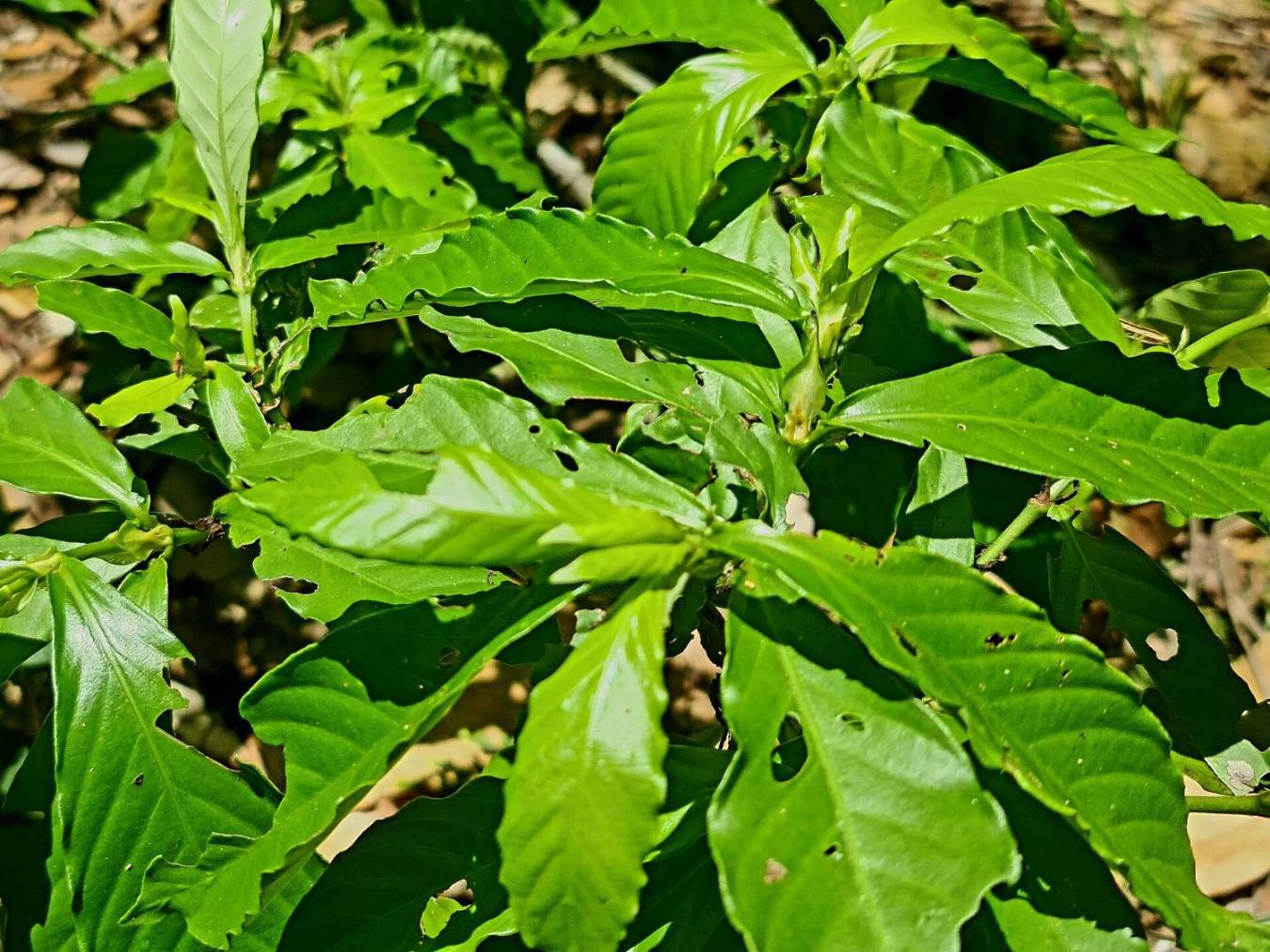
The drink needs a second plant. The most usual is chacruna (Psychotria viridis), a shrub of the coffee family; in other regions chaliponga (Diplopterys cabrerana) is used.8
- Family
- Malpighiaceae
- Habit
- Woody climbing liana
- Flower
- Pink, in clusters
- Fruit
- Samara, a winged seed
Memory and tradition
The drink that teaches
Dozens of peoples of the Amazon in Peru, Colombia, Ecuador, Brazil and Bolivia take it in order to heal, to divine and as part of their way of understanding the world. No one can date precisely when it began.8
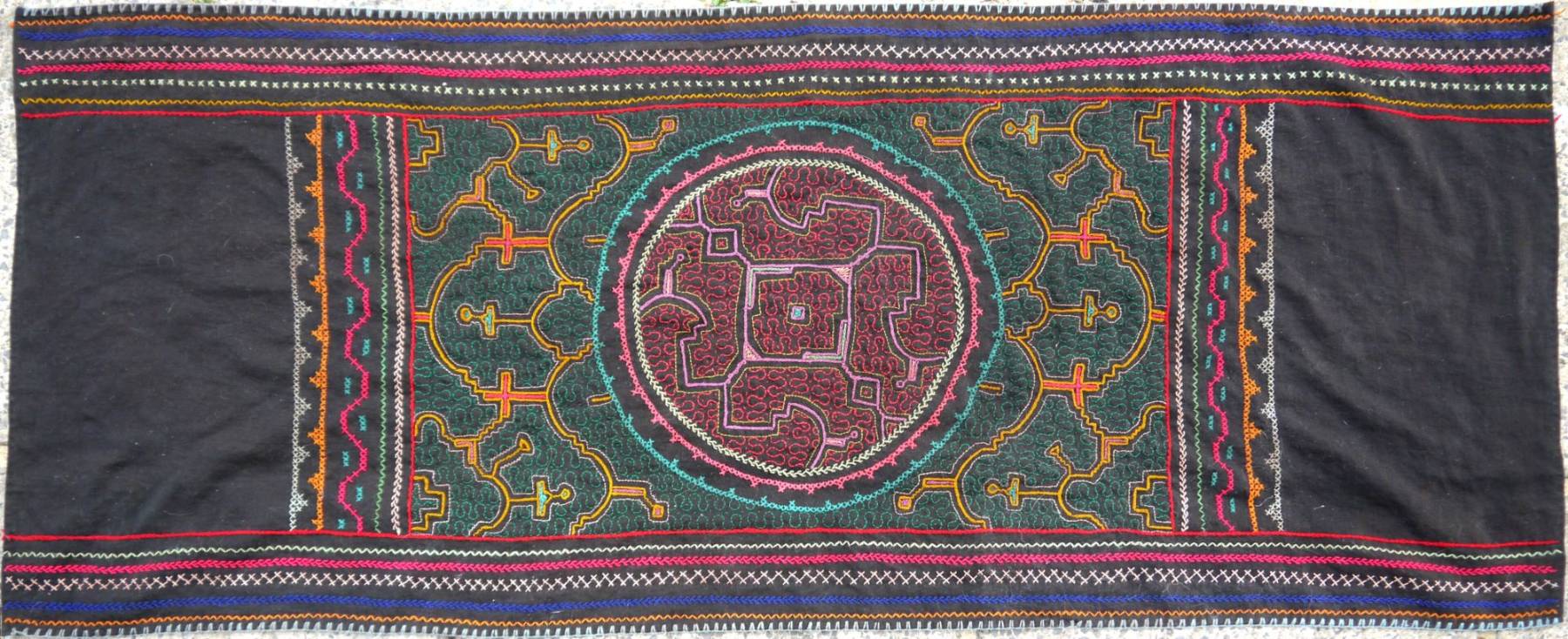
The person who leads the gathering sings. In the Peruvian Amazon these songs are called ícaros. The Shipibo-Konibo people also embroider and paint geometric designs, the kené, which belong to that same world.
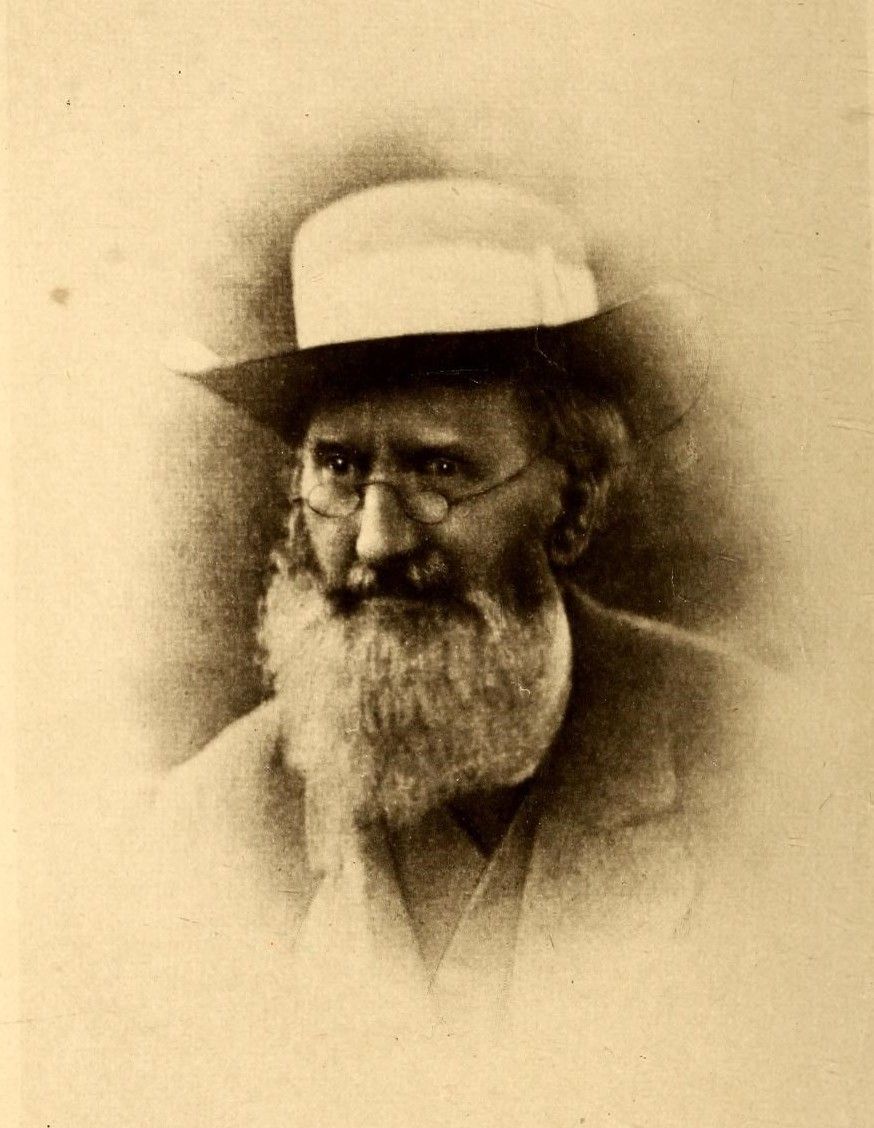
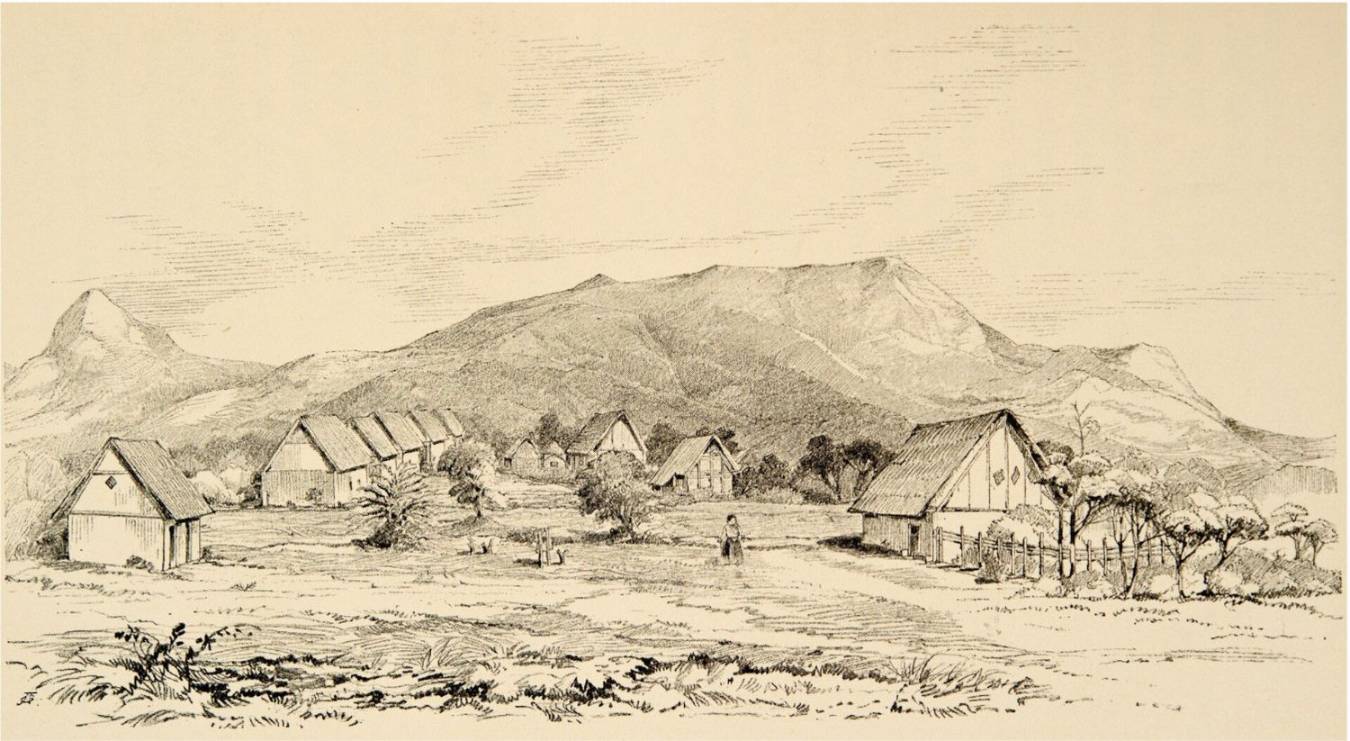
The first botanist to collect it was the Englishman Richard Spruce. In 1851, on the Vaupés river, he found it among the Tukano and noted down the name they gave it: caapi.10
Over time
In the Cueva del Chileno, on the Bolivian altiplano, a ritual bundle holds traces of harmine and DMT together: it is the oldest chemical evidence of the two components of the drink.3
Richard Spruce collects the liana among the Tukano of the Vaupés river.10
August Grisebach publishes the name Banisteria caapi in the Flora Brasiliensis.1
In Brazil, Raimundo Irineu Serra founds Santo Daime, which joins the drink with Christianity.
José Gabriel da Costa founds the União do Vegetal.
Jordi Riba's team in Barcelona describes how it acts in the human body.4
First placebo-controlled trial in people with treatment-resistant depression.5
Its names
- ayahuasca
- Quechua: "rope of the spirits"
- yagé, yajé
- Colombia and Ecuador
- caapi
- Brazil; the name Spruce noted down
- natem
- Shuar
- kamarampi
- Asháninka
- oni
- Shipibo-Konibo
- nixi pae
- Huni Kuin
- hoasca, daime
- ayahuasca religions of Brazil
Territory and care
A liana increasingly sought after
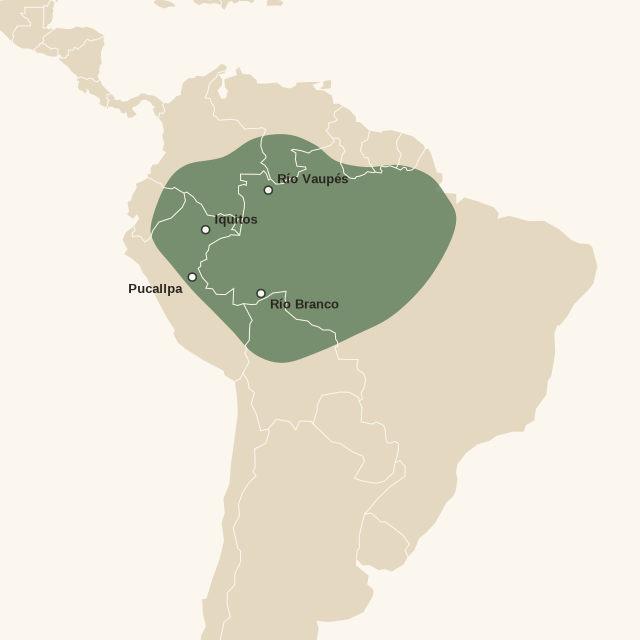
Kew places its native range in southern tropical America, in the humid lowland forest.1 Outside it, it is grown in gardens and nurseries around half the world.
The liana takes at least five years before it can be harvested. With demand from outside, those who gather it speak of scarcity, rising prices and ever younger lianas, and more than a hundred Shipibo-Konibo healers (curanderos) have voiced concern about overharvesting.6
Conservation status · NE, not evaluated
The IUCN Red List has not yet evaluated the species.6
What helps
- Grow it outside the forest and in agroforestry systems.
- Protect the large lianas.
- Make sure the benefits reach the communities of origin.
- Distinguish the traditional from the recent, and do not call something new "ancestral".
What it contains
Two plants, one key
Taken on its own by mouth, the DMT in the leaves has no effect: an enzyme in the gut and liver, MAO, destroys it before it reaches the brain. The liana provides the substances that block that enzyme. Together, the two plants open an experience lasting several hours.4
Every preparation is different, and more than two hundred plants have been described that are sometimes added to the brew.9
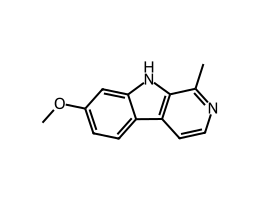 Harmineβ-carboline · from the liana
Reversibly blocks the enzyme MAO-A. Together with harmaline and tetrahydroharmine, it lets DMT pass into the blood.
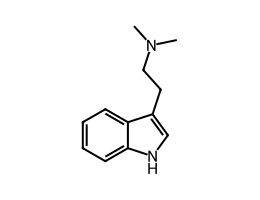 DMTTryptamine · from the leaves
Activates serotonin 5-HT2A receptors, like the other classic psychedelics. This is where the visions come from.
The experience
Four to six hours
It starts to be noticed between half an hour and an hour after drinking it, reaches its peak at around two hours and fades over four to six.4 It brings visions, intense emotions and an inward gaze.
There is almost always nausea and, often, vomiting. In the tradition, this purge is understood as a cleansing.
Indicative outline: it changes with the preparation, the amount and the person.
Research
What has been studied
In the 2000s, Jordi Riba's team at the Hospital de Sant Pau in Barcelona described how ayahuasca is absorbed and how it acts in the human body.4
In 2019, a trial in Brazil with 29 people with treatment-resistant depression compared a single dose with a placebo. One week later, 57% of those who took it had responded, compared with 20% of the placebo group.5 For addictions there are only small studies without a comparison group.
Scope of these dataThat trial was carried out under medical supervision, at a single centre and with few people. It is not the same as a ceremony, nor does it turn the drink into a treatment.
With care
What it helps to know beforehand
A very difficult psychological experience and, in predisposed people, episodes of psychosis or mania.7
Antidepressants and other drugs that act on serotonin: the combination can be serious.
Blood pressure and pulse rise moderately. This matters if there is hypertension or heart disease.4
Some brews contain other plants, such as toé (Brugmansia), which change the effect and the risk.
Gallery
A closer look
To follow
Books and related medicines
 Vine of the SoulRichard Evans Schultes and Robert F. Raffauf · 1992In the APDER library →
 Ayahuasca ReaderLuis Eduardo Luna and Steven F. White (eds.) · 2000In the APDER library →APDER libraryAyahuasca y saludAyahuasca y saludBeatriz Caiuby Labate and José Carlos Bouso (eds.) · 2013In the APDER library →
The leaf that provides the DMT in the drink.
PlantSyrian ruePeganum harmalaAnother plant with harmine, from the Mediterranean to Central Asia.
PlantMapachoNicotiana rusticaThe tobacco that accompanies many Amazonian ceremonies.
PlantJuremaMimosa tenuifloraA root with DMT from north-eastern Brazil.
Sources
Where each piece of information comes from
- Royal Botanic Gardens, Kew. Plants of the World Online: Banisteriopsis caapi (Spruce ex Griseb.) C.V.Morton. powo.science.kew.org.
- Gates B. Banisteriopsis, Diplopterys (Malpighiaceae). Flora Neotropica Monograph 30. New York: New York Botanical Garden; 1982.
- Miller MJ, Albarracin-Jordan J, Moore C, Capriles JM. Chemical evidence for the use of multiple psychotropic plants in a 1,000-year-old ritual bundle from South America. Proc Natl Acad Sci USA. 2019;116(23):11207-11212.
- Riba J, Valle M, Urbano G, et al. Human pharmacology of ayahuasca: subjective and cardiovascular effects, monoamine metabolite excretion, and pharmacokinetics. J Pharmacol Exp Ther. 2003;306(1):73-83.
- Palhano-Fontes F, Barreto D, Onias H, et al. Rapid antidepressant effects of the psychedelic ayahuasca in treatment-resistant depression: a randomized placebo-controlled trial. Psychol Med. 2019;49(4):655-663.
- Ermakova AO, Gandy S. Of shrub, cactus, vine and toad: psychedelic species of conservation concern. Front Conserv Sci. 2025;6:1569528.
- Bouso JC, Andión Ó, Sarris JJ, et al. Adverse effects of ayahuasca: results from the Global Ayahuasca Survey. PLOS Glob Public Health. 2022;2(11).
- Rätsch C. The Encyclopedia of Psychoactive Plants. Rochester: Park Street Press; 2005. Entries "Banisteriopsis caapi" and "Ayahuasca".
- ICEERS. Technical report on ayahuasca. Barcelona; 2017. iceers.org.
- Spruce R. Notes of a Botanist on the Amazon and Andes. London: Macmillan; 1908.
- Stems of Banisteriopsis caapi cut for brewing. The cut shows the lobes of the liana. Apollo · CC BY 2.0
- Flowers of Banisteriopsis caapi. Vojtěch Zavadil · CC BY-SA 3.0
- Shipibo-Konibo cloth with a kené design. Luke Hancock · CC0
- Richard Spruce. Portrait published in Notes of a Botanist on the Amazon and Andes, 1908. Biodiversity Heritage Library · public domain
- Tarapoto (Peru), drawn by Spruce in 1856, where he collected plants for two years. Richard Spruce · public domain
- Map APDER, with data from Natural Earth · public domain
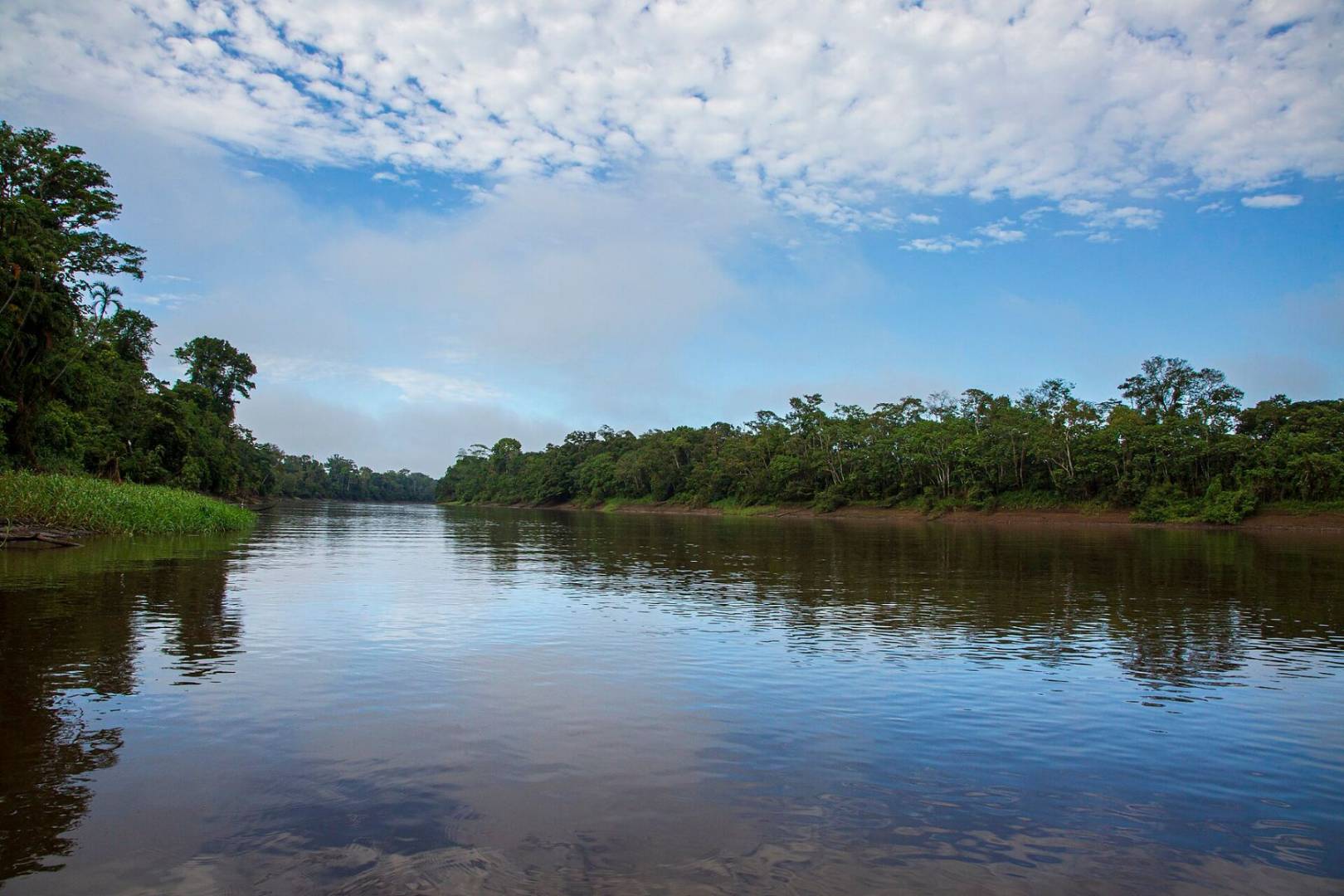
- Pacaya Samiria National Reserve, in the Peruvian Amazon. Techylm · CC BY-SA 4.0
- Molecule drawings APDER
- Chacruna (Psychotria viridis), the leaf that provides the DMT. Anthony Baratier · CC BY-SA 4.0
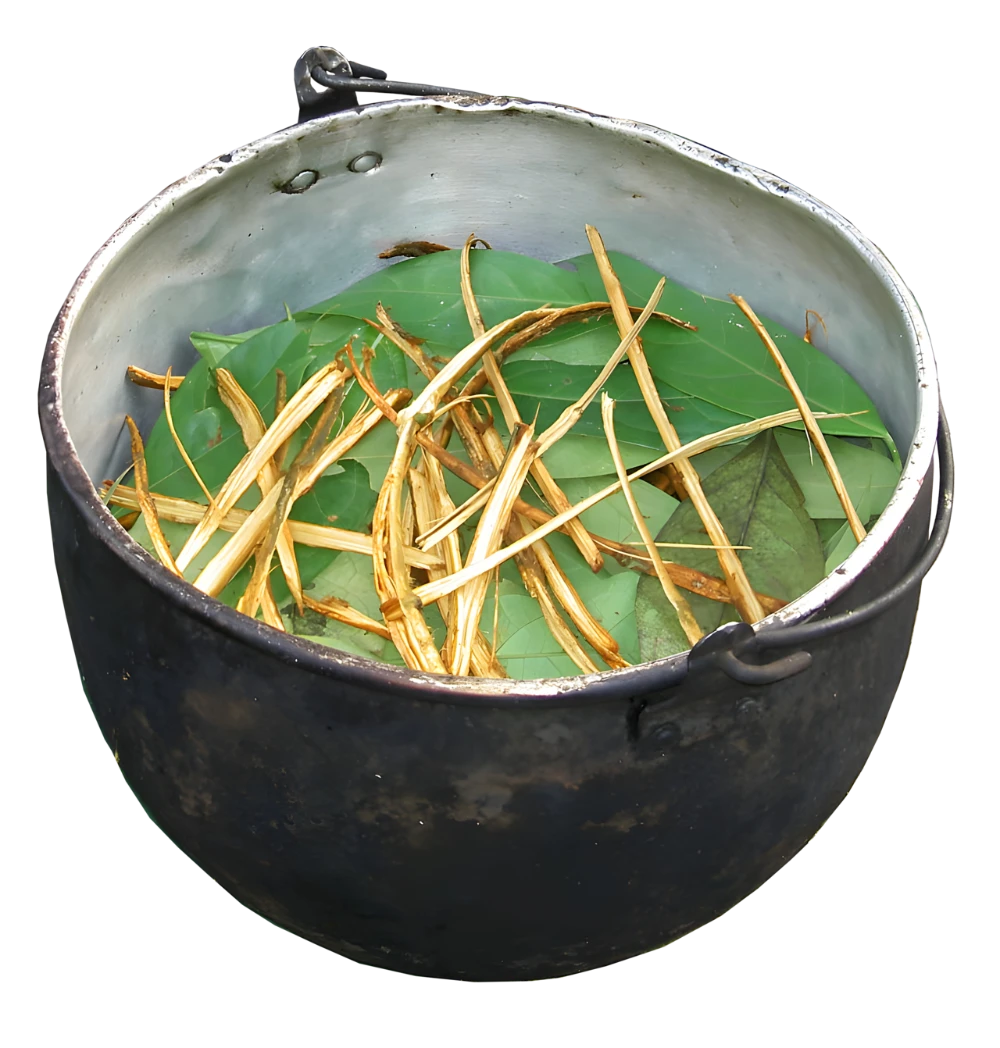
- Crushed liana and leaves before brewing. Pastaza, Ecuador. Rune Engelbreth Larsen, from a photo by Terpsichore · CC0
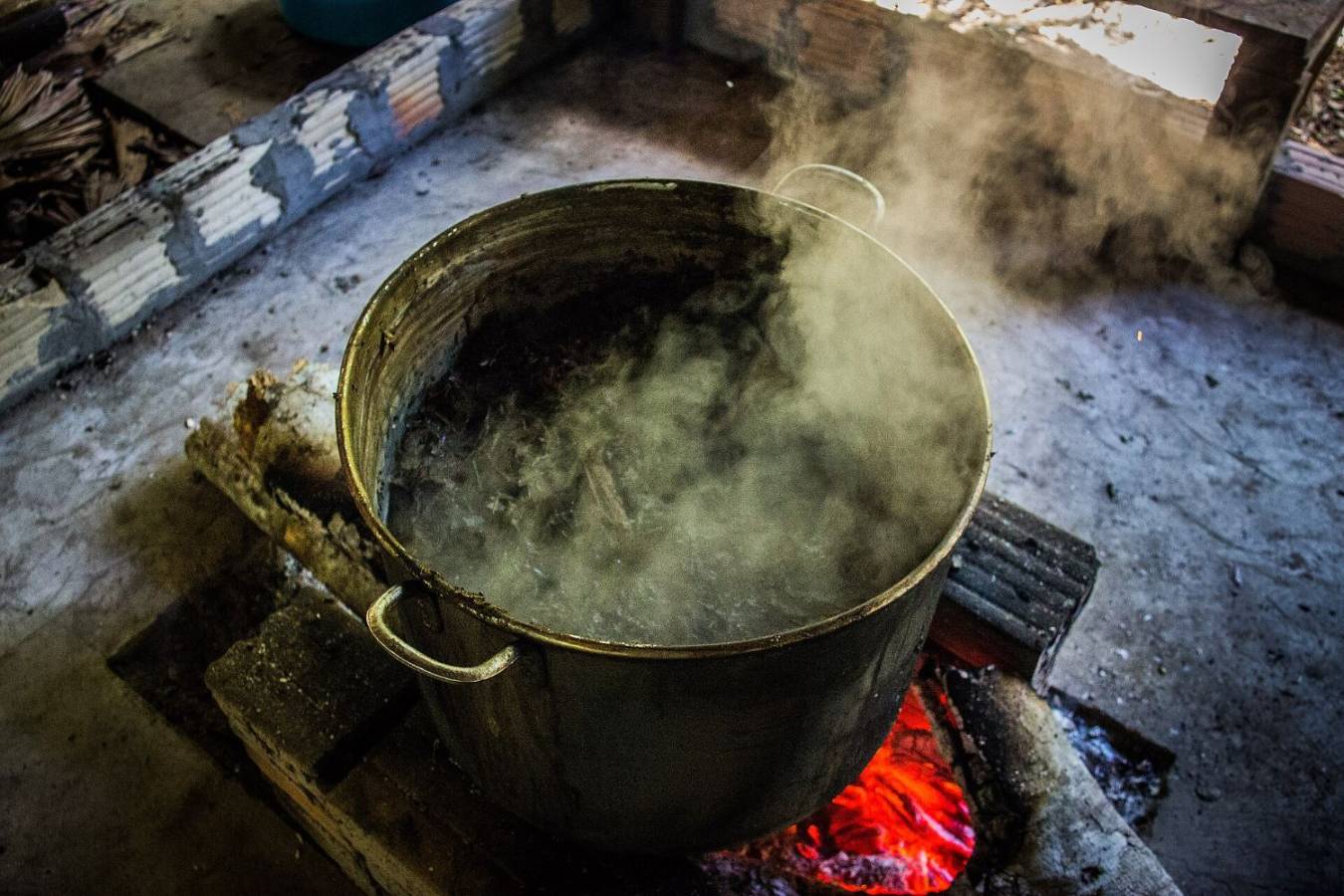
- The brewing takes hours. Iquitos, Peru. Apollo · CC BY 2.0
- Living stem of the liana. Jaime Torres / Archivo Centro Takiwasi · CC BY-SA 4.0
Last reviewed: 23 November 2026. If you spot a mistake, write to us at info@apder.org.