

Contents
- In brief
- What it is and where it comes from
- How it works
- The experience
- Dose
- Interactions
- Who should not take it
- How to reduce risks
- If something goes wrong
- Research and therapeutic use
- Integration and personal growth
- Ethics and sustainability
- Myths and facts
- History
- Frequently asked questions
- Further reading and related guides
- References
In brief
- What it is. The seed of the tree Theobroma cacao. In ceremonies, a thick drink of pure cacao paste is taken, with much more cacao than a cup of hot chocolate.
- What it does. A mild stimulant effect from theobromine and caffeine, which influence mood and alertness. It is not a psychedelic.12
- The main risk. Low in healthy adults. With a large amount, insomnia, nervousness or palpitations; take more care in pregnancy, in childhood and with heart problems.3
- The most dangerous interaction. Adding it to other stimulants and sources of caffeine. With MAOI antidepressants, consult whoever prescribes them beforehand.34
- Ethics. A good part of the world's cacao comes from plantations that use child labour: origin matters.5
What it is and where it comes from
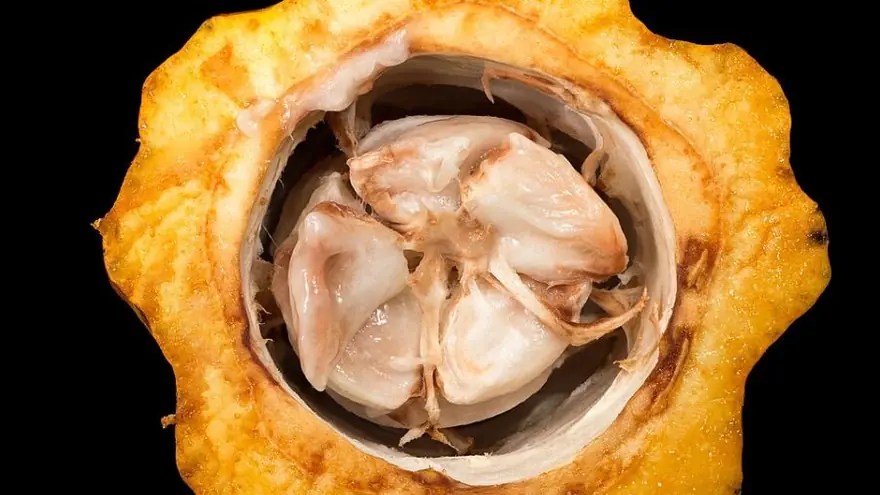
Cacao is the seed of the tree Theobroma cacao, whose scientific name means “food of the gods”. In cacao ceremonies a thick drink made from pure cacao paste is taken, in much larger quantity than a cup of hot chocolate. It is not a psychedelic: its effect is mild, stimulating and opens the emotions, and its value lies above all in the ritual.
Active compounds
- Theobromine (3,7-dimethylxanthine): the main stimulant. Cacao contains 3 to 10 times more theobromine than caffeine.6
- Caffeine, in smaller amounts.
- Flavanols, antioxidants linked to its effects on the blood vessels.7
- Other substances, such as phenylethylamine, whose role in the effect has not been demonstrated.2
How much it contains
Cocoa powder has about 28.5 mg of methylxanthines (theobromine and caffeine) per gram, and dark chocolate about 5.5 mg.6 One study estimated that 50 g of dark chocolate provide about 250 mg of theobromine and 19 mg of caffeine.1 Ceremonial cacao paste, having no sugar or milk, is more concentrated.
Ceremonial and culinary
So-called ceremonial cacao is usually whole cacao paste, with the cocoa butter not separated, dissolved in hot water, sometimes with spices. Bar chocolate contains added sugar, milk or fat and less cacao per gram. The difference lies in the quantity and the context, not in a different substance.
How it works
Theobromine and caffeine are methylxanthines. They act in two ways:1
- They block adenosine receptors, adenosine being a substance in the brain that gives a feeling of tiredness. Hence the alertness and energy.
- They inhibit phosphodiesterases, enzymes that regulate signals inside cells.
Theobromine is a milder stimulant than caffeine, with different effects and fewer unwanted ones.1 One study concluded that methylxanthines are the psychopharmacologically active components of chocolate.2
Why it lasts. The half-life of theobromine in healthy volunteers is about 10 hours, longer than that of caffeine.1 That is why it can keep you awake even if it was taken in the afternoon.
Blood vessels. The flavanols in cacao slightly lower blood pressure.7 The sensation of warmth that many people describe is usually attributed to this effect on the vessels.
Tolerance and dependence. No dependence on theobromine has been described. Someone who drinks a lot of coffee will have some tolerance to caffeine.
The experience
ExperienceIn a ceremony, the drink is usually taken slowly, with an intention, music, silence or meditation. People who take it describe gentle, sustained energy, warmth in the body, a lifted mood and a sense of openness. Much of what is experienced comes from the ritual and the group, rather than from the substance.
Phases over time
- First hour. Warmth, energy, more attention.
- The following hours. A sustained effect of 2 to 4 hours.
- Afterwards. Theobromine takes time to be eliminated: it may be hard to sleep.13
Physical effects
- Gentle, sustained energy, without the jitteriness of coffee.
- A feeling of warmth from the widening of the blood vessels.
- With a large amount: palpitations, headache, nausea or insomnia.
Mental effects
- A lifted mood and a sense of openness.
- More alert.1
Challenging experiences
They are rare and almost always physical: nervousness, an upset stomach or difficulty sleeping. Sometimes what is difficult is emotional and comes from the group work, not from the cacao.
Dose
There is no studied dose for ceremonial cacao. What has been assessed is caffeine, which cacao provides together with theobromine. According to the European Food Safety Authority (EFSA):3
| Group | Caffeine from all sources without safety concerns |
|---|---|
| Healthy adults | Up to 200 mg at one time and 400 mg a day |
| Pregnancy and breastfeeding | Up to 200 mg a day |
| Children and adolescents | 3 mg per kilo of body weight a day |
Doses of 100 mg can affect sleep in some people if taken close to bedtime.3 EFSA did not assess theobromine; its profile in people is milder.1
What changes the effect
- The amount of cacao and whether it is pure paste or chocolate.
- The origin and processing, which change the theobromine and caffeine content.
- Other sources of caffeine that day: coffee, tea, energy drinks.
- The time: in the afternoon or at night, more insomnia.
The theobromine and caffeine content of each cacao is unknown to the person taking it. Doses and interactions pending expert review.
Interactions
| Combination | Risk | What can happen |
|---|---|---|
| Stimulants (cocaine, amphetamines, MDMA) and energy drinks | Caution | They add stimulation: faster pulse, nervousness and insomnia. Caffeine counts from all sources.3 |
| MAOI antidepressants | Caution | There are no solid data on cacao. The tranylcypromine data sheet asks to avoid foods rich in tyramine and does not mention chocolate. Consult whoever prescribes it.4 |
| SSRI and SNRI antidepressants, lithium, tramadol | Caution | No studies with cacao. If you are going to take a large amount, tell whoever prescribes them. |
| Heart and blood pressure medication | Caution | Cacao lowers blood pressure somewhat and methylxanthines are stimulants; with high amounts, it is better to consult.71 |
| Psychedelics (mushrooms, ayahuasca) in the same ceremony | Caution | No studies. It adds stimulation and may increase restlessness. See the guide to each substance. |
| Cannabis | Caution | No studies. Both raise the pulse.8 |
| Coffee, tea, mate | Low known risk | They add to the day's caffeine; bear in mind the EFSA limits.3 |
| Alcohol | Low known risk | According to EFSA, moderate alcohol consumption does not change the safety of 200 mg of caffeine and, at those levels, caffeine does not mask drunkenness.3 |
Who should not take it
- Pregnancy and breastfeeding: keep it moderate because of the theobromine and caffeine. EFSA sets the caffeine limit at 200 mg a day, adding up all sources.3
- Children and adolescents: 3 mg of caffeine per kilo of body weight a day at most.3
- Heart: take care with hypertension, arrhythmias or heart disease if high amounts are taken.
- Anxiety or insomnia: the stimulation may make them worse.3
- MAOI antidepressants: consult beforehand (see the table).4
- Mental health: cacao has no known psychiatric risks, but ceremonies can stir up intense emotions. If you are in a crisis, consider whether it is the right time.
- Driving: wait until you are rested if the ceremony has been long or if other substances have been taken.
- Animals: theobromine is toxic to dogs. About 20 mg of methylxanthines per kilo already cause vomiting and diarrhoea, and from 40-60 mg per kilo, heart problems and seizures.6 Keep cacao out of their reach.
How to reduce risks
Before
- Ask yourself what you are going for. A ceremony can be a space of calm and meeting; it is not a treatment.
- Count the day's caffeine, especially if you are pregnant or take other stimulants.3
- Find out about who is leading: what they propose, what experience they have and whether they ask about your health and medication.
- Review your medication if you take MAOIs or heart medication.
During
- Drink slowly and do not take more out of obligation.
- Drink water.
- If other substances are offered in the same ceremony, ask what they are and do not accept what you do not know.
Afterwards
- If the ceremony is in the afternoon, expect to sleep worse.3
- Give yourself time for whatever has arisen before making decisions.
Testing the substance
Cacao is a food and is not usually adulterated with dangerous substances. If you have doubts about what is served in a ceremony, especially if it is mixed with other plants, the Energy Control testing service explains how to send samples.9
Warning signs specific to cacao
They are rare. Strong palpitations, chest pain or fainting, especially with other stimulants, call for medical attention. If a dog has eaten cacao or chocolate, call the vet without waiting for symptoms.6
If something goes wrong
Call 112 if the person:
- does not respond or has lost consciousness;
- has seizures;
- has difficulty breathing or chest pain;
- is very hot, with dry or red skin, or is confused;
- is so agitated that they may hurt themselves or others;
- talks about harming themselves or taking their own life.
112 is free and operates throughout the European Union. Asking for help in time matters more than fear of the consequences.
While help is on its way
- Do not leave the person alone.
- If they are unconscious but breathing, put them on their side, in the recovery position.
- Find a quiet, cool, dimly lit place.
- Do not give them any more substances, or other ones to ‘counteract’ the effect.
- If they are conscious, give water in sips; drinking a lot of water at once is also dangerous.
What to tell the health staff
What they have taken, how much, when, whether they have mixed it with anything and what medication they take regularly. If any remains or the packaging, take it with you. Telling the truth helps the person to be treated properly. For questions about a poisoning, the Toxicology Information Service is available 24 hours a day on 91 562 04 20.
If it is a challenging experience, with no physical warning signs
Support them with presence and a calm voice. Remind the person that what they feel is the effect of the substance and that it will pass. If it does not ease or a risk appears, ask for help. If someone has thoughts of harming themselves, the Ministry of Health’s 024 Line is free, open 24 hours a day and confidential.
Before taking anything
Testing a substance is the only way to know what it contains. In Spain this is done by Energy Control, with offices in Andalusia, Catalonia, Madrid and Mallorca and a postal service from other regions. Also read the interactions section of each guide.
Research and therapeutic use
Research- Blood pressure. A Cochrane review of 35 trials with 1,804 adults, almost all healthy, found that flavanol-rich cacao lowers blood pressure by about 1.8 mmHg on average, in trials lasting 2 to 18 weeks. The quality of the evidence is moderate. There was digestive discomfort in 1% of those who took cacao.7
- Mood and alertness. The methylxanthines in cacao have a positive influence on mood and alertness.12
- Cholesterol. In trials with cacao, HDL cholesterol rises and LDL falls; one trial points to theobromine as responsible for the rise in HDL.1
Limits. These studies use cacao or extracts in measured amounts, not ceremonies. There are no trials on the emotional effects of “ceremonial cacao” or on the “opening of the heart” that is often attributed to it.
Regulated accessCacao is a food. As of 21 November 2026 we are not aware of any cacao medicine authorised in Spain. Cacao ceremonies are not healthcare treatments.
Integration and personal growth
InterpretationWhat follows is a view from humanistic and transpersonal psychology, not a clinical finding. With cacao, the pharmacological effect is mild; what weighs most is the context: the intention, the group, the silence, the music. From Gestalt, what is valuable is contact with what is present: what the body feels, what emotion appears, what need becomes visible. Carl Rogers spoke of a climate of acceptance that allows the person to listen to themselves.
Integrating is carrying that into everyday life: writing down what arose, talking about it with someone you trust, noticing what small change it asks for. There is no need to attribute everything to the cacao; often the value lies in having given yourself a space.
Ask for professional support if memories or emotions appear in a ceremony that overwhelm you and do not settle in the following days, or if you notice persistent anxiety, insomnia or sadness. Look for someone with healthcare training who listens without judging.
Ethics and sustainability
Child labour. Côte d'Ivoire and Ghana produce almost 60% of the world's cacao. In the 2018-2019 season, almost 1.5 million children were doing hazardous work on their plantations.5
Traditions. Cacao has a central role in Mesoamerican and Amazonian cultures. Today's ceremonies mix elements of those traditions with modern practices. Distinguishing the traditional from the contemporary, and not presenting as “ancestral” what is new, is a basic form of respect.
What helps. Preferring cacao of traceable origin, with verified working conditions, fair pay to those who grow it and cultivation that respects the forest.
Myths and facts
- “Ceremonial cacao is a psychedelic plant.”
- Its active components are methylxanthines, mild stimulants like caffeine.21
- “Chocolate gets you high through phenylethylamine or anandamide.”
- One study concluded that methylxanthines are the psychopharmacologically active components of chocolate.2
- “It's medicine for high blood pressure.”
- It lowers blood pressure, but only by about 1.8 mmHg on average: it does not replace a treatment.7
- “The purer it is, the more harmless.”
- Pure cacao concentrates more theobromine and caffeine than chocolate.6
- “A little chocolate won't do the dog any harm.”
- Symptoms appear from about 20 mg of methylxanthines per kilo, and cocoa powder is the most concentrated.6
History
- About 5,300 years ago. At Santa Ana-La Florida, in south-eastern Ecuador, the Mayo-Chinchipe culture was already using cacao: it is the oldest known trace, and places the origin of its domestication in the upper Amazon.10
- Around 1100 BCE. At Puerto Escondido (Honduras), cacao drinks, probably fermented, were drunk.11
- Mesoamerica. The Olmecs, Maya and Mexica cultivated cacao and drank it in ceremonies, weddings and offerings; its seeds served as currency.
- 16th century. The Spanish took it to Europe, where it was sweetened and became chocolate.
- Today. Cacao ceremonies, widespread in wellness circles, mix Mesoamerican elements with modern practices.
Frequently asked questions
Is ceremonial cacao a psychedelic?
No. Its active components are theobromine and caffeine, mild stimulants. Its value lies above all in the ritual.
How does it differ from chocolate?
It is pure cacao paste, without sugar or milk, and is taken in much larger quantity than a cup of hot chocolate. That is why it has more theobromine and caffeine.
How long does the effect last?
It is felt for about 2 to 4 hours, but theobromine takes time to be eliminated, with a half-life of about 10 hours: it may be hard to sleep.
Can I take it if I take antidepressants?
With MAOIs, consult whoever prescribes them beforehand. With other antidepressants there are no studies; if you are going to take a large amount, mention it.
Can it be taken during pregnancy or breastfeeding?
In moderation. EFSA recommends not exceeding 200 mg of caffeine a day from all sources in pregnancy and breastfeeding.
Is it dangerous for dogs?
Yes. Theobromine is toxic to dogs and pure cacao is the most concentrated. If a dog has eaten it, call the vet.
How do I know if the cacao is ethical?
Look for traceable origin and verified working conditions. Child labour is still present in the world's cacao production.
Further reading and related guides
Books from the APDER Library:
- Historia general de las drogas, Antonio Escohotado, 1989. In Spanish.
- Plantas de los dioses, Richard Evans Schultes and Albert Hofmann, 1979. With a Spanish edition.
- From Chocolate to Morphine, Andrew Weil and Winifred Rosen, 1983. In English.
References
- Martínez-Pinilla E, Oñatibia-Astibia A, Franco R. The relevance of theobromine for the beneficial effects of cocoa consumption. Front Pharmacol. 2015;6:30. doi:10.3389/fphar.2015.00030.
- Smit HJ, Gaffan EA, Rogers PJ. Methylxanthines are the psycho-pharmacologically active constituents of chocolate. Psychopharmacology. 2004;176:412-419. doi:10.1007/s00213-004-1898-3.
- European Food Safety Authority (EFSA). EFSA explains risk assessment: caffeine. 2015 (scientific opinion published on 27 May 2015). efsa.europa.eu; summary: efsa.europa.eu/en/topics/topic/caffeine.
- AEMPS. Ficha técnica de Tranilcipromina Aristo 10 mg comprimidos recubiertos con película (registration no. 88523), sections 4.4 and 4.5. CIMA. cima.aemps.es.
- NORC at the University of Chicago. Child labor grows in certain areas of cocoa production. November 2020. norc.org.
- Hayes C. Chocolate toxicosis in animals. Merck Veterinary Manual, professional version. Reviewed September 2024. merckvetmanual.com.
- Ried K, Fakler P, Stocks NP. Effect of cocoa on blood pressure. Cochrane Database Syst Rev. 2017;(4):CD008893. doi:10.1002/14651858.CD008893.pub3.
- Health Canada. Health effects of cannabis. Modified 25 March 2024. canada.ca.
- Energy Control. Substance testing service. energycontrol.org.
- Zarrillo S, Gaikwad N, Lanaud C, et al. The use and domestication of Theobroma cacao during the mid-Holocene in the upper Amazon. Nat Ecol Evol. 2018;2:1879-1888. Record: agritrop.cirad.fr.
- Henderson JS, Joyce RA, Hall GR, Hurst WJ, McGovern PE. Chemical and archaeological evidence for the earliest cacao beverages. Proc Natl Acad Sci U S A. 2007. PMCID: PMC2141886.
Last reviewed: 21 November 2026. Doses and interactions pending expert review.
Before you read on. This information is for general education. We prepare it carefully from scientific and harm reduction sources, but it may contain errors or become out of date. It is not medical advice and does not replace a health professional, especially if you take medication or have a health problem. APDER does not encourage the use of any substance and accepts no responsibility for how this information is used. If you spot an error, write to us at info@apder.org.
Canonical address: https://apder.org/sustancias/cacao/