

Contents
- In brief
- What it is and where it comes from
- How it works
- The experience
- Dose
- Interactions
- Who should not take it
- How to reduce risks
- If something goes wrong
- Research and therapeutic use
- Integration and personal growth
- Myths and facts
- History
- Frequently asked questions
- Further reading and related guides
- References
In brief
- What it is. The main alkaloid of the iboga root, sacred in the bwiti tradition of Central Africa.
- What it does. A long, dream-like experience, with a review of memories, followed by one to three days of residual effects.
- The main risk. The heart: it lengthens the QT interval and can cause fatal arrhythmias, including in the days afterwards.1,2
- The most dangerous interaction. Opioids (risk of overdose after the session) and any medicine that lengthens the QT.
- Therapeutic use. Promising observational studies in opioid addiction and one in veterans with brain injury; no placebo-controlled trial.3,4,5
What it is and where it comes from
Ibogaine is the main alkaloid of the root of iboga (Tabernanthe iboga), a shrub from Central Africa. In Gabon and Cameroon it is used in the initiation rites of the bwiti tradition.
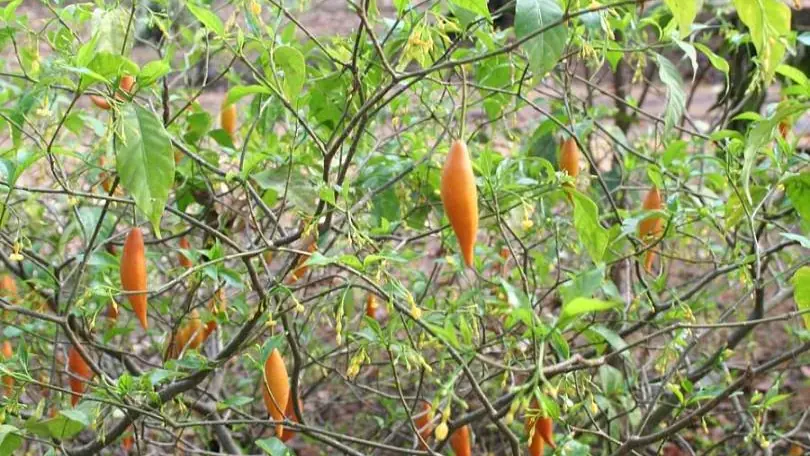
In the West it is known because many people with opioid addiction report that a single session removed their withdrawal syndrome and their desire to use. At the same time, it is one of the substances on this list with the greatest physical risk: it can cause fatal cardiac arrhythmias.1,2
| Type | Oneirogen (indole alkaloid) |
|---|---|
| Main action | Highly complex: NMDA receptors, kappa opioid receptors, serotonin transporter; its metabolite noribogaine lasts for days |
| Route | Oral (root, extract or ibogaine hydrochloride) |
| Starts to be noticed | At 1–3 hours |
| Total duration | 24–36 hours, with residual effects for several days |
| Addictive potential | Low |
It is taken by mouth in three very different forms: the dried root bark, as in the bwiti tradition; an extract with several alkaloids; or ibogaine hydrochloride, a purified powder. The amount of ibogaine in the root and in extracts varies greatly, which makes the effect on the heart even harder to predict.
How it works
Ibogaine does not act like the classic psychedelics. It touches many systems at once: it blocks the NMDA receptor (like ketamine), acts on the kappa and mu opioid receptors, and inhibits the transporter that takes up serotonin. The liver converts it into noribogaine, which stays in the body for several days.2
Why it affects the heart. Ibogaine and noribogaine block certain potassium channels (hERG) that the heart needs in order to recover between beats. This lengthens the QT interval on the electrocardiogram and can trigger serious arrhythmias. Because noribogaine lasts for days, the risk does not end when the experience does.2
Why it is of interest in addiction. Its action on opioid receptors and other systems is thought to explain the reduction in opioid withdrawal that many people describe, although the mechanism is not clear.3,5
Why it lasts so long. The intense phase lasts hours, but noribogaine prolongs the residual effects — tiredness, insomnia, sensitivity to light — for one to three days.
The experience
ExperienceThe ibogaine experience is long, physical and not at all recreational. Many people describe it as a review of their own life.
- Acute phase (4–8 h). Dream-like visions, often reviewing memories of one’s own life as if they were a film. Nausea, dizziness, great difficulty moving.
- Evaluation phase (8–20 h). The visions fade; what remains is a state of intense reflection on what was lived.
- Residual phase (1–3 days). Tiredness, insomnia and sensitivity to light and noise.
Effects
- Dream-like visions and biographical memories.
- Ataxia: great difficulty coordinating movements.
- Nausea and vomiting.
- Changes in heart rhythm (prolongation of the QT interval).
- In people dependent on opioids, a marked reduction in withdrawal.
Challenging experiences
What is hard here is usually not only psychological: the person can barely move, vomits and goes many hours without sleep. They may relive painful memories with great clarity. For that reason they need to be in a safe place, lying down, with someone beside them throughout the session and with medical monitoring of the heart.
Dose
We do not give dose figures for personal use. In clinical settings the dose is calculated by weight, after an electrocardiogram and tests, with continuous cardiac monitoring and staff able to treat an arrhythmia. Outside that framework the risk is too high.
Interactions
Ibogaine has serious interactions, above all with anything that affects the heart and with opioids. Listed from most to least dangerous:
| Combination | Risk | What can happen |
|---|---|---|
| Opioids (including methadone and fentanyl) | Very dangerous | Ibogaine increases sensitivity to opioids; using afterwards can cause an overdose. Methadone and other long-acting opioids complicate the process a great deal. |
| Medicines that lengthen the QT (some antipsychotics, antibiotics, antiarrhythmics) | Very dangerous | Their effect on the QT adds up: serious arrhythmias.2 |
| Stimulants (cocaine, amphetamines) | Very dangerous | Extreme cardiac load on a heart that is already affected. |
| SSRI antidepressants | Dangerous | Cardiac and serotonergic interactions. |
| Alcohol, benzodiazepines | Dangerous | Withdrawal and sedation that complicate the session. Alcohol also lengthens the QT.2 |
This table is not exhaustive. Any medication must be reviewed by a doctor beforehand.
Who should not take it
- Heart: any heart disease, arrhythmia, long QT (one’s own or in the family), unexplained fainting or sudden death in young relatives. This is the most important contraindication.2
- Low potassium or magnesium, for example from vomiting, diarrhoea, diuretics or eating disorders: they increase the risk of arrhythmia.2
- Liver: liver disease, which changes how it is eliminated.
- Mental health: psychosis or bipolar disorder, one’s own or in the family.
- Dependence on alcohol or benzodiazepines: their withdrawal can cause seizures and complicate the session.
- Methadone or other long-acting opioids: they require a specific medical plan.
- Pregnancy and breastfeeding: it must not be taken.
- Medication: any drug that lengthens the QT, antidepressants and stimulants; see the interactions table.
How to reduce risks
APDER does not encourage use and, in the case of ibogaine, clearly advises against any use without medical supervision. If someone is considering it, this reduces the risks, although it does not eliminate them.
Before
- Only with real medical supervision: electrocardiogram, blood tests including potassium and magnesium, a review of all medication and an assessment of the liver.2
- Ask the clinic whether there will be continuous cardiac monitoring, whether there is staff able to treat an arrhythmia, whether they have a defibrillator and how they would transfer you to a hospital.
- Tell them everything: what you use, when you last used and what medication you take, including what seems unimportant.
During
- Lying down, without getting up alone: the lack of coordination causes falls.
- Nothing else: no other substances or medicines unless the medical team decides so.
Afterwards
- Monitoring of the heart for days, not only during the experience: noribogaine is still acting.2
- Extreme care with opioids. After ibogaine, tolerance drops: the amount you used before can cause a fatal overdose. Keep naloxone to hand if there is a risk of relapse.
- Continued support. Without a plan afterwards, relapses are frequent.3
The risk specific to ibogaine: the heart
A review of deaths associated with ibogaine between 1990 and 2008 found that most involved previous heart problems, mixtures with other substances, or both.1 If palpitations, intense dizziness, fainting, chest pain or seizures appear during or in the days after, call 112 and say that the person has taken ibogaine.
Ethics: iboga and ibogaine
Iboga is a sacred plant of the bwiti tradition, which grows slowly in the forests of Central Africa. International demand increases the pressure on wild plants and raises questions about the benefit to the communities that have cared for it. Ibogaine can also be obtained from other plants, such as Voacanga africana, or by synthesis.
If something goes wrong
Call 112 if the person:
- does not respond or has lost consciousness;
- has seizures;
- has difficulty breathing or chest pain;
- is very hot, with dry or red skin, or is confused;
- is so agitated that they may hurt themselves or others;
- talks about harming themselves or taking their own life.
112 is free and operates throughout the European Union. Asking for help in time matters more than fear of the consequences.
While help is on its way
- Do not leave the person alone.
- If they are unconscious but breathing, put them on their side, in the recovery position.
- Find a quiet, cool, dimly lit place.
- Do not give them any more substances, or other ones to ‘counteract’ the effect.
- If they are conscious, give water in sips; drinking a lot of water at once is also dangerous.
What to tell the health staff
What they have taken, how much, when, whether they have mixed it with anything and what medication they take regularly. If any remains or the packaging, take it with you. Telling the truth helps the person to be treated properly. For questions about a poisoning, the Toxicology Information Service is available 24 hours a day on 91 562 04 20.
If it is a challenging experience, with no physical warning signs
Support them with presence and a calm voice. Remind the person that what they feel is the effect of the substance and that it will pass. If it does not ease or a risk appears, ask for help. If someone has thoughts of harming themselves, the Ministry of Health’s 024 Line is free, open 24 hours a day and confidential.
Before taking anything
Testing a substance is the only way to know what it contains. In Spain this is done by Energy Control, with offices in Andalusia, Catalonia, Madrid and Mallorca and a postal service from other regions. Also read the interactions section of each guide.
Research and therapeutic use
ResearchIn 1962, Howard Lotsof, then dependent on heroin, took ibogaine and noticed that his desire to use had disappeared. Since then its effect on addictions has been studied, above all in observational studies in Mexico and New Zealand.3,5
Opioids (observational studies). In Mexico, 30 people with opioid dependence treated at a clinic described less withdrawal and less use in the following months.5 In New Zealand 14 people were treated; the 8 who completed the one-year follow-up were using considerably less than at the start.3 There was no comparison group.
In 2024, a study from Stanford University with 30 war veterans with traumatic brain injury found significant improvements in disability, depression and anxiety after a treatment with ibogaine and magnesium, without serious cardiac effects.4 Placebo-controlled trials are still lacking.
Limits. There are no placebo-controlled trials of ibogaine in addiction. The studies are small and carried out in clinics that select their patients. The benefits described should always be set beside the cardiac risk.1,2
Regulated accessAs of 23 November 2026, no medicine containing ibogaine is authorised in Spain. There is no treatment with ibogaine within the health system in Spain.
What a therapeutic process is like, step by step, is explained in Ibogaine therapy.
Integration and personal growth
InterpretationWhat follows is a view from humanistic and transpersonal psychology, not a laboratory finding. In the bwiti tradition, iboga is taken in order to ‘see’ one’s own life and to find one’s place in the community and among the ancestors. Many people in treatment describe something similar: a review of their biography that allows them to understand where their use comes from.
That understanding is a beginning, not an end. From Carl Rogers’s person-centred approach, what sustains change is a relationship of acceptance in which the person can keep choosing; from Gestalt, attending to what remains open and asks to be closed. In addiction, integration includes very concrete things: somewhere to live, people to talk to, therapeutic support that continues for months.
Myths and facts
- ‘Ibogaine cures addiction in one session’
- It can reduce withdrawal and open an opportunity for change, but without support afterwards relapses are frequent.3
- ‘If it is a traditional plant, it is safe’
- It is one of the substances on this list with the greatest physical risk: it can cause fatal arrhythmias.1,2
- ‘When the journey is over, the risk is over’
- Noribogaine stays in the body for several days and maintains the effect on the heart.2
- ‘After ibogaine you can go back to using as before’
- After the session, tolerance to opioids drops: using the amount you used before can be fatal.
- ‘It is a psychedelic like the others’
- Its experience, its physical effects and its risks are very different from those of psilocybin or LSD.
History
- Centuries of use in the bwiti tradition of Gabon, in rites of initiation and healing.
- 1901. Ibogaine is isolated from the root.
- 1939–1966. In France an extract of a related plant is sold as a stimulant, under the name Lambarène.
- 1962. Howard Lotsof discovers its effect on opioid addiction.
- From the 1990s onwards. Clinics appear in Mexico, Europe and elsewhere.
- 2024. A Stanford study with veterans with brain injury combines ibogaine and magnesium to protect the heart.4
Frequently asked questions
Does ibogaine cure addiction?
It can interrupt withdrawal and give an opportunity for change, but it is not a cure on its own. Without support afterwards, relapses are frequent, and relapsing after the session is especially dangerous.
Why is it dangerous for the heart?
It lengthens the QT interval, a part of the heart’s electrical rhythm, which can trigger fatal arrhythmias. Its metabolite stays in the body for several days.
What should a serious clinic do?
An electrocardiogram and tests beforehand (including potassium and magnesium), a review of all medication, continuous cardiac monitoring, medical staff able to treat an arrhythmia and a plan of support afterwards.
Can it be taken at home?
No. Because of the risk of fatal arrhythmias, only with an electrocardiogram and tests beforehand, cardiac monitoring and staff able to handle an emergency.
What happens if I use opioids again afterwards?
Tolerance drops after the session: the amount you used before can cause a fatal overdose. If there is a risk of relapse, it is advisable to keep naloxone to hand and to have close support.
Further reading and related guides
- Howard S. Lotsof and Boaz H. Wachtel, Manual for Ibogaine Therapy: Screening, Safety, and Treatment (in English). In the Library.
- Kenneth R. Alper and Stanley D. Glick (eds.), Ibogaine (2001, in English). In the Library.
- Vincent Ravalec, Mallendi and Agnès Paicheler, Iboga: The Visionary Root of African Shamanism (in English). In the Library.
- José Carlos Bouso, Medicina psiquedélica: manual para pacientes, clínicos, usuarios y curiosos (2025). In the Library.
References
- Alper KR, Stajić M, Gill JR. Fatalities temporally associated with the ingestion of ibogaine. J Forensic Sci. 2012;57(2):398-412. doi:10.1111/j.1556-4029.2011.02008.x.
- Koenig X, Hilber K. The anti-addiction drug ibogaine and the heart: a delicate relation. Molecules. 2015;20(2):2208-2228. doi:10.3390/molecules20022208. PMID 25642835.
- Noller GE, Frampton CM, Yazar-Klosinski B. Ibogaine treatment outcomes for opioid dependence from a twelve-month follow-up observational study. Am J Drug Alcohol Abuse. 2018;44(1):37-46. doi:10.1080/00952990.2017.1310218.
- Cherian KN, Keynan JN, Anker L, et al. Magnesium–ibogaine therapy in veterans with traumatic brain injuries. Nat Med. 2024;30(2):373-381. doi:10.1038/s41591-023-02705-w.
- Brown TK, Alper K. Treatment of opioid use disorder with ibogaine: detoxification and drug use outcomes. Am J Drug Alcohol Abuse. 2018;44(1):24-36. doi:10.1080/00952990.2017.1320802.
Last reviewed: 23 November 2026. Doses and interactions pending expert review.
Before you read on. This information is for general education. We prepare it carefully from scientific and harm reduction sources, but it may contain errors or become out of date. It is not medical advice and does not replace a health professional, especially if you take medication or have a health problem. APDER does not encourage the use of any substance and accepts no responsibility for how this information is used. If you spot an error, write to us at info@apder.org.
Canonical address: https://apder.org/sustancias/ibogaina/