

Preparation · Ritual drink · North-east Brazil
Jurema wine
Mimosa tenuiflora (jurema preta) (Willd.) Poir.
Jurema wine (vinho da jurema, ajucá) is a ritual drink from north-east Brazil, made from jurema preta, a tree native to the semi-arid region. It is associated with Indigenous peoples, with catimbó and with the Jurema religions, and it is prepared in a closely guarded way, known only to those who have undergone baptism.123
Also calledvinho da jurema · ajucá · jurema sagrada (religion) · juremahuasca (variant with ayahuasca)
- What it is
- Ritual drink of the Jurema religions
- Territory
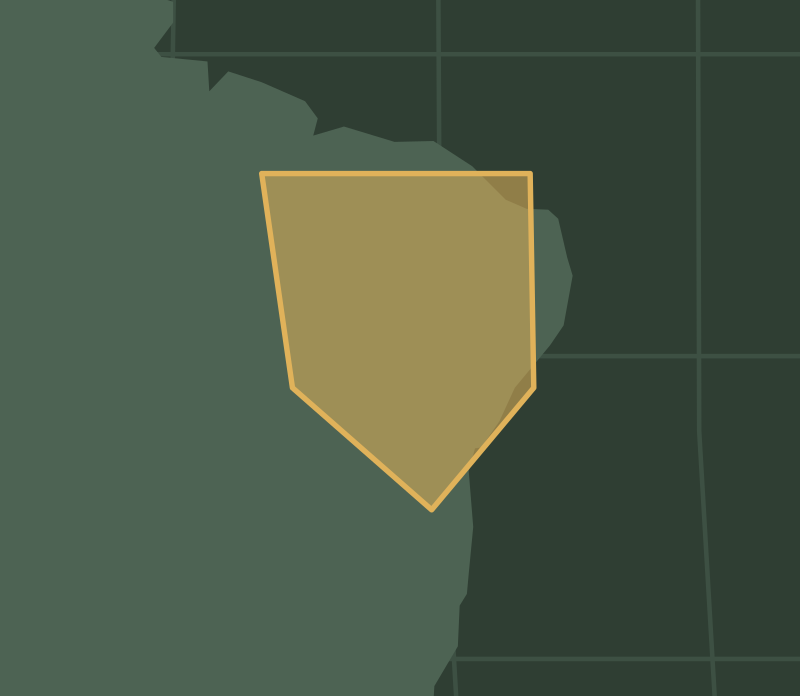
- North-east Brazil, semi-arid region
- Part used
- Jurema preta plant; guarded preparation
- Active principles
- DMT in the plant, according to the literature
- Onset and duration
- Not applicable
- Who keeps its memory
- Peoples of the north-east, catimbó, umbanda and Jurema Sagrada
The plant
Jurema preta
In Brazil, the name jurema refers to several plants, drinks and religious practices; among the trees, jurema preta (Mimosa tenuiflora) stands out, a plant native to the semi-arid north-east.4
It is a shrub or small tree of the Fabaceae family, with fern-like leaves, known in Mexico as tepezcohuite, whose natural range runs from north-east Brazil to southern Mexico.7
A Pankararé teacher explained that the wine is made only with jurema-de-caboclo, a thornless variety of jurema preta.8
An ethnopharmacobotanical study describes the wine of the Afro-Brazilian religions as prepared with Mimosa hostilis and M. tenuiflora, with psychoactive additives.5
Descriptive entry: it does not include preparation instructions, which the tradition keeps guarded.
- Family
- Fabaceae
- Common name
- Jurema preta
- Region
- North-east Brazil
- Other name
- Tepezcohuite (Mexico)
Memory and tradition
From Indigenous peoples to catimbó
Ritual use of jurema among Indigenous peoples of north-east Brazil has been recorded since the colonial period.4
That practice reappears in catimbó, a religious tradition linked to those rites, which umbanda took up in the mid-twentieth century, and in the recent Jurema Sagrada.14
According to a popular summary, the peoples cited as having used it include the Kariri, Tusha, Fulniô, Pankararu, Acroá, Guegue, Atanaye and Pimenteira.7
The first writings on its ritual use appear in the 1930s, with Mário de Andrade and the Folkloric Research Mission.6
In 1945, Roger Bastide described a catimbó ritual and confirmed its Indigenous origin; other authors see it as a confluence of Iberian witchcraft, Indigenous pharmacopoeia and Bantu rhythms.6
There are few early references, probably because of repression in the colonial period, and only those who have undergone baptism know how the wine is made.2
A recent article invites us to look beyond the psychoactive, towards the ritual mediations of its use.10
Over time
First records of ritual use among Indigenous peoples
First writings on jurema
Bastide describes a catimbó ritual
Its names
- vinho da jurema
- Portuguese
- ajucá
- Indigenous name
Territory and care
North-east Brazil
What helps
- Respect the guarded nature of the preparation.
- Acknowledge the peoples and communities who keep it.
- Cite Indigenous and Brazilian authors.
What it contains
DMT and other compounds
The literature regards the wine as an entheogen because of the presence of the indole alkaloid N,N-dimethyltryptamine (DMT).2
It is reported that Mimosa tenuiflora contains up to 1% DMT, and that in 2005 yuremamine was isolated, a phytoindole whose contribution to the effects is unknown.7
Knowing that jurema contains a lot of DMT, psychonauts outside Brazil have mixed it with another plant from the East in a drink called juremahuasca.1
The experience
Trance and the spiritual world
One study states that the wine fosters the trance of incorporation in umbanda and candomblé rituals dedicated to the entity Jurema.5
In catimbó, according to a literary analysis, the catimbozeiro master experiences a mystical state that includes a hallucinogenic dimension.9
Research
What has been studied
According to an interview, the Brain Institute in Natal explored DMT extracted from jurema preta for treatment-resistant depression.11
Anthropology has studied the Jurema religions, although until the 1990s they received little attention.6
Scope of these dataEthnographic and phytochemical studies; clinical research on jurema DMT is at an early stage.
With care
What it helps to know beforehand
To follow
Books and related medicines
Sources
Where each piece of information comes from
- Revista Brasileira (cejsh). Article on jurema and religious practices, 2020. cejsh.icm.edu.pl.
- Santos, N. A. Dissertation on the phytochemistry of the Mimosa known as jurema, Universidade de Brasília. repositorio.unb.br/bitstream/10482/54824/1/NayaraAlvesSantos_DISSERT.pdf.
- Article on jurema and religious practices (redalyc). redalyc.org/journal/2433/243364810019/243364810019.pdf.
- Article on jurema, 2020. cejsh.icm.edu.pl, abstract in Portuguese and English.
- Revista Nures 26, 2014. Contribuição ao estudo etnofarmacobotânico do vinho da jurema. revistas.pucsp.br/index.php/nures/article/download/24694/17574/64166.
- Universidade de São Paulo. Text on jurema. ea.fflch.usp.br/sites/ea.fflch.usp.br/files/inline-files/Jurema.pdf.
- Ethnoco. Mimosa tenuiflora (syn. hostilis) ~ Jurema. medium.com/ethnoco/mimosa-tenuiflora-syn-hostilis-jurema-98c532635b21.
- Chacruna. How Jurema helped the Pankararé people recover their land. chacruna.net/this-is-how-jurema-a-dmt-containing-tree-helped-the-pankarare-people-recover-their-land-in-brazil/.
- Moara, Universidade Federal do Pará. Article on jurema and catimbó. periodicos.ufpa.br/index.php/moara/article/download/21318/13559.
- Barreto, M. V. Para além da questão psicoativa. Revista Brasileira de História das Religiões, 2024. periodicoseletronicos.ufma.br.
- Chacruna. The Enchanted Science of Jurema. chacruna.net/?p=129611.
- Map APDER, with data from Natural Earth · public domain
- Molecule drawings APDER
Last reviewed: 24 November 2026. If you spot a mistake, write to us at info@apder.org.