

Plant · Fabaceae · Australia and other regions
Acacias
Acacia spp.
An enormous genus, some Australian species of which contain DMT and other alkaloids. It is a field where unsourced claims abound: it is worth separating what is confirmed from what is merely said.12
Also known asacacias · mimosas · wattle · Acacia maidenii · Acacia phlebophylla · Acacia obtusifolia
- What it is
- A genus of trees and shrubs with hundreds of species
- Territory
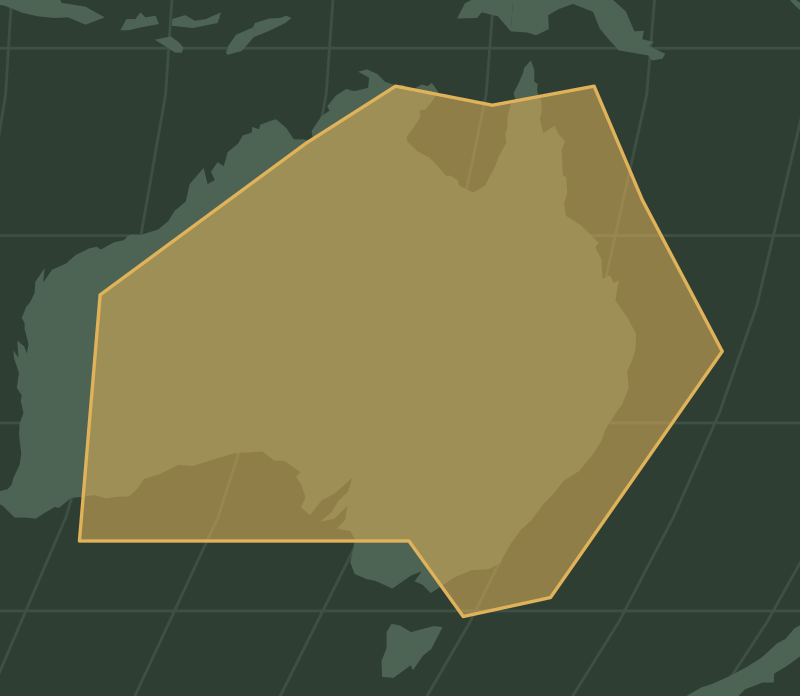
- Mainly Australia; also Africa and other regions
- Part used
- Bark and leaves, depending on the species
- Active principles
- Tryptamines such as DMT, beta-carbolines and others
- Onset and duration
- No reliable data outside studies
- Who keeps its memory
- Aboriginal peoples of Australia; little-documented data
Botany
A genus with almost a thousand Australian species
Worldwide there are more than a thousand species of Acacia in the strict sense, and the great majority, 975, are endemic to Australia.1
In southern Africa, 44 species and 4 subspecies were reviewed in 2011 and moved to the genera Senegalia and Vachellia.1
It is best not to mix African and Australian acacias: the psychoactive chemistry that has been confirmed refers to Australian species.1
- Family
- Fabaceae
- Species
- More than a thousand in the strict sense
- Endemic to Australia
- 975
- English name
- Wattle
Memory and tradition
A little-documented memory
Acacias appear in Egyptian symbolism and are frequently cited in the Bible, although in older translations they are called by another name.1 That does not make them plants of psychoactive use.
On the use of Australian acacias in the tradition of Aboriginal peoples, the available literature is scarce and does not allow anything specific to be asserted. What circulates in the media and on websites often has no primary source.1
Today in Australia there are people who drink acacia preparations in a contemporary context, and a spirituality of the Australian psychedelic acacias is spoken of as a field little explored by anthropology.4
Over time
Linnaeus already uses the name Acacia for the genus.1
Fitzgerald and Sioumis publish data on Acacia maidenii.3
The acacias of Africa are reorganised into Senegalia and Vachellia.1
First exploratory study of acacia-based formulations with healthy volunteers.2
Its names
- acacia
- genus; the name has been in use since the 14th century
- wattle
- English name for Australian acacias
In Australia the name Acacia is kept, although in Africa it was changed.1
Territory and care
Trees of a fragile territory
What helps
- Asking about the origin of any material that circulates as “acacia”.
- Not uprooting or stripping the bark of wild trees.
- Respecting the bond of Aboriginal peoples with these plants and with their land.
What it contains
Tryptamines, beta-carbolines and more
Chemical analyses have unequivocally demonstrated the presence of tryptamines, such as DMT, beta-carbolines, histamines and phenylethylamines in Australian species.1
In most cases where DMT appears in an acacia, MMT, a related compound, also appears.3 Some species also carry beta-carbolines, which could explain rare and different effects.3
Tryptamine present in some Australian species.[1]
It usually accompanies DMT in acacias.[3]
Present in some Australian species.[1]
The experience
What has been studied
In 2025 an exploratory clinical study was published with nine healthy volunteers with previous ayahuasca experience. It tested three purified formulations of DMT from two Australian species of Acacia, combined with alkaloids from Peganum harmala.2
Its aim was to assess safety, tolerability and psychedelic effects.2 It is a small, exploratory study.
Outside that study, what is said about the experience comes from accounts, not measurements.
Indicative outline: it changes with the preparation, the amount and the person.
Research
What has been studied
In 2022 a review was published of the acacia species with possible psychoactive use, which separates what is confirmed in the literature from what only appears in the media.1
That review points out, for example, that some species are listed as psychoactive in outdated internet sources, or are claimed to contain DMT without any primary source confirming it.1
Scope of these dataThere is well-established chemistry for some Australian species and a single small clinical study. There are no studies of long-term effects or risks.
With care
What it helps to know beforehand
Many claims about acacias come from the internet and have no primary source; it is not possible to know which species or what content a material has.1
Australian and African acacias are not equivalent.1
The 2025 study combined DMT with alkaloids from another plant; this is not something to improvise.2
Long-term safety studies and studies of content by species are lacking.
To follow
Books and related medicines
Sources
Where each piece of information comes from
- Plants (Basel). 2022;11(23):3356. Review of acacias with possible psychoactive use. pubmed.gov/36501395 · mdpi.com/2223-7747/11/23/3356.
- Bonomo YA, Norman AF, Collins L, Ross M, Dwyer J, Perkins D, Sarris J. DMT and harmala alkaloids: an exploratory study of oral Acacia based formulations in healthy volunteers. Front Psychiatry. 2025;16:1545915. doi:10.3389/fpsyt.2025.1545915.
- Erowid. Ayahuasca: alkaloids, plants y analogs, section 3. erowid.org/books_online/ayahuasca_apa.
- Psychedelic Café, no. 5: Drinking the psychedelic acacias (podcast). jameswjesso.libsyn.com.
- Map APDER, with data from Natural Earth · public domain
- Molecule drawings APDER
Last reviewed: 24 November 2026. If you spot a mistake, write to us at info@apder.org.