

Plant · Solanaceae · Mediterranean and Near East
Mandrake
Mandragora officinarum L.
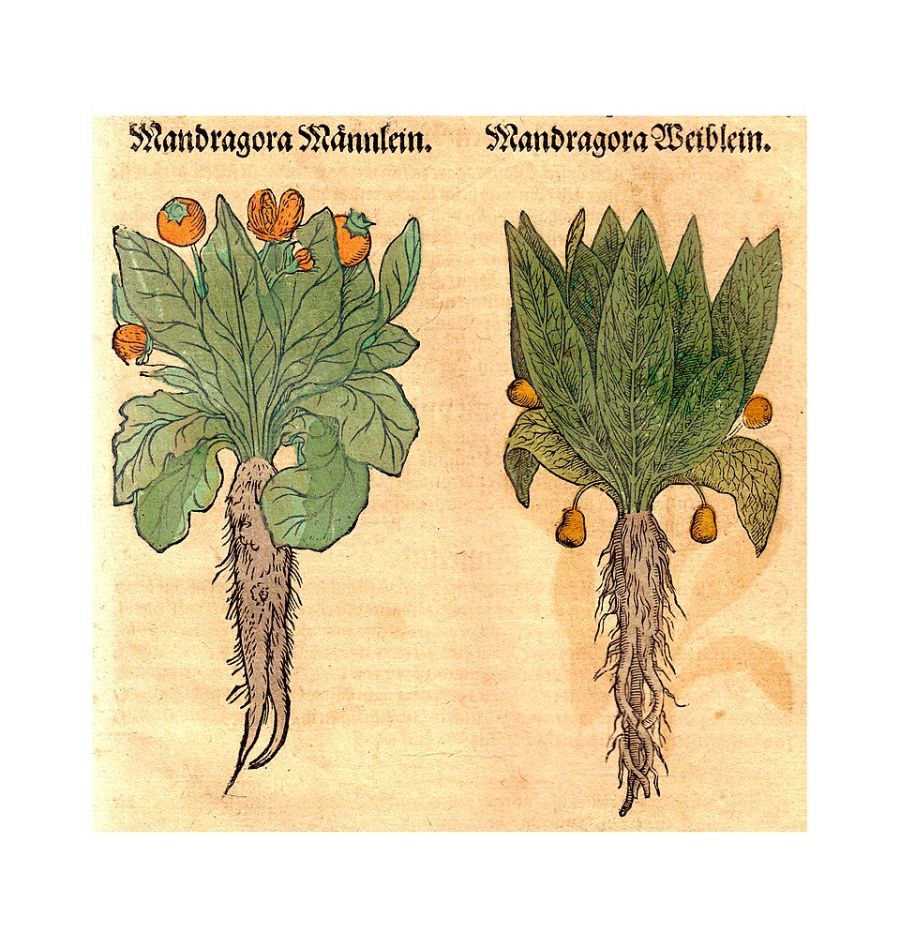
A Mediterranean herb with a thick root that resembles a human figure and which, for that reason, has carried centuries of myth. It contains very dangerous tropane alkaloids, the same ones that gave mandrake its reputation as an anaesthetic and a plant of witches.1235
Also known asmandrake · mandrágora · devil's apple · Circe's plant · abu'l-ruh
- What it is
- Perennial herb with rosette leaves and a thick root
- Territory
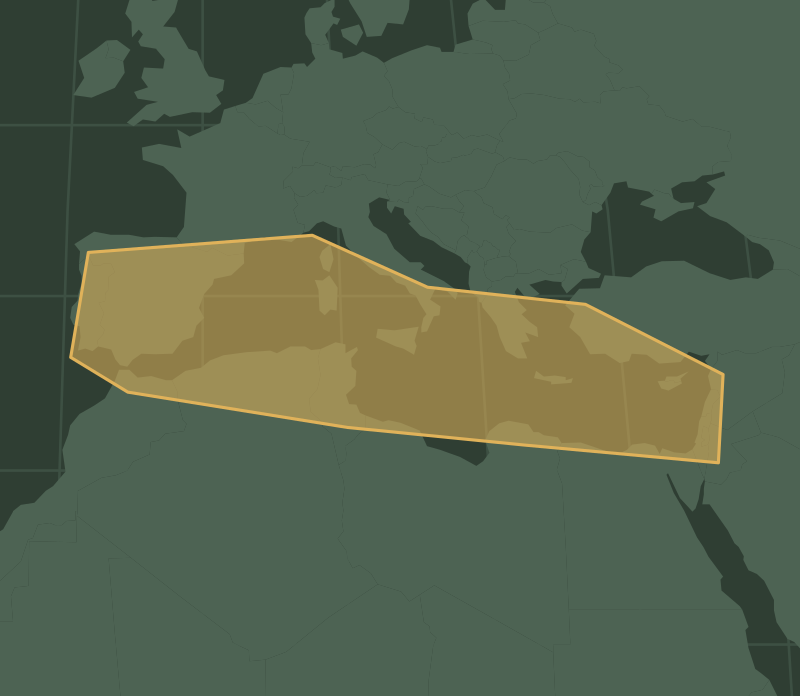
- Dry areas of the Mediterranean and the Levant
- Part used
- The root; the whole plant is toxic
- Active principles
- Scopolamine, hyoscyamine and atropine
- Onset and duration
- No reliable data
- Who keeps its memory
- Medicine and folklore of the Mediterranean and Europe
Botany
A rosette of leaves and a root that looks like a body
It is a perennial herb that grows in dry areas of the Mediterranean and the Levant. It has a thick, parsnip-shaped root and dark green leaves that form a flat rosette at ground level.25
The roots, often branched, sometimes resemble a human figure. A large part of its folklore arose from that resemblance.25
- Family
- Solanaceae
- Cycle
- Perennial
- Leaf
- Oval, in a rosette
- Root
- Thick, sometimes human-shaped
Memory and tradition
The root that screamed when pulled up
Mandrake appears in cuneiform writings from the Near East of the 14th century BC and is one of the most famous medicinal plants in history.14 For centuries it was used as an anaesthetic for pain, as a sleep aid and for fertility.13
In the 1st century, Dioscorides recorded the human shape of the root and its use as an anaesthetic in operations such as amputation.3 In the 15th century, the "doctrine of signatures" held that a plant shaped like a human body cured the body.3
Folklore tied it to witchcraft: it is said that in 1431 a woman was accused at her trial of carrying a mandrake root as proof of sorcery, and it was said to grow under gallows.3
Over time
It appears in cuneiform writings from the Near East.4
Dioscorides describes it as a surgical anaesthetic.3
The doctrine of signatures strengthens its reputation because of the human shape of the root.3
A woman is accused at her trial of carrying a mandrake root.3
It is still used in folk medicine, and its alkaloids, isolated, retain a role in medicine.1
Its names
- mandrake
- from the Latin mandragora, which has nothing to do with "man" or "dragon"
- abu'l-ruh
- in Old Arabic, "the master of the breath of life"
- devil's apple
- because of its fruit and its reputation
- Circe's plant
- after the sorceress of Greek mythology
The English name mandrake lends itself to a false etymology, from "man" and "drake"; the classical word does not come from there.5
Territory and care
A plant of dry lands
What helps
- Do not gather or consume roots of wild plants of this group.
- Respect mandrake as a plant of history and tales, not as a home remedy.
- Leave their historical value to herbaria and museums.
What it contains
Tropanes that block acetylcholine
It contains scopolamine, hyoscyamine and atropine, tropane alkaloids that block acetylcholine receptors at nerve synapses.25
That is why it is considered extremely dangerous. Its alkaloids can cause delirium and hallucinations.25 Isolated and modified, the alkaloids of this family still play a role in present-day medicine.1
It produces delirium, confusion and memory loss.[2][5]
Alkaloid of several toxic nightshades, including mandrake.[1][5]
The experience
A delirium, not a vision
Like the other tropane-bearing nightshades, it produces delirium and hallucinations, not a lucid experience.5
Historically it was used to induce sleep and dull pain, but its medical use declined over time.1
Indicative outline: it changes with the preparation, the amount and the person.
Research
What has been studied
What has been studied is its history: a review of ethnobotany and herbaria traces its medical use from antiquity.1
Its alkaloids, already isolated, have been studied extensively, but the raw plant has no clinical studies.
Scope of these dataIts value is historical and cultural. There is no evidence to support using the root as medicine, and its reputation as an anaesthetic is ancient, not modern.
With care
What it helps to know beforehand
It is considered extremely dangerous because of its tropanes.2
They behave like those of datura: delirium, loss of contact with reality and almost no memory of it.25
Call the emergency services: in Spain, 112. This is a medical emergency.
To follow
Books and related medicines
Sources
Where each piece of information comes from
- Benítez G, Leonti M, Böck B, Vulfsons S, Dafni A. The rise and fall of mandrake in medicine. J Ethnopharmacol. 2022 (PMID 36395976).
- University of Oxford Botanic Garden and Herbaria. Plants 400: Mandragora (Mandrake). herbaria.plants.ox.ac.uk.
- Wellcome Collection. Mandrake: medicine and myths. wellcomecollection.org.
- USDA Forest Service. Mandrake, Abu'l-ruh, Satan's apple (Mandragora spp.). Ethnobotany. fs.usda.gov/wildflowers.
- Wikipedia. "Mandragora officinarum". en.wikipedia.org (accessed 24-11-2026).
- Taylor & Francis. Mandragora officinarum. taylorandfrancis.com/knowledge.
- Mandrake in Bock's herbal, 16th century. Unknown author · public domain
- Map APDER, with data from Natural Earth · public domain
- Molecule drawings APDER
Last reviewed: 24 November 2026. If you spot a mistake, write to us at info@apder.org.