

Plant · Solanaceae · Amazon and Andes
Mapacho
Nicotiana rustica L.
The strong tobacco of the Amazon, with far more nicotine than commercial tobacco, which healers blow over people in ayahuasca ceremonies. It is both a sacred plant and a powerful generator of dependence.1234
Also known asmapacho · rustic tobacco · Aztec tobacco · strong tobacco · sacred tobacco
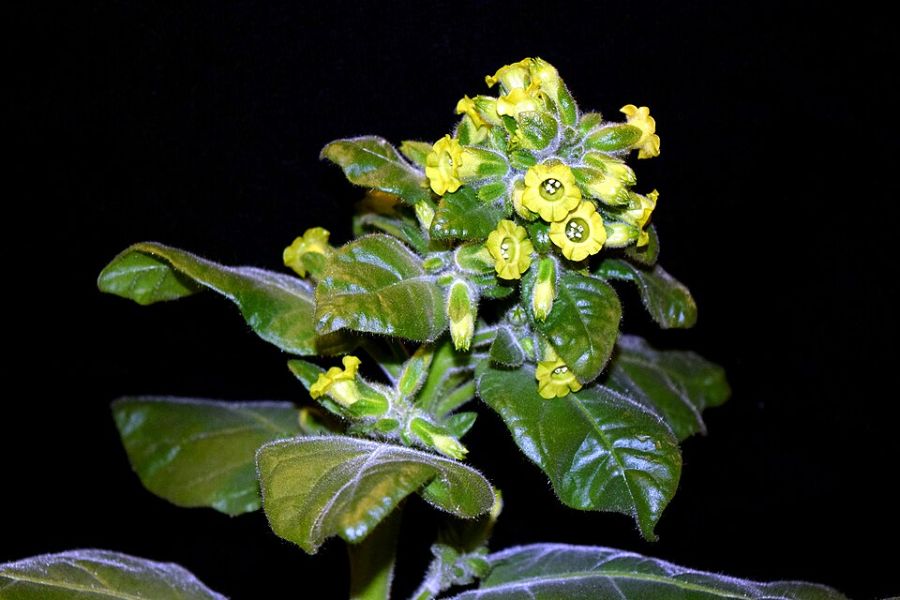
- What it is
- A plant of the nightshade family with leaves very rich in nicotine
- Territory
- South America, the Amazon and the Andes
- Part used
- The leaf, cured and rolled into cigars
- Active principles
- Nicotine, in far greater amounts than in commercial tobacco
- Onset and duration
- Seconds · a few minutes
- Who keeps its memory
- Amazonian and Andean peoples; healers, or tobacco healers (tabaqueros)
Botany
A jungle plant stronger than ordinary tobacco
- Family
- Solanaceae
- Names
- Mapacho, Aztec tobacco, strong tobacco
- Habitat
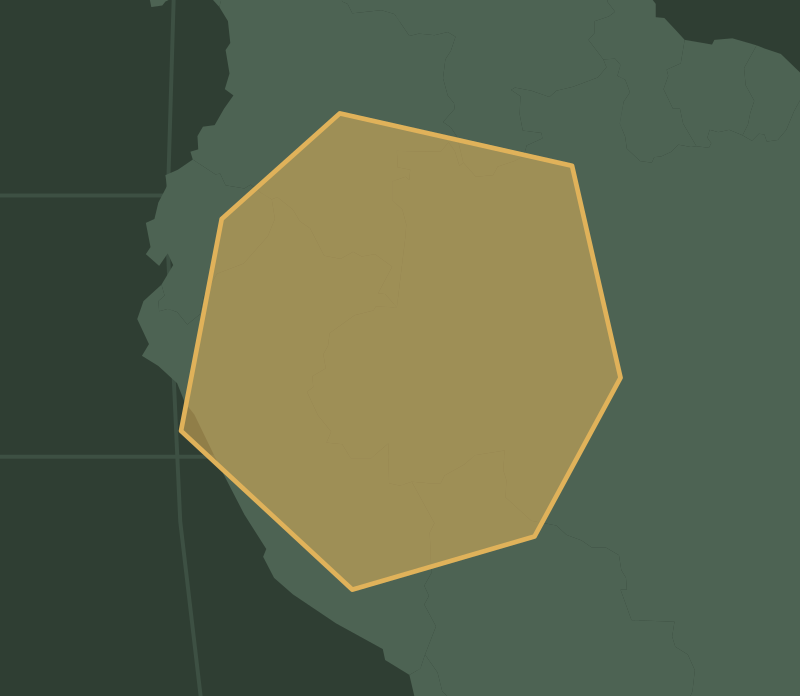
- Jungle and Andean valleys of South America
- Nicotine
- Up to nine times more than N. tabacum
Memory and tradition
Tobacco as a master plant
In the Amazon, mapacho is used mainly in ceremonies: its smoke is blown over people, and it often accompanies ayahuasca.34 There are healers, known as tabaqueros, who work chiefly with this plant.6
Wilbert studied about 300 Indigenous societies of South America and found that tobacco has been used for magical-religious, medicinal and recreational purposes since pre-Columbian times.12
The origin of N. rustica and N. tabacum is placed in the South American Andes; only these two species spread across the world.5
Over time
The peoples of South America use tobacco in rites, medicine and social life.2
In North America, it was mostly N. rustica that was chewed or smoked.7
Columbus and the Europeans take tobacco away with them; the focus shifts to recreational use.7
Its names
- mapacho
- Amazonian name for Nicotiana rustica
- Aztec tobacco
- because it was grown in Mexico
- strong tobacco
- because of its high nicotine content
- snuff (rapé)
- powdered tobacco, mixed with ash and other plants, that is blown into the nose
Mapacho is the name by which Nicotiana rustica is known in South America.3
Territory and care
Between the jungle and the Andes
What helps
- Know its origin: prefer mapacho from communities that grow it for ceremonies.
- Do not treat it as a fashionable product: it is a healers' plant.
- Find out about its risks before using it.
What it contains
Nicotine in quantity
It contains nicotine, which activates nicotinic acetylcholine receptors, releases dopamine and raises the pulse and blood pressure.38
Its leaves can contain up to nine per cent nicotine, compared with a fraction of that in commercial tobacco, which is why a mapacho cigar is much stronger.3
It is the substance that accounts for dependence and poisoning.[8]
The experience
Intense rush, dizziness and focus
With mapacho or snuff, the rush is intense, with dizziness, sweating, watering eyes and a sense of "cleansing" and focus. With large amounts there is nausea and vomiting.18
In ceremonial use, tobacco does not seek visions but focus, "cleansing" and grounding.4
Indicative outline: it changes with the preparation, the amount and the person.
Research
What has been studied
The broadest study is Wilbert's: about 1,800 sources on some 300 societies of South America, showing how the pharmacology of nicotine informs shamanic practices.2
As for its therapeutic effects, there are no clinical trials with mapacho.
Scope of these dataThis is ethnographic and pharmacological research, not clinical. There is no evidence that mapacho is a medicine.
With care
What it helps to know beforehand
Drunk, or sniffed in liquid form, nicotine is absorbed in large amounts and can cause serious poisoning.1
Smoking changes the levels of some medicines; consult your doctor.8
It is a ceremonial plant: if you decide to use it, do so with someone who knows its tradition.
To follow
Books and related medicines
Sources
Where each piece of information comes from
- Wilbert J. Tobacco and Shamanism in South America. New Haven: Yale University Press; 1987.
- Wilbert J. Does pharmacology corroborate the nicotine therapy and practices of South American shamanism? J Ethnopharmacol. 1991. agris.fao.org.
- Wikipedia. "Nicotiana rustica". en.wikipedia.org (accessed 24 November 2026).
- APDER. Complete guide to tobacco. apder.org/sustancias/tabaco/.
- Encyclopedia.com. Origin and diffusion (tobacco). encyclopedia.com.
- McConnell P. Sacred tobacco. Contra. contra.com.
- Mark JJ. A brief history of tobacco in the Americas. World History Encyclopedia. worldhistory.org.
- Benowitz NL. Pharmacology of nicotine: addiction, smoking-induced disease, and therapeutics. Annu Rev Pharmacol Toxicol. 2009;49:57-71.
- Mapacho (Nicotiana rustica) in flower. Flaminglasrswrd · CC0
- Map APDER, with data from Natural Earth · public domain
- Molecule drawings APDER
Last reviewed: 24 November 2026. If you spot a mistake, write to us at info@apder.org.