

Preparation · Modern blend · Australia
Changa
DMT with an MAO-inhibiting plant
A smokable herbal blend that combines DMT with a plant containing monoamine oxidase inhibitors (MAOIs), almost always the ayahuasca vine or Syrian rue. It was created by the Australian Julian Palmer in 2003–2004 and later spread through festivals on several continents. It is a modern invention inspired by Amazonian knowledge, not an Indigenous tradition.12
Also calledchanga · xanga · fumable de ayahuasca · smokeable ayahuasca
- What it is
- Smokable blend of DMT and MAO inhibitors
- Territory
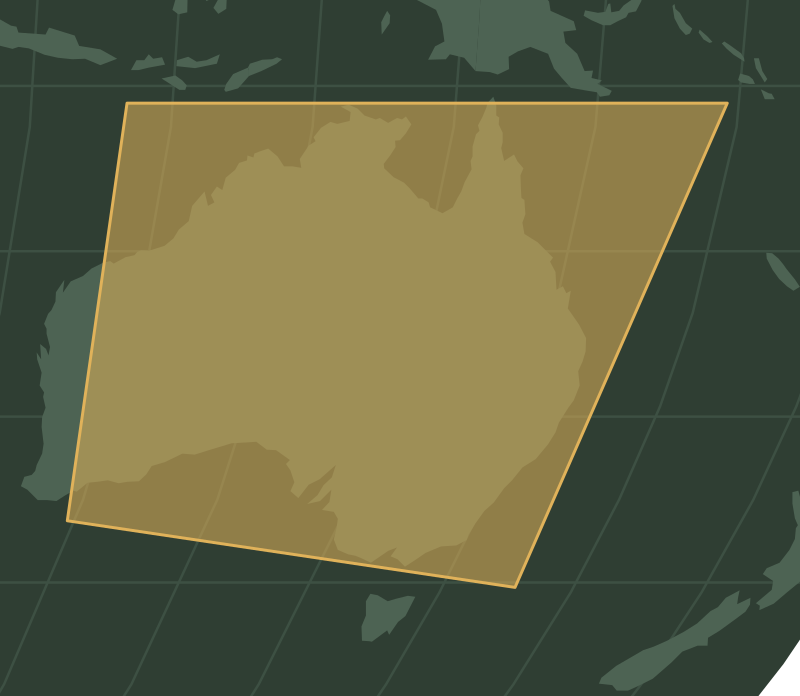
- Originated in Australia; spread worldwide
- Part used
- Herbs containing DMT, or extract on MAOI herbs
- Active principles
- DMT and β-carboline alkaloids
- Onset and duration
- A shorter experience than ayahuasca, according to one popular source
- Who keeps its memory
- No originating people; the knowledge of combining DMT and MAOIs comes from Amazonian cultures
Ingredients
Two parts
Changa consists of two main components: dimethyltryptamine (DMT) and a monoamine oxidase inhibitor (MAOI), typically of plant origin such as Banisteriopsis caapi or Peganum harmala (Syrian rue).1
The DMT-containing plants used in these blends include species of Mimosa, Psychotria viridis, Diplopterys cabrerana and Acacia.1
Other herbs, such as passionflower, mint, mullein or blue lotus, are often added to modify the experience.3
There is no single recipe: blends vary greatly according to the ingredients and their proportions, and there is debate about what counts as a “true” changa.45
Descriptive entry; it includes no recipes or preparation instructions.
- Type
- Smoking blend
- Active compounds
- DMT + IMAO
- Created
- Australia, 2003–2004
- Variants
- Many, with no fixed recipe
Memory and tradition
A recent invention
Changa was named and developed by the Australian Julian Palmer in 2003–2004; from the middle of that decade he promoted it at festivals in Europe, Asia, Africa and South America.16
Palmer conceived it as an alternative to smoking pure DMT crystals, which in his view often left people overwhelmed.6
According to the story, the name came up during an ayahuasca session in which Palmer “asked” for a name.1
An Erowid text recalls that blends of DMT with caapi substrates were already described in 2006 in The Entheogen Review, without being called changa, and that in 1985 Gracie and Zarkov described experiences with smoked extracts of passionflower, Syrian rue and caapi.7
The knowledge of combining DMT with MAO inhibitors comes from Indigenous cultures.1
As Palmer puts it, changa “is now its own tradition”.8
Over time
Gracie and Zarkov describe smoked extracts with β-carboline plants
Julian Palmer creates changa
Spread through festivals on several continents
Its names
- changa, xanga
- modern name
- smokable ayahuasca
- popular description
Territory and care
From Australia to the world
What helps
- To know that it is a modern creation.
- To respect the Amazonian tradition from which it takes its ideas.
- Not to confuse it with a traditional medicine.
What it contains
DMT and β-carbolines
Smoked DMT is potentiated and prolonged by the β-carboline alkaloids of the MAOI plant.9
A popular source describes an experience around 75% shorter and gentler than that of ayahuasca; this is that source's own assessment.5
The MAOI alkaloids in the leaf of B. caapi are present in low concentrations, of approximately 0.28–0.7%, according to Erowid.7
The experience
Shorter than ayahuasca
Popular sources describe it as shorter and gentler than ayahuasca, and more sustained than smoked DMT alone.95
There are no reliable data on onset or duration from studies.
Research
What has been studied
There is little formal research: the data come from user reports, popular writing and analyses of samples.7
Scope of these dataAlmost no formal research.
With care
What it helps to know beforehand
To follow
Books and related medicines
Sources
Where each piece of information comes from
- Wikipedia. Changa (drug). en.wikipedia.org/wiki/Changa_(drug).
- Double Blind Mag. What to Know About Changa, the Smokable «Ayahuasca». newsletter.doubleblindmag.com/p/what-to-know-about-changa-the-smokable-ayahuasca.
- Double Blind Mag. DMT plants. doubleblindmag.com/dmt-plants/.
- Double Blind Mag. What is changa, smokeable ayahuasca?. doubleblindmag.com/what-is-changa-smokeable-ayahausca/.
- Tripsitter. Changa: Smokeable Ayahuasca. tripsitter.substack.com/p/changa.
- Wikipedia. Julian Palmer. en.wikipedia.org/wiki/Julian_Palmer.
- Erowid. Got Changa?. erowid.org/dmt/dmt_article1.shtml.
- Knowledge Mapping (HEIG-VD). Changa. knowledge-mapping.heig-vd.ch/view/3083.
- Healing Maps. What Is Changa?. healingmaps.com/what-is-changa-effects-dosage-recipes/.
- Map APDER, with data from Natural Earth · public domain
- Molecule drawings APDER
Last reviewed: 24 November 2026. If you spot a mistake, write to us at info@apder.org.