

Plant · Malpighiaceae · Amazon basin
Chaliponga
Diplopterys cabrerana (Cuatrec.) B.Gates
A vine of the Amazon basin that is added to yagé or ayahuasca as a source of DMT, used by the Siona and Secoya peoples of Ecuador and by the Mocoa of Colombia. It is sometimes called chacruna, a name that elsewhere refers to a different plant.123
Also known aschaliponga · chagropanga · chacruna (in parts of Ecuador) · oco-yagé · Banisteriopsis cabrerana · Diplopterys cabrerana
- What it is
- Vine or climbing shrub of the Malpighiaceae family
- Territory
- Amazon basin: Brazil, Colombia, Ecuador, Peru and Venezuela
- Part used
- The leaf
- Active principles
- DMT and 5-MeO-DMT
- Onset and duration
- Depends on the brew in which it is used; no reliable data on the plant alone
- Who keeps its memory
- Siona and Secoya (Ecuador), Mocoa (Colombia)
Botany
A vine of the Amazon rainforest
Diplopterys cabrerana is a liana, or climbing shrub, native to the Amazon basin, extending across Brazil, Colombia, Ecuador and Peru.1 According to records, there are also collections from Venezuela and, according to Gates (1982), from Bolivia.2
It used to be classified as Banisteriopsis cabrerana.1
The plant stores alkaloids such as N,N-DMT, 5-MeO-DMT and a beta-carboline derivative in its leaves and stems.1
- Family
- Malpighiaceae
- Habit
- Liana or climbing shrub
- Part used
- The leaf
- Synonym
- Banisteriopsis cabrerana
Memory and tradition
The yagé additive
It is a common additive to the ayahuasca brew, alongside another plant, Psychotria viridis.1
It is found in the Colombian Putumayo and is used by the Mocoa in Colombia and the Siona and Secoya in Ecuador.2 Its use is much less common in Peru than in Colombia and Ecuador.2
Gates's 1982 treatise is the most complete monograph on the genus Diplopterys.2
Over time
Der Marderosian and colleagues analyse the plant.2
Gates publishes the monograph on the genus Diplopterys.2
Its names
- chaliponga
- Quechua name
- chagropanga
- Quechua name
- chacruna
- in parts of Ecuador; it is the proper name of another plant, Psychotria viridis
In Ecuador, “chacruna” sometimes refers to chaliponga, although elsewhere it is the name of Psychotria viridis.13
Territory and care
A shared rainforest
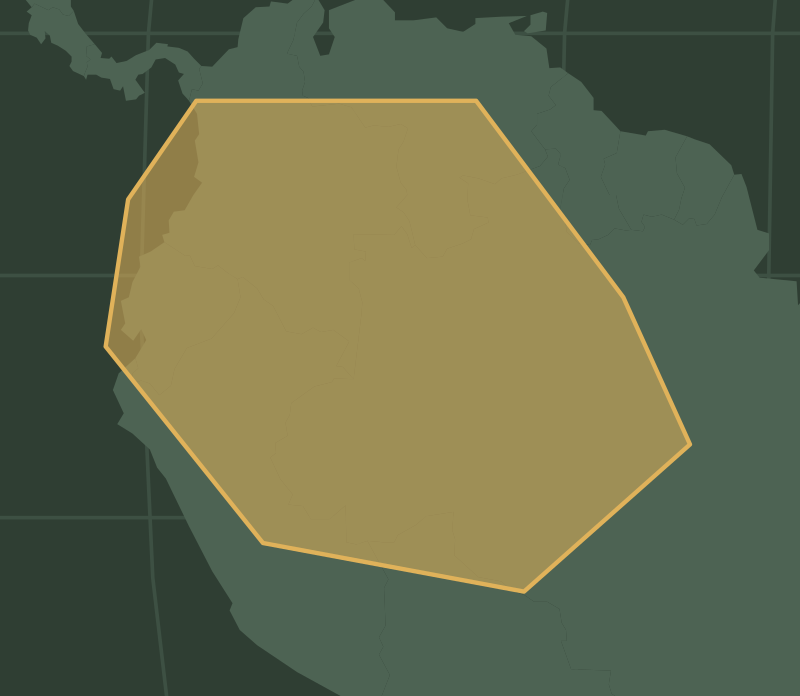
It grows in the Amazon basin, from Colombia and Ecuador to Peru and Brazil.1
It is recognised as a plant of the Amazonian peoples who use it together with other yagé plants.
What helps
- To know it as part of a group of plants, not in isolation.
- To care for the forest where it grows.
- To respect the Siona, Secoya and Mocoa peoples who have safeguarded it.
What it contains
DMT and 5-MeO-DMT
It is a rich source of DMT, a tryptamine believed to be endogenous in humans and other species, such as chacruna (P. viridis).1 It also produces 5-MeO-DMT, a less common analogue.1
The leaves also contain traces of methyltryptamine and bufotenine.13
The leaves can contain notable amounts of DMT, and their alkaloids have been measured in several studies.2
Main alkaloid of the leaves.[1][3]
A less common analogue, which this plant also produces.[1]
Only in traces.[1][3]
The experience
Part of a compound brew
In tradition, chaliponga is not taken alone: it is an additive to yagé, the ayahuasca brew.1
The sources consulted offer no reliable data on its effects when taken on its own.
Research
What has been studied
There have been chemical analyses of the leaves since 1968, and a botanical monograph on the genus.2
Most of what is known about the plant is chemical and ethnobotanical.
Scope of these dataThere are no clinical studies of the plant on its own. What is known refers to the brew as a whole.
With care
What it helps to know beforehand
Ayahuasca is a brew with interactions and contraindications; this plant is only one of its components.1
The name “chacruna” is sometimes applied to a different plant altogether: it is important to know which one is meant.13
Its use is understood within an Amazonian tradition and with support.2
Studies of the plant on its own are lacking.
To follow
Books and related medicines
Sources
Where each piece of information comes from
- Wikipedia. “Diplopterys cabrerana”. en.wikipedia.org (accessed 24 November 2026).
- Erowid. Ayahuasca: alkaloids, plants y analogs. Section 3, part 1: the genus Diplopterys. erowid.org/books_online/ayahuasca_apa/aya_sec3_part1_diplopterys.shtml.
- Wikidoc. “Diplopterys cabrerana”. wikidoc.org/index.php/Diplopterys_cabrerana.
- Map APDER, with data from Natural Earth · public domain
- Molecule drawings APDER
Last reviewed: 24 November 2026. If you spot a mistake, write to us at info@apder.org.