

Plant · Solanaceae · Amazon and eastern Andean slopes
Chiric sanango
Brunfelsia grandiflora D.Don
A shrub or small tree of the upper rainforest, used by Amazonian peoples as an additive to ayahuasca and as a medicine for fever, rheumatism and arthritis. It is a plant more talked about in ethnobotany than in the clinic.1
Also calledchiric sanango · chiricaspi · chiri caspi · Brunfelsia grandiflora · Brunfelsia chiricaspi
- What it is
- Small tree or shrub of the nightshade family
- Territory
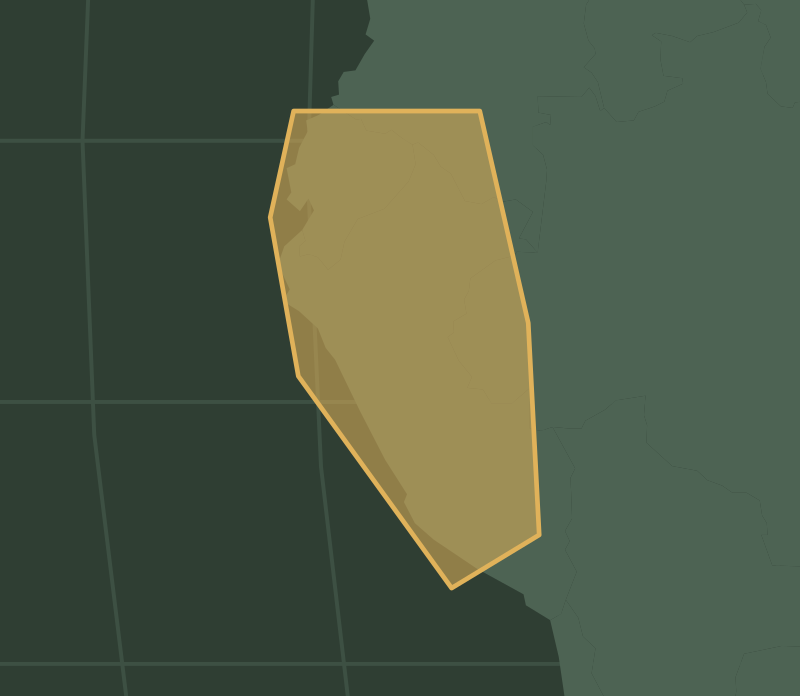
- Eastern slopes of the Andes and the Amazon, between 650 and 2,000 m
- Part used
- Bark and root, according to traditional uses
- Active principles
- Scopoletin and other compounds, little studied
- Onset and duration
- No reliable data
- Who keeps its memory
- Kichwa of the Oriente, Tsa'chi and other Amazonian peoples
Botany
A small tree of the humid montane forest
Brunfelsia grandiflora is a small tree that David Don described in 1829 from material collected on the Ruiz and Pavón expeditions to Peru.1
It grows mainly between 650 and 2,000 metres above sea level, chiefly on the eastern slopes of the Andes, in the region known as the montaña, a humid high-altitude forest.1 In the Amazon it is also cultivated for its narcotic and medicinal properties.1
The genus includes three species used as a yagé additive: B. chiricaspi, B. macrocarpa and B. grandiflora, the last with the subspecies grandiflora and schultesii.1
- Family
- Solanaceae
- Habit
- Small tree
- Altitude
- 650–2,000 m
- Subspecies
- grandiflora and schultesii
Memory and tradition
The yagé additive
Three species of Brunfelsia are used as an additive to the hallucinogenic drink ayahuasca and have been very important plants for the Indigenous Amazonian cultures of Ecuador, such as the Kichwa of the Oriente and the Tsa'chi.1
It is widely used as a hallucinogen, often added to intensify the effect of narcotic drinks.1 Indigenous groups of the north-west Amazon also use it to treat fever, rheumatism and arthritis.1
A study with the Canelo-Kichwa community of the province of Pastaza, in Ecuador, gathered traditional knowledge about chiricaspi in order to preserve, document and validate it.1
In Peru, research in the province of Coronel Portillo, in Ucayali, also recorded its use among local medicinal species.2
Over time
David Don describes the species from material collected on the Ruiz and Pavón expeditions.1
An ethnobotanical and pharmacological study of chiricaspi in the Ecuadorian Amazon is published.1
Its names
- chiric sanango
- Peruvian Amazonian name
- chiricaspi
- name used in Ecuador
- Brunfelsia grandiflora
- scientific name
The plant has several names depending on the people and the region; it should not be confused with other species of the genus.1
Territory and care
Humid montane forest of the eastern Andes
What helps
- To know it for its role in Amazonian traditions.
- To care for the montane forests where it grows.
- To respect the knowledge of the Kichwa and Tsa'chi peoples.
What it contains
Little studied
The 2018 study focused on scopoletin as a compound of interest and proposes lines of development based on the plant.1
Its full chemistry and effects are not described in detail in the sources consulted.
Compound identified as key in the 2018 study.[1]
The experience
An additive, not a journeying plant
The sources describe it as an additive to narcotic drinks, not as a plant to be taken alone for visionary purposes.1
There are no reliable data on onset or duration.
Research
What has been studied
The 2018 study validated the traditional uses through literature reviews of activity and chemical components.1
It proposes, in theory, a line of in silico research for drug development in obstetrics, anaesthesiology and neurology.1
Scope of these dataThere is an ethnobotanical study with validation from the literature, but no clinical trials with the plant.
With care
What it helps to know beforehand
Other species of the genus Brunfelsia have been described in the literature as poisonous and have been used in arrow poisons.3
It is used as an additive to a brew containing other plants, which changes the risk.1
Clinical and toxicity studies are lacking.
To follow
Books and related medicines
Sources
Where each piece of information comes from
- Luzuriaga-Quichimbo CX, Hernández del Barco M, Blanco-Salas J, Cerón-Martínez CE, Ruiz-Téllez T. Chiricaspi (Brunfelsia grandiflora, Solanaceae), a pharmacologically promising plant. Plants. 2018;7(3):67. doi:10.3390/plants7030067.
- Study of medicinal plants in the province of Coronel Portillo (Ucayali, Peru). sites.evergreen.edu.
- Ethnobotanical review of the genus Brunfelsia. archive.org/download/biostor-160946/biostor-160946.pdf.
- Map APDER, with data from Natural Earth · public domain
- Molecule drawings APDER
Last reviewed: 24 November 2026. If you spot a mistake, write to us at info@apder.org.