

Plant · Cannabaceae · East Asia, now worldwide
Cannabis
Cannabis sativa L.
A herb that humanity has cultivated for some 12,000 years, at first for fibre and food. Its flowers and resin contain THC, which produces the psychoactive effect, and CBD, which does not; it is not a classic psychedelic.126
Also known asmarijuana · weed · grass · hemp · hashish · kif
- What it is
- Annual herb with flowers on separate male and female plants
- Territory
- Originated in East Asia; now cultivated worldwide
- Part used
- Flowers and resin of the female plant; also fibre and seeds
- Active principles
- THC, CBD and other cannabinoids
- Onset and duration
- Minutes if smoked; slower and longer-lasting if eaten
- Who keeps its memory
- Peoples of Central and East Asia; Scythians, Chinese, Indians
Botany
A herb that shoots up in a single summer
It is an annual herb with an upright stem and palmate leaves of between three and nine leaflets. Depending on the variety, it measures from a few hand-spans to several metres.34
There are normally separate male and female plants. The females form the clusters of flowers covered in glandular hairs that secrete the resin; the males release pollen and wither.345
A single species yields three things: fibre from the stem, oil from the seeds and cannabinoids from the flowers and leaves.4
- Family
- Cannabaceae
- Cycle
- Annual: a single season
- Leaf
- Palmate, with 3 to 9 leaflets
- Flowers
- Males and females mostly on separate plants
Memory and tradition
Fibre, food, medicine and ritual
Cannabis is believed to have been cultivated for at least 12,000 years, at first for fibre and grain.2 A genomic study of more than a hundred plants from around the world places its origin in East Asia, in China, and not in Central Asia as was previously thought.1
Its use as a medicine already appears in the Chinese herbal attributed to Shennong, which was set down in writing in the 2nd century. In a tomb some 2,700 years old at Yanghai, in north-west China, a shaman was found buried with well-preserved cannabis.2
Herodotus recounted that the Scythians of the Eurasian steppe threw hemp seeds onto red-hot stones inside a tent and inhaled the smoke.2 In Europe, the 19th century brought medical and psychiatric interest in hashish.16
Over time
First cultivation of cannabis in East Asia, for fibre and grain.12
A shaman is buried at Yanghai, in north-west China, with cannabis.2
The herbal attributed to Emperor Shennong, which includes cannabis, is set down in writing.2
Moreau de Tours publishes in Paris his study on hashish and mental illness.16
Gaoni and Mechoulam isolate and describe THC.7
Anandamide, the cannabinoid produced by the brain itself, is described.8
Its names
- cannabis
- Latin name of the genus; "sativa" means "cultivated"
- hemp
- name of the plant grown for its fibre and with very little THC
- marijuana
- Mexican name that spread to the psychoactive herb
- hashish
- pressed resin of the plant
Hemp and psychoactive cannabis are the same species; what changes is the variety, the THC content and the use.4
Territory and care
A plant that travelled with people
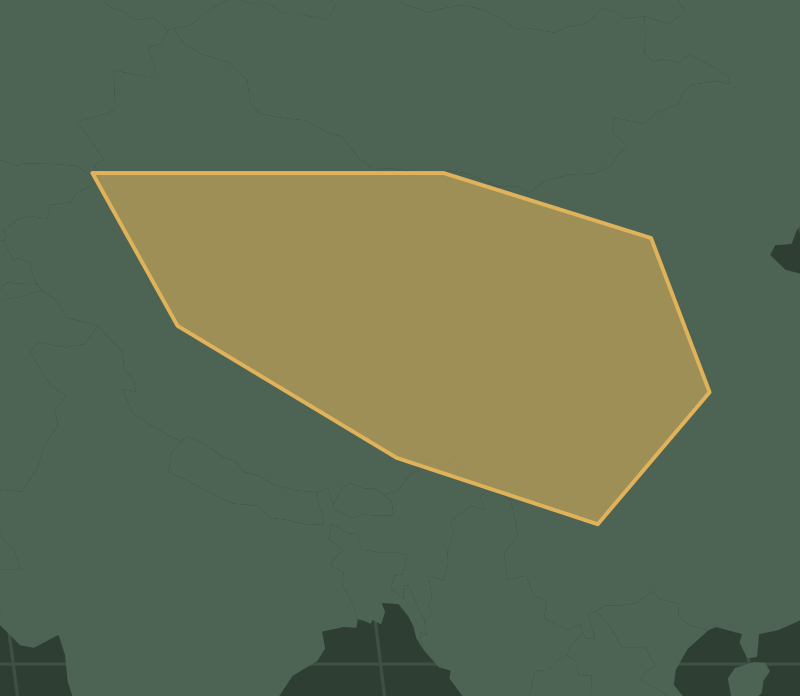
The genomic study points to East Asia as the place of first domestication, some 12,000 years ago, and to an ancestral lineage that survives in feral plants in China.1
From there it spread across the world, always hand in hand with human beings. Today it is grown in almost any temperate climate, and there is no wild population to look after, as there is with other medicines in this encyclopedia.
What helps
- Find out properly before deciding: the APDER guide sets out the risks and interactions.
- Prefer a product of known origin and, if possible, one that has been tested: potency varies greatly.
- Remember that the plant provides fibre, food and medicine, not only a drug.
What it contains
More than a hundred cannabinoids
The plant produces more than a hundred cannabinoids. The two main ones are THC (Δ9-tetrahydrocannabinol), which causes the psychoactive effect, and CBD (cannabidiol), which does not.714
They act on the body's cannabinoid system, a signalling system of the brain's own and of other organs. In 1992 anandamide was identified, a substance the brain makes that binds to the same receptor as THC.8
It was isolated and described by Gaoni and Mechoulam in 1964.[7]
It does not produce the psychoactive effect of THC; it is used as a medicine in some severe forms of epilepsy.[14]
The experience
Relaxation, a different pace of time and more appetite
It relaxes, alters the perception of time and increases appetite. At high doses, and above all when eaten, it can cause anxiety, paranoia and effects similar to those of a psychedelic.6
Edibles take longer to take effect and last longer, so it is easy to take too much without realising.6 Mood, surroundings and the individual change the experience greatly.
Indicative outline: it changes with the preparation, the amount and the person.
Research
What has been studied
Medicines containing cannabinoids are authorised in Spain: an oral spray for the spasticity of multiple sclerosis and a cannabidiol solution for some severe childhood epilepsies.1314
A review by the US National Academies concluded that there is solid evidence for chronic pain and for chemotherapy-induced nausea, and less for other uses.15
Scope of these dataThe evidence applies to those specific medicines, not to smoking or eating cannabis in general. With recreational cannabis, the data point above all to risks.
With care
What it helps to know beforehand
Frequent use: around 3 in 10 people who use it have a use disorder.9
Daily use of high-potency cannabis is associated with a higher risk of psychosis.10 Be mindful of personal or family history.
With alcohol or sedatives, whose effects add together.11 It can also change blood levels of anticoagulants and antiepileptics.1214
In Europe, the resin seized in 2024 contained on average 24.6% THC and the herbal material 12%; the figure for resin has risen by 66% in ten years.17
To follow
Books and related medicines
Sources
Where each piece of information comes from
- Ren G, Zhang X, Li Y, et al. Large-scale whole-genome resequencing unravels the domestication history of Cannabis sativa. Sci Adv. 2021;7(29):eabg2286.
- Nature. 2015;525:S10-S11. History of cannabis. nature.com/articles/525S10a.
- University of Missouri Extension. Industrial hemp (Cannabis sativa L.): botany. extension.missouri.edu/publications/mx80.
- Naturalis Biodiversity Center. Cannabis sativa. Useful Plants. useful-plants.linnaeus.naturalis.nl.
- Wikipedia. "Cannabis". en.wikipedia.org (accessed 24 November 2026).
- Health Canada. Health effects of cannabis. canada.ca. Modified 25 March 2024.
- Gaoni Y, Mechoulam R. Isolation, structure, and partial synthesis of an active constituent of hashish. J Am Chem Soc. 1964;86:1646-1647.
- Devane WA, Hanuš L, Breuer A, et al. Isolation and structure of a brain constituent that binds to the cannabinoid receptor. Science. 1992;258(5090):1946-1949.
- Centers for Disease Control and Prevention (CDC). Understanding your risk for cannabis use disorder. cdc.gov. Reviewed 5 December 2024.
- Di Forti M, Quattrone D, Freeman TP, et al. The contribution of cannabis use to variation in the incidence of psychotic disorder across Europe (EU-GEI). Lancet Psychiatry. 2019;6(5):427-436.
- Hartman RL, Brown TL, Milavetz G, et al. Controlled cannabis vaporizer administration: blood and plasma cannabinoids with and without alcohol. Clin Chem. 2015;61(6):850-869.
- Thomas TF, Metaxas ES, Nguyen T, et al. Case report: medical cannabis—warfarin drug-drug interaction. J Cannabis Res. 2022;4:6.
- AEMPS. Summary of product characteristics of Sativex oromucosal spray. CIMA. cima.aemps.es.
- AEMPS. Summary of product characteristics of Epidyolex 100 mg/ml oral solution (cannabidiol). CIMA. cima.aemps.es.
- National Academies of Sciences, Engineering, and Medicine. The health effects of cannabis and cannabinoids. Washington: National Academies Press; 2017.
- Moreau de Tours J-J. Du hachisch et de l'aliénation mentale: études psychologiques. Paris; 1845.
- European Union Drugs Agency (EUDA). Cannabis: the current situation in Europe (European Drug Report 2026). euda.europa.eu.
- Map APDER, with data from Natural Earth · public domain
- Molecule drawings APDER
Last reviewed: 24 November 2026. If you spot a mistake, write to us at info@apder.org.