

Cactus · Cactaceae · Western Mexico
Cawé
Pachycereus pecten-aboriginum (Engelm.) Britton & Rose
An enormous columnar cactus of western Mexico, with bristle-covered fruits that were used as combs. A sacred use is attributed to it among the Tarahumara, but the literature admits that it is not known for certain whether it is hallucinogenic.123
Also known ascawé · hecho · cardón hecho · chawé · wichowaka · hairbrush cactus · Indian comb
- What it is
- Large columnar cactus
- Territory
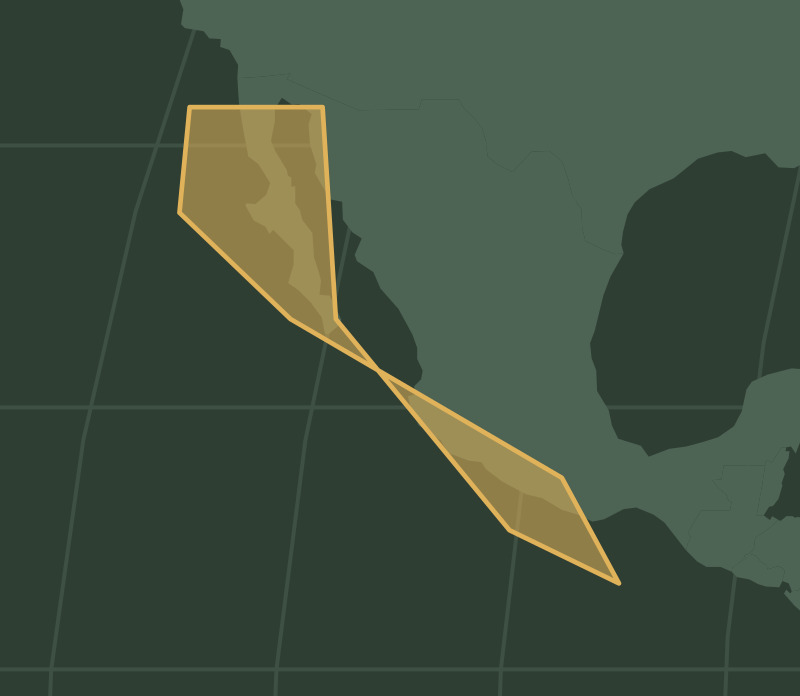
- Western Mexico, from Baja California to Chiapas
- Part used
- Young branches
- Active principles
- Not determined with certainty
- Onset and duration
- No reliable data in the sources consulted
- Who keeps its memory
- Tarahumara (Rarámuri)
Botany
The comb cactus
Pachycereus pecten-aboriginum is a tree-like cactus up to 15 m tall with many branches; its large, bristly fruits give the species its name: "pecten-aboriginum" means "native combs" in Latin, from the use of the fruits as combs.14
In English it is called "hairbrush cactus" or "Indian comb".4
Its flowers are white with a purple edge; the fruits are covered in yellow wool and bristles.2
It was described in 1886 by Sereno Watson as Cereus pecten-aboriginum, and Britton and Rose moved it to the genus Pachycereus in 1909.5
- Family
- Cactaceae
- Height
- Up to 15 m
- Flowers
- White with a purple edge
- Fruits
- Large, with wool and bristles
Memory and tradition
A doubtful sacred cactus
Erowid's guide to visionary cacti notes that the Tarahumara of Mexico use the young branches to make a sacred narcotic drink.2
The classic literature on peyote lists Pachycereus pecten-aboriginum among the plants used by the Tarahumara for their stimulating or narcotic properties, or called "peyote".6
An Erowid summary adds that cawé is combined with San Pedro among the Tarahumara, but that it is not known for certain whether this cactus is hallucinogenic.7
Among the Tarahumara people it is known as cawé, chawé, wichowaka or chik; in Spanish, hecho, cardón hecho or cardón barbón.8
Over time
Its names
- cawé, chawé, wichowaka
- Tarahumara
- hecho, cardón hecho, cardón barbón
- Spanish
- hairbrush cactus, Indian comb
- English
Territory and care
Western Mexico
What helps
- Do not uproot it from the wild.
- Respect the knowledge of the peoples of north-western Mexico.
- Do not confuse it with peyote.
What it contains
Unconfirmed chemistry
The classic literature cites this cactus alongside other plants the Tarahumara call "peyote", and there is no solid confirmation of its psychoactive chemistry in the sources consulted.67
The experience
No reliable data
There are no reliable descriptions of an experience with this cactus; it is not even established that it is psychoactive.7
Research
What has been studied
It is known mainly from mentions in the literature on peyote and from botanical studies.6
Scope of these dataAlmost no chemical or clinical research.
With care
What it helps to know beforehand
To follow
Books and related medicines
Sources
Where each piece of information comes from
- Wikipedia. Pachycereus pecten-aboriginum. en.wikipedia.org/wiki/Pachycereus_pecten-aboriginum.
- Erowid. Visionary Cactus Guide: Pachycereus. taz4.erowid.org/plants/cacti/cacti_guide/cacti_guide_pachycer.shtml.
- Wikipedia. Pachycereus pecten-aboriginum (habitat). en.wikipedia-on-ipfs.org/wiki/Pachycereus_pecten-aboriginum.
- Wikipedia. Pachycereus pecten-aboriginum (name). wikipedia.com/wiki/Pachycereus_pecten-aboriginum.
- Wikiwand. Pachycereus pecten-aboriginum. wikiwand.com/en/articles/Pachycereus_pecten-aboriginum.
- MAPS. Bibliography on cacti called peyote. bibliography.maps.org/resources/download/12884.
- Erowid. Golden Guide to Hallucinogenic Plants. erowid.org/library/books_online/golden_guide/g111-120.shtml.
- LLifle. Cereus pecten-aboriginum. llifle.com/Encyclopedia/CACTI/Family/Cactaceae/8499/Cereus_pecten-aboriginum.
- Map APDER, with data from Natural Earth · public domain
- Molecule drawings APDER
Last reviewed: 24 November 2026. If you spot a mistake, write to us at info@apder.org.