

Plant · Poaceae · Temperate and warm regions of the world
Giant reed
Arundo donax L.
A tall, bamboo-like grass that supplies the reeds for flutes, oboes and clarinets. It has been reported to contain tryptamines, but the data are scarce and variable, and almost all of it comes from non-academic sources.123
Also known asgiant reed · reed · carrizo · giant river reed · Colorado River reed · Arundo donax
- What it is
- Tall perennial grass, bamboo-like in appearance
- Territory
- Temperate and warm regions; grows on damp banks
- Part used
- Rhizomes and stems; the canes are used for instruments
- Active principles
- Tryptamines (DMT, bufotenine, 5-MeO-DMT) and gramine, according to reports
- Onset and duration
- No reliable data
- Who keeps its memory
- Musicians from Persia and other traditions, for the nay flute
Botany
A reed bed up to eight metres tall
Arundo donax is a tall perennial grass, similar in nature to bamboo.2 It grows to about eight metres in height on the banks of lakes and streams and in other damp places.4
It belongs to the grass family, Poaceae.5 In English it is called giant reed and Colorado River reed.5
It is told apart from the European common reed Phragmites because its panicle hangs to one side only, unlike the latter.6
- Family
- Poaceae
- Habit
- Tall perennial grass
- Height
- Up to about 8 m
- Habitat
- Damp banks
Memory and tradition
The flute reed
In Persia the reed is used to make the nay, an end-blown flute linked to the Sufi tradition.1 The same plant is the source of reeds for clarinets, saxophones, oboes, bassoons and bagpipes.1
There are no verifiable sources for a traditional psychoactive use of giant reed; what circulates is based on recent chemical analyses and on amateur accounts.12
Over time
Smith lists tryptamines in plants, giant reed among them.7
The Shulgins mention it as a rich source of tryptamines in TIHKAL.2
Its names
- giant reed
- usual name in Spanish
- carrizo
- popular name, also applied to other reeds
- giant reed
- English name
The name "carrizo" also refers to Phragmites, another reed with a different panicle.6
Territory and care
A widespread plant
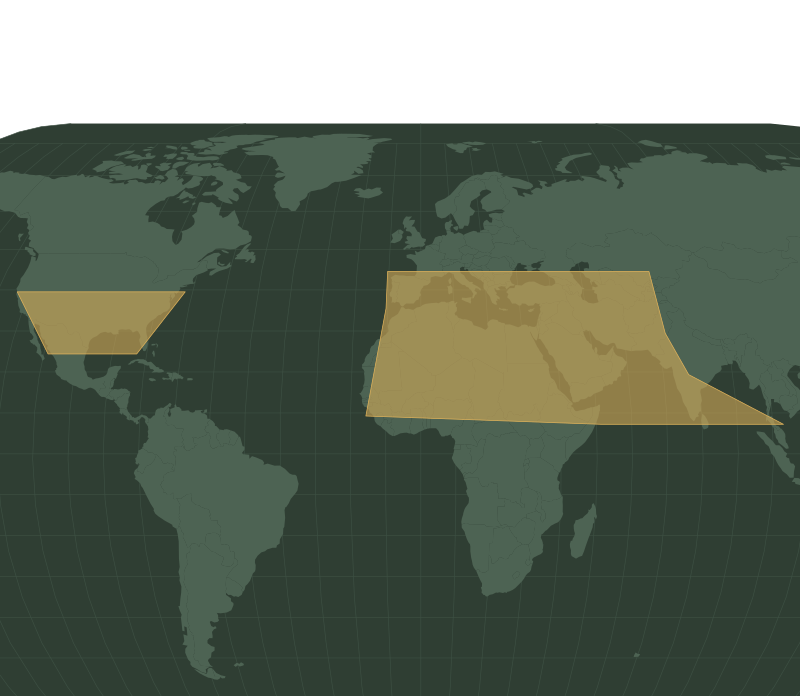
According to the correspondence cited, it grows wild in large stands in many parts of the United States.1
What helps
- Know it for its place in music and craftsmanship.
- Do not present it as a source of anything: the data are scarce.
- Treat it with the same caution you would give any unverified information.
What it contains
Little-studied tryptamines
The plant has been reported to contain some psychoactive substances, among them DMT, bufotenine and 5-MeO-DMT.3 Other reports add gramine.3
A 1977 compendium listed tryptamines and related compounds in plants; it is the source often cited for this species.7
Concentrations are highly variable, with a tendency to be low.3
Described in variable, low amounts.[3]
Described in the plant.[3]
Cited in reports, without solid confirmation.[2]
Cited in reports on the plant.[3]
The experience
What is not known
There is no documented tradition of use, nor reliable data on the experience of the plant itself.
The sources that speak of effects are popular or amateur accounts, not studies.38
Research
What has been studied
The basis is a 1977 phytochemical compendium of tryptamines in plants.7
Other sources reproduce that information and add amateur reports to it, without independent verification.23
Scope of these dataThere are no clinical or ethnographic studies of a psychoactive use of giant reed. Any figures in circulation should be read with caution.
With care
What it helps to know beforehand
The data on its content are scarce, variable and of non-academic origin.3
Some grasses contain tryptamines and others contain alkaloids that can be toxic; they cannot be told apart at a glance.8
What circulates online about this plant is not solid evidence.2
There are no data on safety or on effects.
To follow
Books and related medicines
Sources
Where each piece of information comes from
- Erowid. Arundo donax as a source of DMT (1992 correspondence and comments). erowid.org/plants/arundo_donax/arundo_donax_info3.shtml.
- Shulgin A, Shulgin A. TIHKAL, ch. 15: "DMT is everywhere" (1997), on Erowid. erowid.org/plants/arundo_donax/arundo_donax_info2.shtml.
- The Drug Classroom. Arundo donax. thedrugclassroom.com/video/arundo-donax.
- Erowid. Arundo donax, general entry. erowid.org/plants/arundo_donax/arundo_donax.shtml.
- Erowid. Arundo donax, botanical classification. erowid.org/plants/arundo_donax.
- TripSit Wiki. Reed (Phragmites). wiki.tripsit.me/wiki/Reed.
- Smith TA. Tryptamine and related compounds in plants. Phytochemistry. 1977;16(2):171-175. doi:10.1016/S0031-9422(00)86778-3.
- Erowid. Which grasses contain DMT? erowid.org/ask/ask.php?ID=3155.
- Map APDER, with data from Natural Earth · public domain
- Molecule drawings APDER
Last reviewed: 24 November 2026. If you spot a mistake, write to us at info@apder.org.