

Animal · Sparidae · Eastern Atlantic and Mediterranean
Salema
Sarpa salpa (Linnaeus, 1758)
A coastal fish with golden stripes, common in the Mediterranean and the eastern Atlantic, also known as the ‘dreamfish’. Some people who have eaten it have suffered visual and auditory hallucinations lasting days. The sources agree that its origin and the agents responsible are unclear.123
Also known assalema · salpa · dreamfish · salema porgy · cow bream · saupe · the fish that makes you dream
- What it is
- Coastal marine fish of the sea bream family
- Territory
- Eastern Atlantic, Mediterranean and south-western Indian Ocean
- Part used
- Eating it for psychoactive purposes is not recommended
- Active principles
- Unknown
- Onset and duration
- No reliable data beyond isolated cases
- Who keeps its memory
- Mediterranean fishers and the Arab tradition
Biology
The golden-striped bream
Sarpa salpa is a marine fish of the Sparidae family, which includes the sea breams and the gilt-heads; it is the only species in its genus.14
It is also called ‘dreamfish’, salema, ‘cow bream’, karanteen, salpa, saupe, strepie and ‘goldline’; the name of the genus, Sarpa, is the local name of the fish in Genoa.1
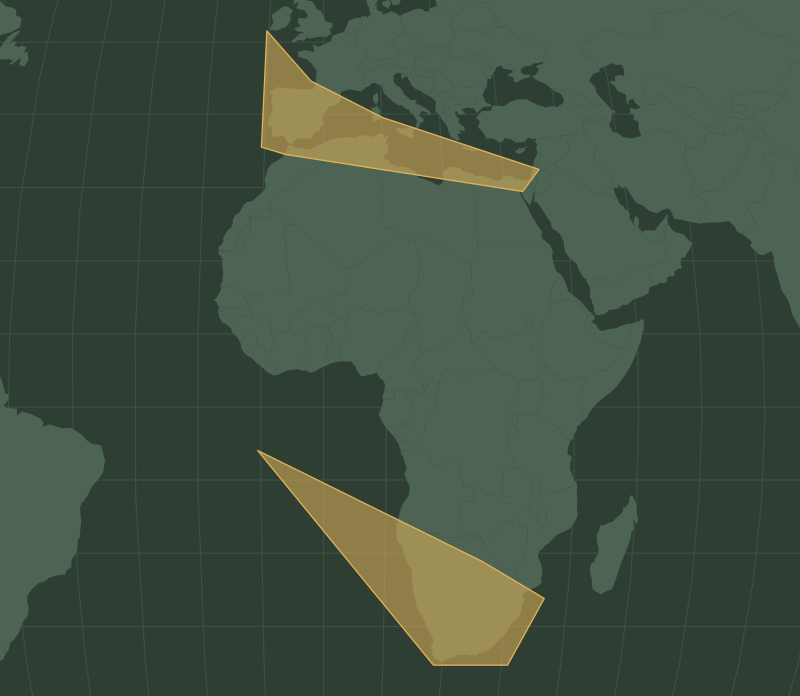
It is found in the eastern Atlantic, the Mediterranean and the south-western Indian Ocean, from the Bay of Biscay to South Africa.1
Linnaeus described it in 1758 as Sparus salpa.4
- Family
- Sparidae
- Habitat
- Coastal waters
- Depth
- Down to about 70 m
- Distribution
- Eastern Atlantic and Mediterranean
Memory and tradition
The fish that makes you dream
In Arabic it is called ‘the fish that makes you dream’.35
A piece of popular science writing notes that Mediterranean fishers have known its effects for centuries and suggests recreational use in ancient Rome; that claim comes from a popular source, not from a study.5
It became famous through the cases of 2006: two men who ate what appeared to be Sarpa salpa in the Mediterranean suffered hallucinations lasting days.24
The case was published in the journal Clinical Toxicology.6
Over time
Linnaeus describes the species
Two cases of hallucinations in the western Mediterranean
Its names
- salema, salpa
- Spanish
- saupe
- French
- dreamfish
- English
Territory and care
Coasts and meadows
What helps
- Do not eat it in search of effects.
- Respect artisanal fishing.
- Look after the posidonia meadows.
What it contains
An unsolved mystery
The agents that cause hallucinations in humans, and their origin, are unclear.7
It is not known whether the fish themselves produce the toxins or take them from their diet, and a dietary cause may be more likely.3
Christian Rätsch believes the fish could contain DMT; this is a conjecture.2
Some sources say the likelihood of hallucination depends on the season.2
The experience
A picture of poisoning
One case describes a 40-year-old man with mild digestive upset and frightening visual and auditory hallucinations after eating a fish in a restaurant.6
Another, aged 90, had auditory hallucinations after 2 hours, nightmares on the following two nights, and recovered spontaneously after three days.6
These poisonings resemble delirium more than the effects of serotonergic psychedelics such as LSD.2
Research
What has been studied
There are clinical case reports and a literature review, with no systematic studies.6
Scope of this evidenceAlmost no research; case reports only.
With care
What it helps to know beforehand
To follow
Books and related medicines
Sources
Where each piece of information comes from
- Wikipedia. Salema porgy. en.wikipedia.org/wiki/Salema_porgy.
- Wikipedia. Hallucinogenic fish. en.wikipedia.com/wiki/Psychoactive_fish.
- Wikipedia. Ichthyoallyeinotoxism. en.wikipedia.org/wiki/Ichthyoallyeinotoxism.
- Wikipedia. Sarpa salpa. wikipedia.org/wiki/Sarpa_salpa.
- ZME Science. Salema Porgy: the hallucinogenic fish. zmescience.com/other/feature-post/fish-lsd-hallucinations-04012017.
- de Haro, L. and Pommier, P. (2006). Hallucinatory fish poisoning. Clinical Toxicology 44(2): 185–188. erowid.org/references/refs_view.php?ID=9213.
- Wikiwand. Hallucinogenic fish. wikiwand.com/en/articles/Hallucinogenic_fish.
- Map APDER, with data from Natural Earth · public domain
- Molecule drawings APDER
Last reviewed: 24 November 2026. If you spot a mistake, write to us at info@apder.org.