

Plant · Convolvulaceae · Indian subcontinent
Lysergic rose
Argyreia nervosa (Burm.f.) Bojer
A climbing vine of the Indian subcontinent, also called the Hawaiian baby woodrose, whose seeds contain ergoline alkaloids. Its psychoactive use is recent, while its roots and leaves have a long history in Ayurvedic medicine.1235
Also known aslysergic rose · Hawaiian baby woodrose · elephant creeper · woolly morning glory · bidhara · Argyreia speciosa
- What it is
- Perennial vine of the morning glory family
- Territory
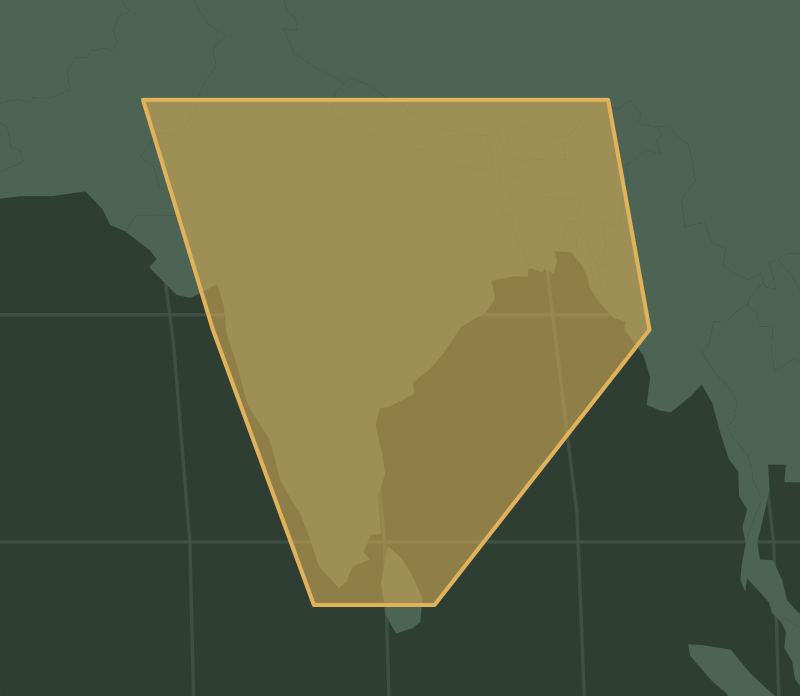
- Indian subcontinent; introduced to Hawaii, Africa and the Caribbean
- Part used
- The seed; the root in Ayurvedic medicine
- Active principles
- Ergoline alkaloids, including ergine (LSA)
- Onset and duration
- No reliable data in the sources consulted
- Who keeps its memory
- Ayurvedic medicine; modern psychoactive use since the 1960s
Botany
A giant morning glory
Argyreia nervosa is a perennial climbing vine of the Convolvulaceae family, native to the Indian subcontinent and introduced to many regions of the world, including Hawaii, Africa and the Caribbean.5
Its common names include ‘elephant creeper’, ‘woolly morning glory’ and ‘Hawaiian baby woodrose’.1 Despite its popular name, it is not native to Hawaii.1
Two botanical varieties are recognised: nervosa and speciosa; the roots of the latter are used in Ayurvedic medicine.2
It is grown for its ornamental and medicinal value, although it can be invasive.1 Where the temperature falls below 13 °C it is grown in a warm greenhouse.6
- Family
- Convolvulaceae
- Habit
- Perennial climber
- Varieties
- nervosa and speciosa
- Part used
- Seed
Memory and tradition
From Ayurvedic medicine to psychoactive seeds
The speciosa variety is used in Ayurvedic medicine, with roots regarded as being of great medicinal value.2
Its psychoactive properties became known in the 1960s.6 In 1965 an article in Science on ergoline alkaloids from this plant brought it to the drug scene.3
Between 1968 and 1969, seeds of Argyreia nervosa and Ipomoea violacea were distributed and used recreationally in the United States.7
A 1972 book on the psychoactive use of plants reports that poor Hawaiians consumed it for a ‘cheap high’.7
In 1983 Shawcross reviewed its botany and chemistry, and gathered reports of use from popular literature, self-experimentation and a panel of volunteers.3
Its seeds are known for a potent entheogenic effect, with people reporting psychedelic and spiritual experiences.2
Over time
First publications on its chemistry; lysergic acid amide is tentatively identified.7
Recreational use in the United States.7
Miller identifies lysergic acid amide and isolysergic acid amide as the principal alkaloids.8
A book reports its consumption among poor Hawaiians.7
Its names
- lysergic rose
- name in Spanish
- Hawaiian baby woodrose
- English
- elephant creeper
- English
- bidhara
- Ayurvedic name
The name ‘Hawaiian baby woodrose’ is misleading: the plant comes from India.1
Territory and care
From India to the tropics
What helps
- Know it as an Ayurvedic and ornamental plant.
- Do not grow it in areas where it could become invasive.
- Distinguish its medicinal use from modern psychoactive use.
What it contains
Ergoline alkaloids
The seeds contain ergoline alkaloids such as ergine (lysergic acid amide, LSA) and isoergine.1
Later studies also point to ergometrine, lysergol, lysergic acid and other alkaloids, and methylergometrine and methysergide, which were believed to be exclusively synthetic, have been reported.56
In Ipomoea tricolor, a related plant, the concentration of ergolines in the leaves is twelve times lower than in the seeds.1
The alkaloids in the seeds vary greatly from one seed to another.6
The glycoside argyroside is exclusive to Argyreia nervosa.4
Main alkaloid of the seeds.[1][8]
Present alongside ergine.[1]
Found in more recent studies.[5]
The experience
A psychedelic experience described by users
People who have used it report significant psychedelic and spiritual experiences.2
There are no reliable data on onset or duration.
Research
What has been studied
There are reviews of its botany and chemistry, and phytochemical studies of the seeds.38
There are no clinical studies of its psychoactive use.
Scope of this evidenceWell-documented chemistry; no clinical studies.
With care
What it helps to know beforehand
To follow
Books and related medicines
Sources
Where each piece of information comes from
- Wikipedia. Argyreia nervosa. en.wikipedia.org/wiki/Argyreia_nervosa.
- Wikiwand. Argyreia nervosa (Hawaiian baby woodrose). wikiwand.com/en/articles/Hawaiian_baby_woodrose.
- Shawcross WE. Recreational use of ergoline alkaloids from Argyreia nervosa. J Psychoactive Drugs. 1983. bibliography.maps.org/resources/download/14848.
- Wikipedia. Argyreia nervosa (glycosides and ergolines). en.wikipedia.com/wiki/Argyroside.
- Earthpedia. Hawaiian baby woodrose (Argyreia nervosa). earthpedia.earth.com/plant-encyclopedia/angiosperms/convolvulaceae/argyreia-nervosa.
- Wikiwand. Elephant creeper (Argyreia nervosa). wikiwand.com/en/articles/Elephant_creeper.
- Erowid. Hawaiian baby woodrose (Argyreia nervosa): timeline. erowid.org/plants/hbw/hbw_timeline.php.
- Miller MD. Isolation and identification of lysergic acid amide and isolysergic acid amide as the principal ergoline alkaloids in Argyreia nervosa. J AOAC. 1970;53(1):123-127. taz4.erowid.org/plants/hbw/hbw_info1.shtml.
- RxList. Hawaiian baby woodrose. rxlist.com/hawaiian_baby_woodrose/supplements.htm.
- Map APDER, with data from Natural Earth · public domain
- Molecule drawings APDER
Last reviewed: 24 November 2026. If you spot a mistake, write to us at info@apder.org.