

Plant · Convolvulaceae · Mexico and Central America
Ololiuqui
Ipomoea corymbosa (L.) Roth
A woody climber of Mexico and Central America whose seeds, ololiuqui, were used by the Mexica for medicinal and divinatory purposes. Its botanical identification, in 1939 and 1941, and the isolation of its ergine by Albert Hofmann in 1960 make up one of the best-known stories in ethnobotany.124
Also calledololiuqui · ololiuhqui · coatl xoxouhqui · semilla de la Virgen · piule · Rivea corymbosa · Turbina corymbosa
- What it is
- Woody climber of the morning glory family
- Territory
- From Mexico to Peru, naturalised elsewhere
- Part used
- The seed
- Active principles
- Ergine (LSA) and isoergine
- Onset and duration
- No reliable data
- Who keeps its memory
- Mexica, Mazatec, Chinantec and Zapotec peoples
Botany
A climber with round brown seeds
Ipomoea corymbosa is a species of morning glory native throughout Latin America, from Mexico to Peru, and naturalised elsewhere. Its common names in English include Christmasvine and snakeplant.3
It is a large, woody climber of the bindweed family (Convolvulaceae).5 Its seeds are brown and almost round, and are distinguished from those of Ipomoea violacea, which are long, black and angular.6
The scientific name has changed several times: it is also known as Rivea corymbosa and Turbina corymbosa.37
- Family
- Convolvulaceae
- Habit
- Large, woody climber
- Seed
- Brown and almost round
- Distribution
- From Mexico to Peru
Memory and tradition
The seed of the Virgin
After the conquest of Mexico, in 1521, several Spanish chroniclers described religious rituals of the Mexica and other peoples who used ololiuqui seeds for their intoxicating effect.5 A report from the time speaks of a herb called cóatl-xoxouhqui, "green serpent", whose seeds were ololiuqui.4
A Spanish missionary said that it deprived whoever took it of reason and that it was the way the natives communicated with the devil.5 This is a colonial view; the indigenous tradition understood it as medicine and divination.8
In the Mazatec region the seeds are known today as "the seed of the Virgin".1 The Chinantecs call it a-mu-kia, "divination medicine", and the Mazatecs piule.4
Botanists were slow to accept that it was a morning glory. For years it was thought that ololiuqui could not be one, since no intoxicating use of those seeds was known, nor any toxic constituent in the family. Even so, several Mexican botanists maintained that it was, and in 1939 Schultes and Reko collected in Oaxaca a specimen of a convolvulaceous plant used as a divinatory narcotic: it was Rivea corymbosa.2
In 1960, Albert Hofmann described its chemical composition: it contains ergine, an ergoline alkaloid related to LSD.3 He isolated ergine and isoergine, which he already knew as semi-synthetic analogues of LSD.1
Over time
After the conquest, Spanish chroniclers describe the ritual use of the seeds.5
Schultes and Reko collect in Oaxaca the plant used as a divinatory narcotic.2
Hofmann describes its chemical composition and isolates ergine.13
Its names
- ololiuqui
- from Nahuatl; designates the plant's brown seeds
- cóatl-xoxouhqui
- "green serpent", name of the herb
- the seed of the Virgin
- Mazatec name, in Huautla
- piule
- Mazatec name
- a-mu-kia
- Chinantec: "divination medicine"
It should not be confused with tlitliltzin, the black seeds of another morning glory (Ipomoea tricolor).69
Territory and care
From Mexico to Peru
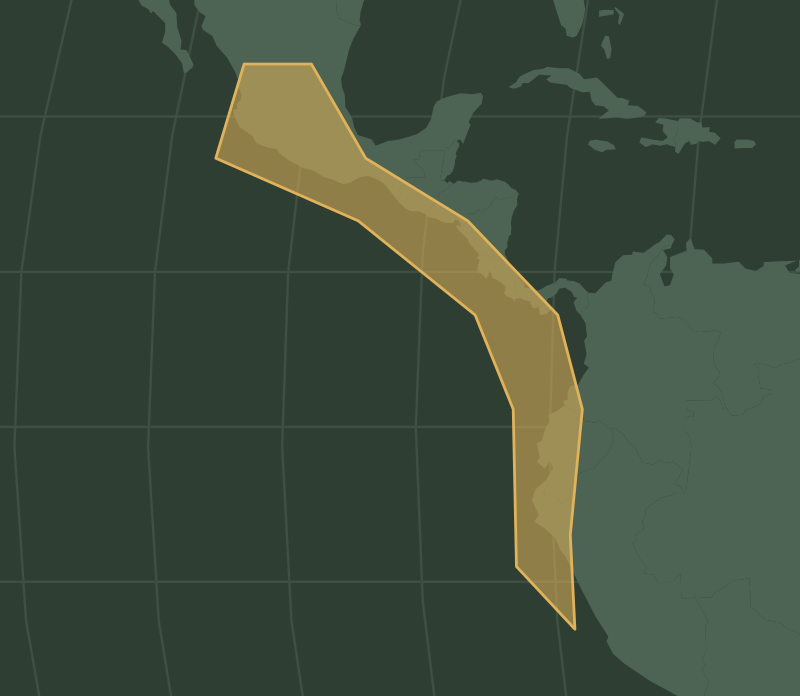
It grows natively throughout Latin America, from Mexico in the north to Peru in the south, and has become naturalised elsewhere.3
That breadth makes it a common plant of gardens and fences, but its value for the peoples who safeguard it lies in its medicinal and divinatory use, not in the plant as a curiosity.
What helps
- Learn its history from the voices of the Mazatec, Chinantec and Zapotec peoples.
- Do not treat it as a product: it is a plant of medicine and memory.
- Avoid buying seeds without reliable information about their origin and content.
What it contains
Ergine, an ergoline alkaloid
The seeds contain ergine, also called lysergic acid amide or LSA, an ergoline alkaloid related to LSD.3 They also contain isoergine.1
Hofmann pointed out that ergine and isoergine were previously known as semi-synthetic analogues of LSD, before they were found in a plant.1
Lysergic acid amide; the main alkaloid of the seeds.[1][4]
Isolysergic acid amide, a companion of ergine.[1]
The experience
What is known and what is not
Historical sources speak of use for medicinal and divinatory purposes.28 As for the experience itself, there are no reliable measurements of when it begins or how long it lasts.
The seeds of Ipomoea violacea are believed to be more potent than those of Rivea corymbosa.6
Indicative outline: it changes with the preparation, the amount and the person.
Research
What has been studied
The best documented aspects are the botany and the chemistry: the identification of the plant in 1939 and 1941, and the isolation of the ergolines in 1960.123
There have been later advances in the phytochemistry of the Convolvulaceae and in the pharmacology of the compounds isolated from their seeds.8
Scope of these dataThere are no clinical trials with these seeds. What is known about their use comes from historical chronicles and chemistry studies.
With care
What it helps to know beforehand
It is a seed of traditional use, not a consumer product, and the alkaloid content of what is sold is not known.1
There are garden morning glory seeds with similar alkaloids; without analysis it is not possible to tell which is which.6
Studies on its effects and risks in humans are lacking.
To follow
Books and related medicines
Sources
Where each piece of information comes from
- Hofmann A. The active principles of the seeds of Rivea corymbosa and Ipomoea violacea. Botanical Museum Leaflets, Harvard University. 1963;20:194-212.
- Schultes RE. Planta Medica. 1976;29 (article on hallucinogenic Convolvulaceae). bibliography.maps.org/resources/download/15072.
- Wikipedia. "Ipomoea corymbosa". en.wikipedia.org (accessed 24 November 2026).
- ICEERS. Basic info: ergot, LSA and morning glory. iceers.org/?p=5549.
- ICEERS. Ipomoea violacea: basic info. iceers.org/ipomoea-violacea-basic-info/.
- Wasson RG. Notes on the present status of ololiuqui and the other hallucinogens of Mexico. druglibrary.org/Schaffer/lsd/wasson.htm.
- Wikidoc. "Rivea corymbosa". wikidoc.org/index.php/Rivea_corymbosa.
- Ololiuqui, Tlitliltzin and related pre-Columbian Central American convolvulaceous drugs. bibliography.maps.org/resources/download/13618.
- Wikipedia. "Aztec use of entheogens". en.wikipedia.org (accessed 24 November 2026).
- Map APDER, with data from Natural Earth · public domain
- Molecule drawings APDER
Last reviewed: 24 November 2026. If you spot a mistake, write to us at info@apder.org.