

Plant · Lamiaceae · Asia, naturalised in the Americas
Marihuanilla
Leonurus sibiricus L.
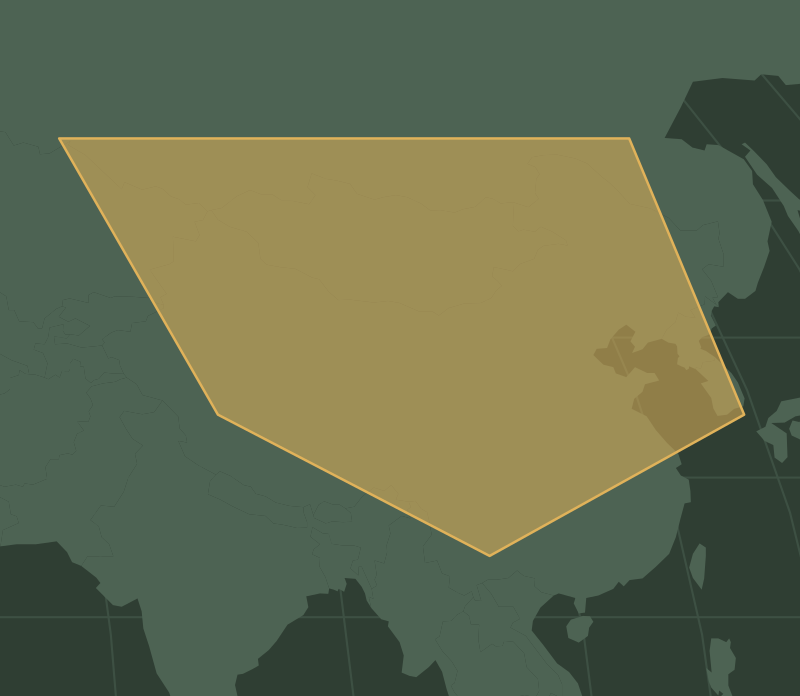
A herb of the mint family, native to China, Mongolia and Siberia and naturalised in many regions of the world, including the Americas. In the Americas it is called "marihuanilla" or "little marijuana"; in China it has a long medicinal tradition.123
Also calledmarihuanilla · agripalma siberiana · honeyweed · Siberian motherwort · little marijuana · yi mu cao · Leonurus sibiricus
- What it is
- An annual or biennial herb of the mint family
- Territory
- Native to China, Mongolia and Siberia; naturalised on other continents
- Part used
- Leaves and aerial parts
- Active principles
- Leonurine, among other compounds
- Onset and duration
- No reliable data in the sources consulted
- Who keeps its memory
- Traditional Chinese medicine and popular uses in the Americas
Botany
A whorled labiate
Leonurus sibiricus is a herbaceous plant of the Lamiaceae family, known as "honeyweed" or "Siberian motherwort", with an inflorescence of verticillasters.1
It is annual or biennial, with upright stems of 20 to 80 cm and long-stalked, ovate-cordate basal leaves with toothed margins and deep lobes.1
It flowers from July to September.2
- Family
- Lamiaceae
- Height
- 20 to 80 cm
- Cycle
- Annual or biennial
- Flowering
- July to September
Memory and tradition
Between Chinese medicine and the American name
In China it has been used against abscesses, boils, insect and snake bites, and as an aphrodisiac and for other purposes, according to compendia of Chinese medicine such as those of Li Shih-chen and Keys.4
It is also recorded in Chinese manuals for circulation, hypertension, menorrhagia and diuresis.5
In China its shoots and leaves are eaten.6
Among its names are "marihuanilla", "little marijuana", "honeyweed" and "Xi ye yi mu cao".32
Its likeness to marijuana lies in the name, not in the chemistry: there is no indication in the sources consulted that it contains cannabinoids.
Over time
Its names
- marihuanilla
- the Americas
- agripalma siberiana
- Spanish name of the species
- honeyweed
- English
- yi mu cao
- Chinese
Not to be confused with Leonotis leonurus, the "lion's tail" or African "wild cannabis".7
Territory and care
From Siberia to the Americas
What helps
- Know it as a herb of traditional Chinese medicine.
- Do not treat it as a substitute for other plants.
- Respect its popular name without confusing it.
What it contains
Leonurine
Leonurine has been measured in the leaves at around 0.5%, along with a fatty oil.6
The sources consulted do not record any demonstrated psychoactive chemistry.
Compound cited in the leaves.[6]
The experience
No reliable data
The sources consulted offer no reliable data on effects, onset or duration.
Research
What has been studied
The available documentation is mostly ethnobotanical, in databases of traditional uses.45
There are no clinical studies of any psychoactive use.
Scope of these dataDocumented traditional use; no clinical research in this field.
With care
What it helps to know beforehand
There are other plants called "wild cannabis" or similar, such as lion's tail.7
Reliable studies of other uses are lacking.
To follow
Books and related medicines
Sources
Where each piece of information comes from
- Wikipedia. Leonurus sibiricus. wikipedia.org/wiki/Leonurus_sibiricus.
- Minnesota Wildflowers. Leonurus sibiricus (Siberian motherwort). minnesotawildflowers.info/flower/siberian-motherwort.
- Pl@ntNet. Leonurus sibiricus L. identify.plantnet.org/reunion/species/Leonurus%20sibiricus%20L./data.
- USDA. Ethnobotanical plant Leonurus sibiricus. phytochem.nal.usda.gov/ethnobotanical-plant-leonurus-sibiricus.
- USDA. Ethnobotanical Plant Leonurus sibiricus (uses). phytochem.nal.usda.gov/node/12236.
- Purdue University. Famine foods: Leonurus sibiricus. purdue.edu/hla/sites/famine-foods/?p=4618.
- Wild cannabis: a review of the traditional use and phytochemistry of Leonotis leonurus. J Ethnopharmacol. 2015;174:520-539. pubmed.ncbi.nlm.nih.gov/26292023/.
- Map APDER, with data from Natural Earth · public domain
- Molecule drawings APDER
Last reviewed: 24 November 2026. If you spot a mistake, write to us at info@apder.org.