

Mushroom · Amanitaceae · Forests of the northern hemisphere
Fly agaric
Amanita muscaria (L.) Lam.
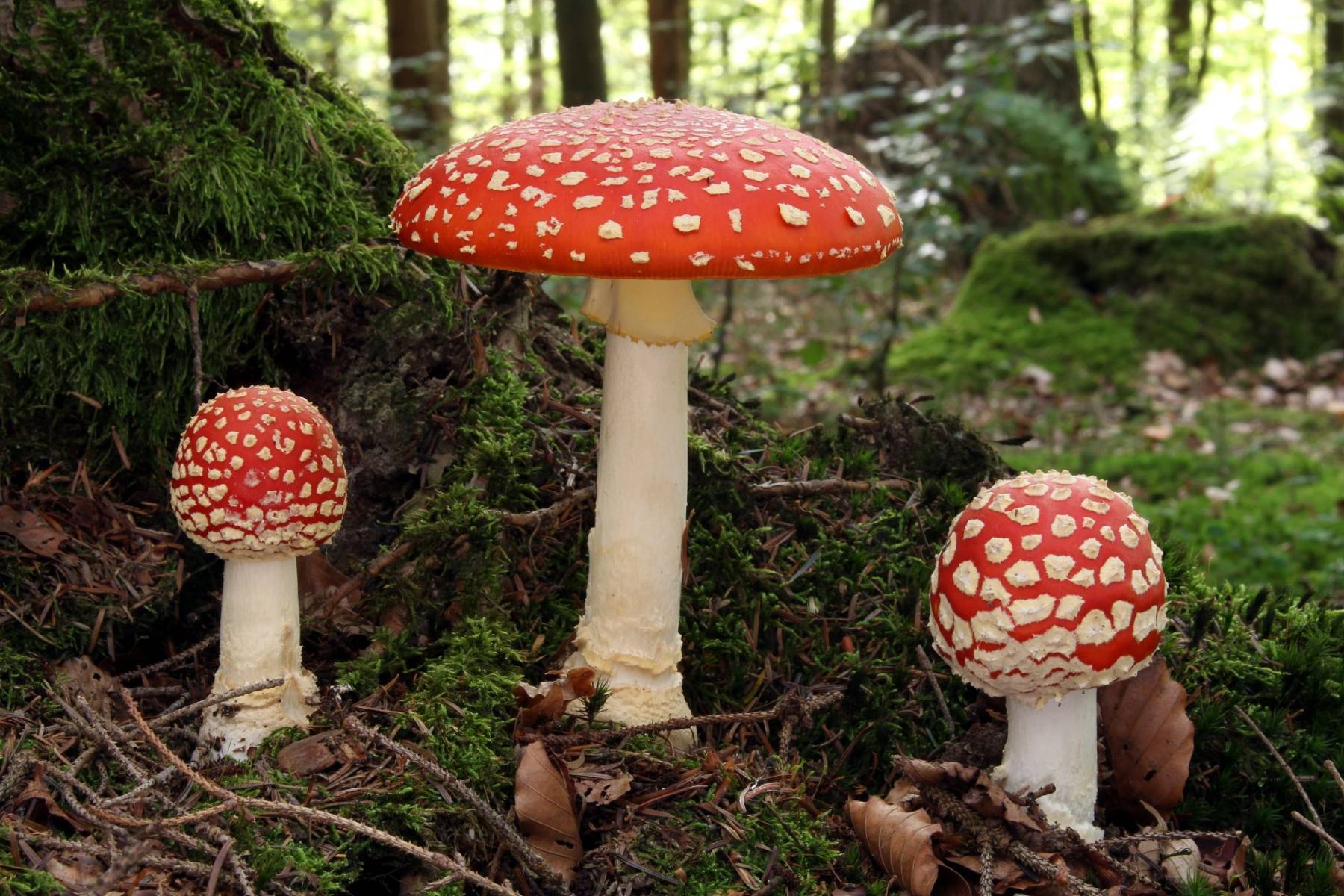
It is the red mushroom with white spots of fairy tales. It grows every autumn at the foot of birches and pines, it is toxic, it contains no psilocybin and it is perhaps the most drawn mushroom in the world.1
Also calledfalsa oronja · rebentabois · brincabois · reig bord · fly agaric · Fliegenpilz · mujomor
- What it is
- Woodland mushroom, toxic and intoxicating
- Territory
- Temperate and cold forests of the northern hemisphere
- Part used
- The cap, traditionally dried
- Active principles
- Ibotenic acid and muscimol
- Onset and duration
- 30–120 min · 6–10 hours
- Who keeps its memory
- Koryaks, Chukchi, Itelmens and Khanty, in Siberia
Mycology
Red, white and bound to a tree
Linnaeus described it in 1753 as Agaricus muscarius and Lamarck moved it in 1783 to the genus Amanita, where it remains.6
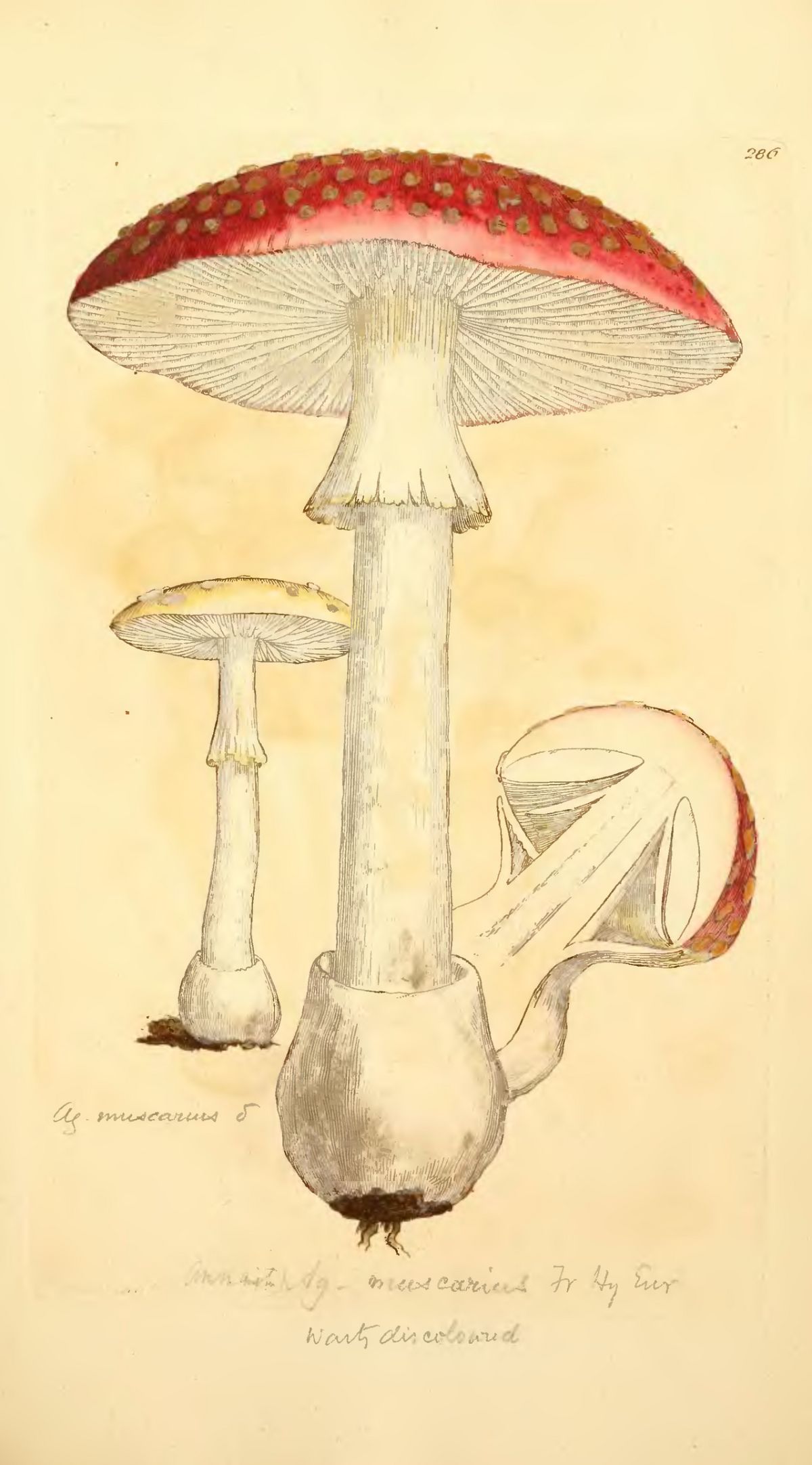
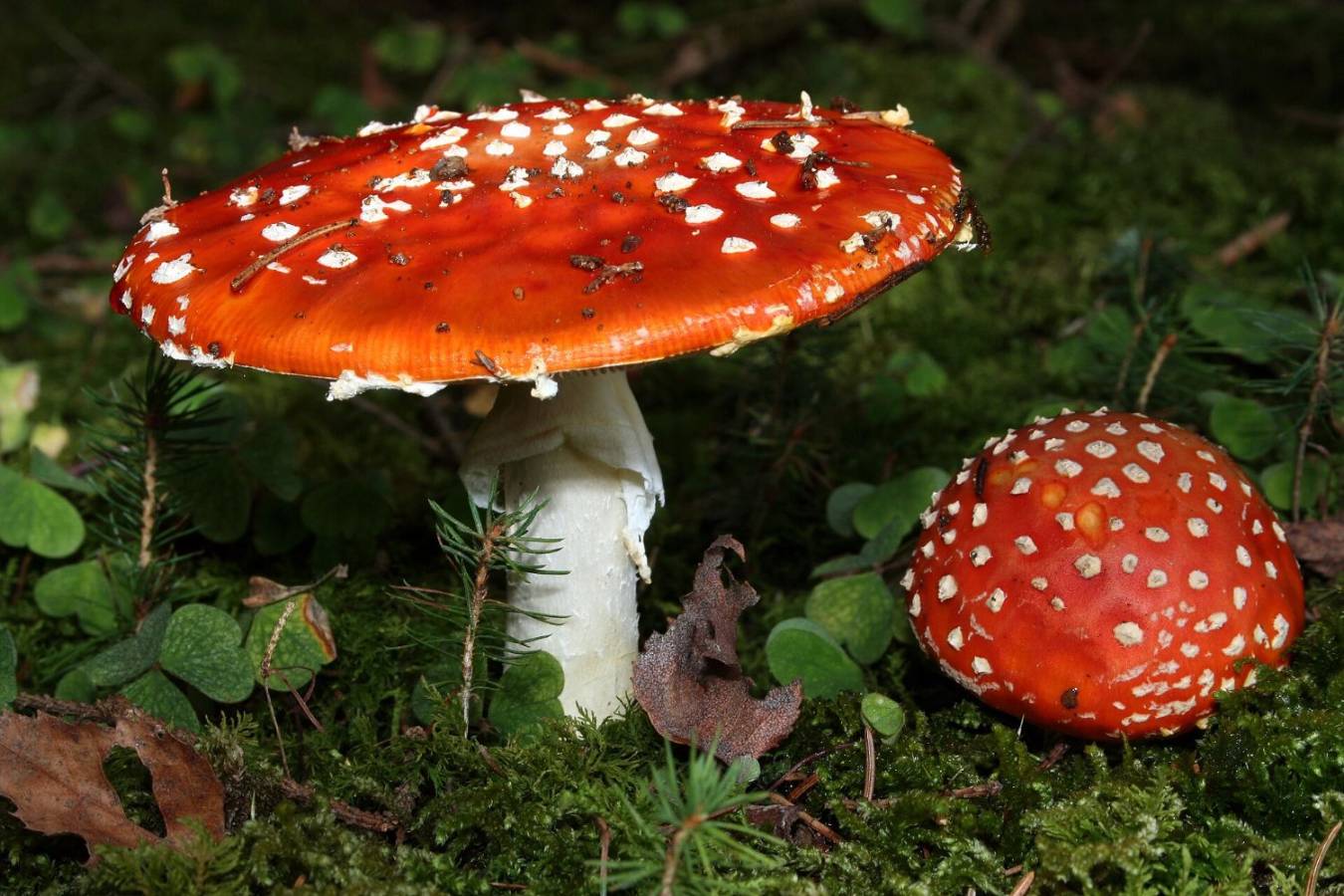
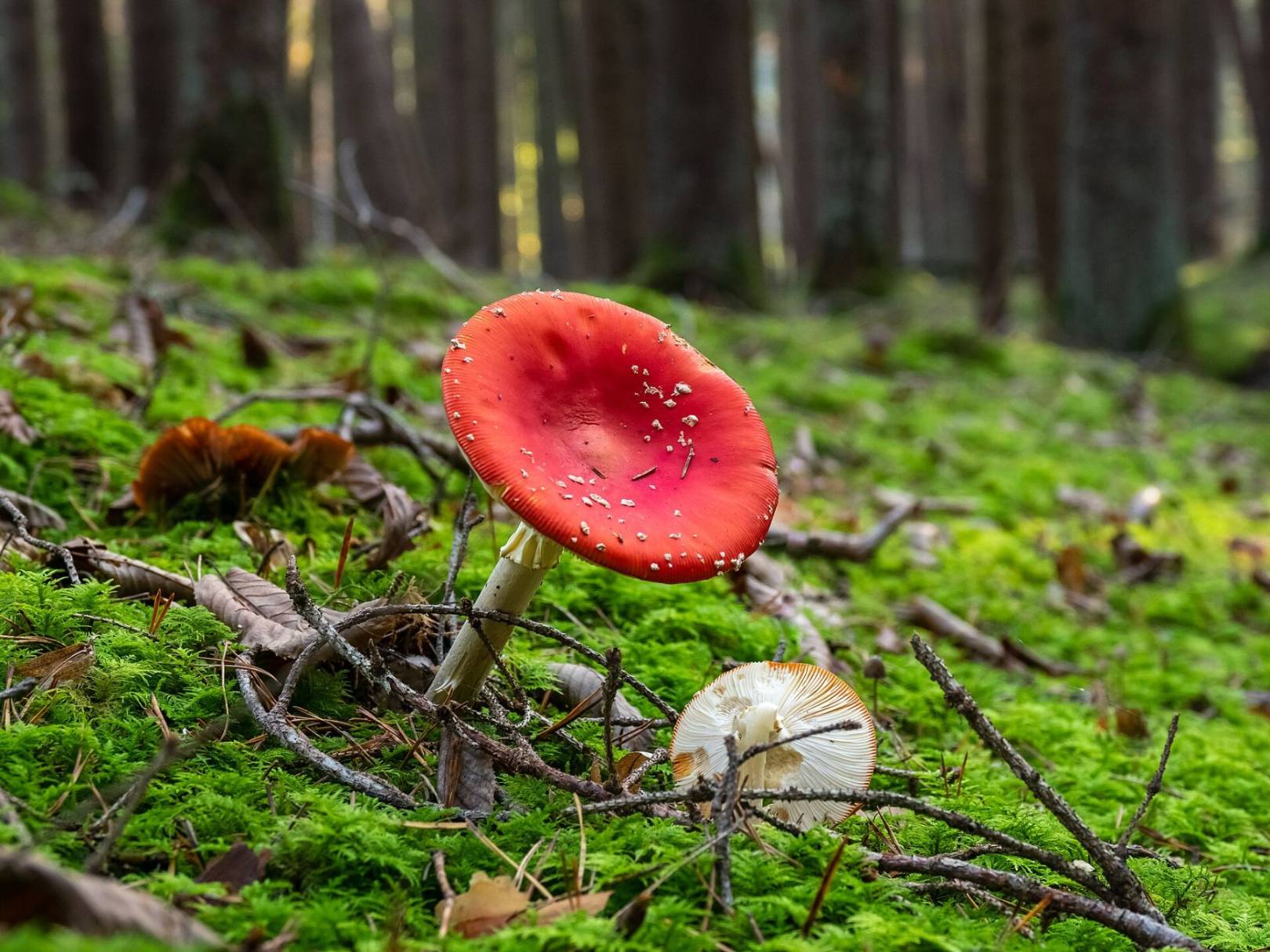
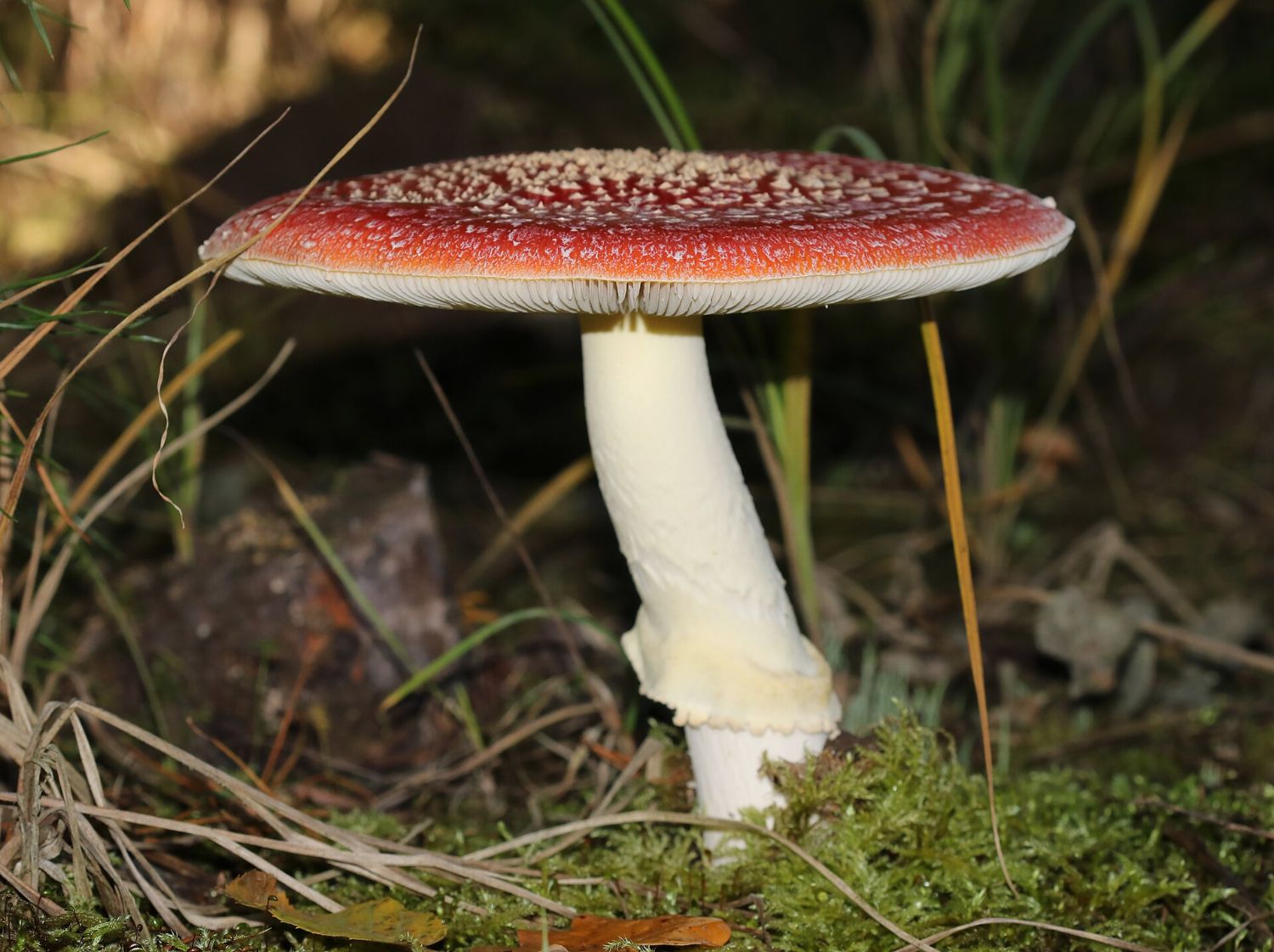
The cap ranges from bright red to orange and carries white warts, remnants of the veil that wrapped it at birth; rain can wash them off. Underneath it has white gills, a hanging ring and a white stem ending in a bulb.1
It does not live alone. Its filaments wrap around the roots of birches, pines, spruces, firs and oaks, and fungus and tree feed one another. That is why it always appears close to them, from the end of summer to autumn, and why it is not easily cultivated.1
This is not an identification key. Isolated features are misleading, and the same genus includes deadly mushrooms. If in doubt, eat none.
- Family
- Amanitaceae
- Way of life
- Mycorrhiza with trees
- Cap
- Red, with white warts
- Season
- Late summer and autumn
Memory and tradition
From Siberia to fairy tales
Its best-documented use is in Siberia. Koryaks, Chukchi, Itelmens and Khanty have taken it in rites and at festivals, almost always dried.2
The travellers who reported it in Europe noticed one detail: part of the active substance passes into the urine unchanged, and some people drank it to repeat the effect.1
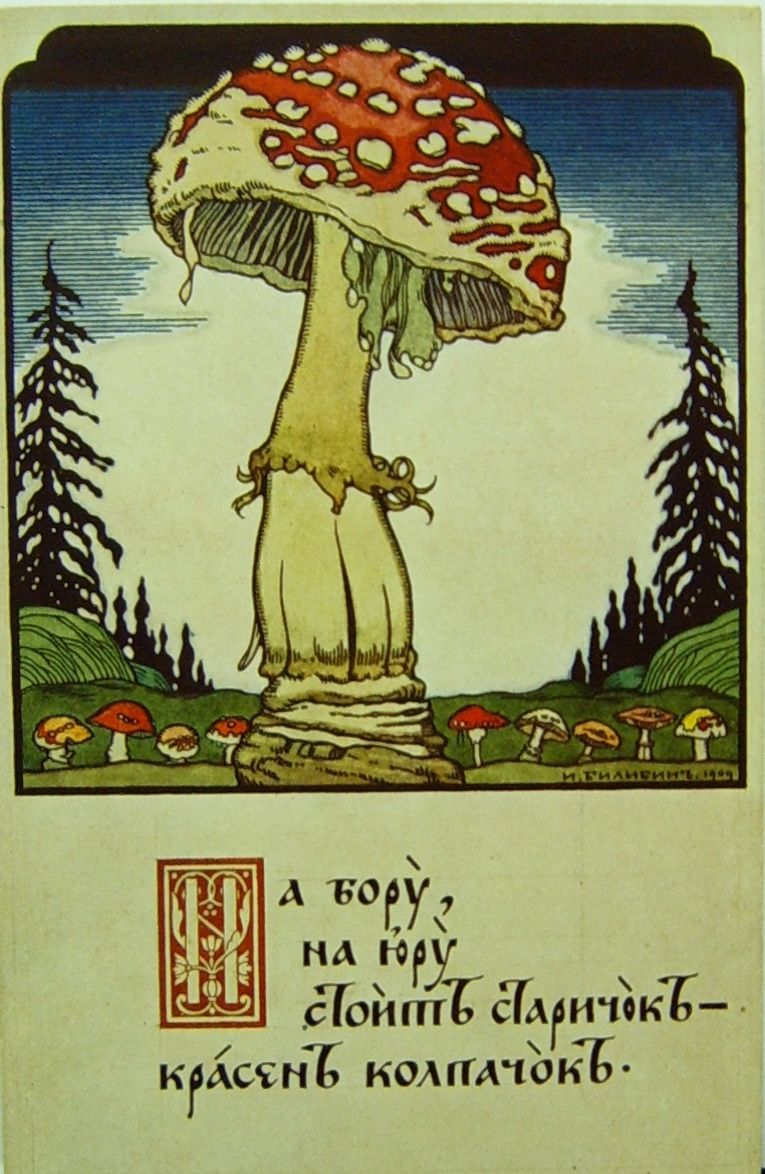
In central Europe it has been a good-luck charm for more than a century, and in Russia the mujomor is a character in fairy tales. Ivan Bilibin drew it around 1900.
Over time
A Polish prisoner of war writes that the Ostyaks of the River Irtysh eat mushrooms shaped like fly agarics and become intoxicated on them.4
The Swede Philipp Johann von Strahlenberg, twelve years a captive in Siberia, describes how it is taken.4
Linnaeus names it Agaricus muscarius.6
Lamarck places it in the genus Amanita.6
R. Gordon Wasson proposes that it was the soma of the Vedic hymns. The idea remains much debated.4
Its names
- matamoscas, falsa oronja
- Spanish
- rebentabois, brincabois
- Galician
- reig bord, oriol foll
- Catalan
- fly agaric
- English
- Fliegenpilz
- German
- amanite tue-mouches
- French
- mujomor (мухомор)
- Russian
- beni-tengu-take
- Japanese
Around 1250, Albertus Magnus recorded that it served to kill flies, and hence its name in half of Europe. The reference review doubts that it works as an insecticide.1
Territory and care
Where there are birches and pines
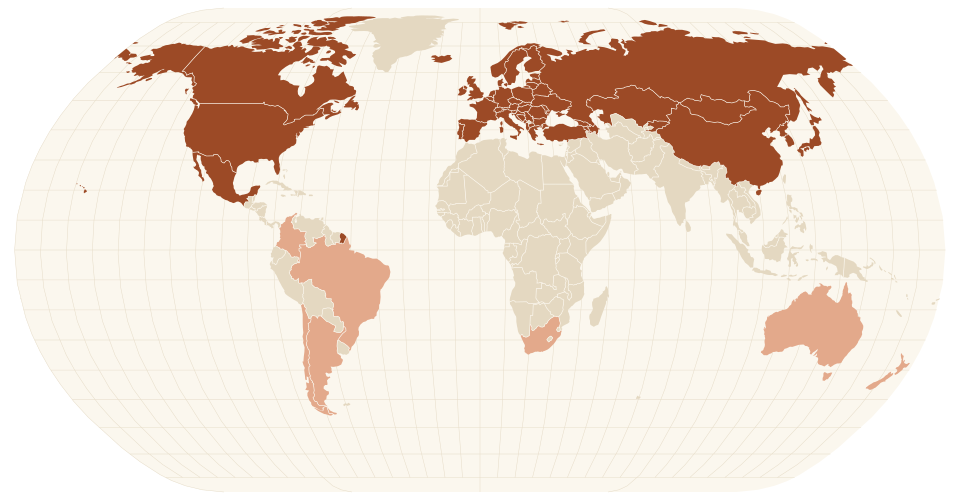
It is native to the temperate and boreal forests of the northern hemisphere, from the Iberian Peninsula to Kamchatka and from Alaska to Mexico. With pine and birch plantations it has travelled to the southern hemisphere, and it now also grows in Australia, New Zealand, South Africa and parts of South America.1
What helps
- Gather without disturbing the soil or pulling up the mycelium.
- Do not trample the surroundings: the mushroom lives joined to the roots of the tree.
- Do not call a commercial product "shamanic": it confuses a living tradition with a market object.
What it contains
An accelerator and a brake
The brain works with signals that excite and signals that slow things down. The fly agaric touches both at once, and that is why its effect mixes agitation and drowsiness and is so hard to predict.1
The amount of each substance varies greatly from one mushroom to another, from one place to another and from one season to another. Muscarine, from which it takes its name, is present in small amounts.1
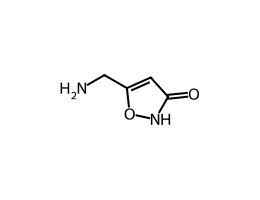 MuscimolResembles GABA
It activates the GABA-A receptor, the brain's main brake: sedation, clumsiness and vivid dreams.
It excites the nervous system and is the more toxic of the two. When the mushroom is dried or heated, part of it turns into muscimol.
The experience
A waking dream, often uncomfortable
It usually begins with nausea and vomiting. Then come confusion, euphoria or agitation, and things and one's own body seem to change size. At the end comes a very deep sleep.1
It is not like psilocybin mushrooms. It is more sedating, more confusing and more unpredictable, and it is often unpleasant.
Indicative outline: it changes with the preparation, the amount and the person.
Research
Almost everything remains to be studied
There are no demonstrated therapeutic uses. Muscimol is used in the laboratory to study the GABA-A receptor, but that is not a treatment.
A 2023 study analysed comments in social media groups favourable to its use. Those who took it said they were seeking relief from stress, insomnia, low mood or pain; the adverse effects most often cited were drowsiness, abdominal pain and nausea.5
Scope of these dataThese are testimonies from people who chose to write them, with no comparison group. They do not show that it works.
With care
What it helps to know beforehand
Mistaking it for another amanita. The same genus includes the death cap (Amanita phalloides), the most dangerous mushroom in Europe.
Poisoning is unpredictable and sometimes needs hospital care.3
Alcohol, tranquillisers, opioids and other sedatives: their effects add up.
Gummies, chocolates and extracts with unreliable labels; some contain undeclared substances.
Look-alikes that matter
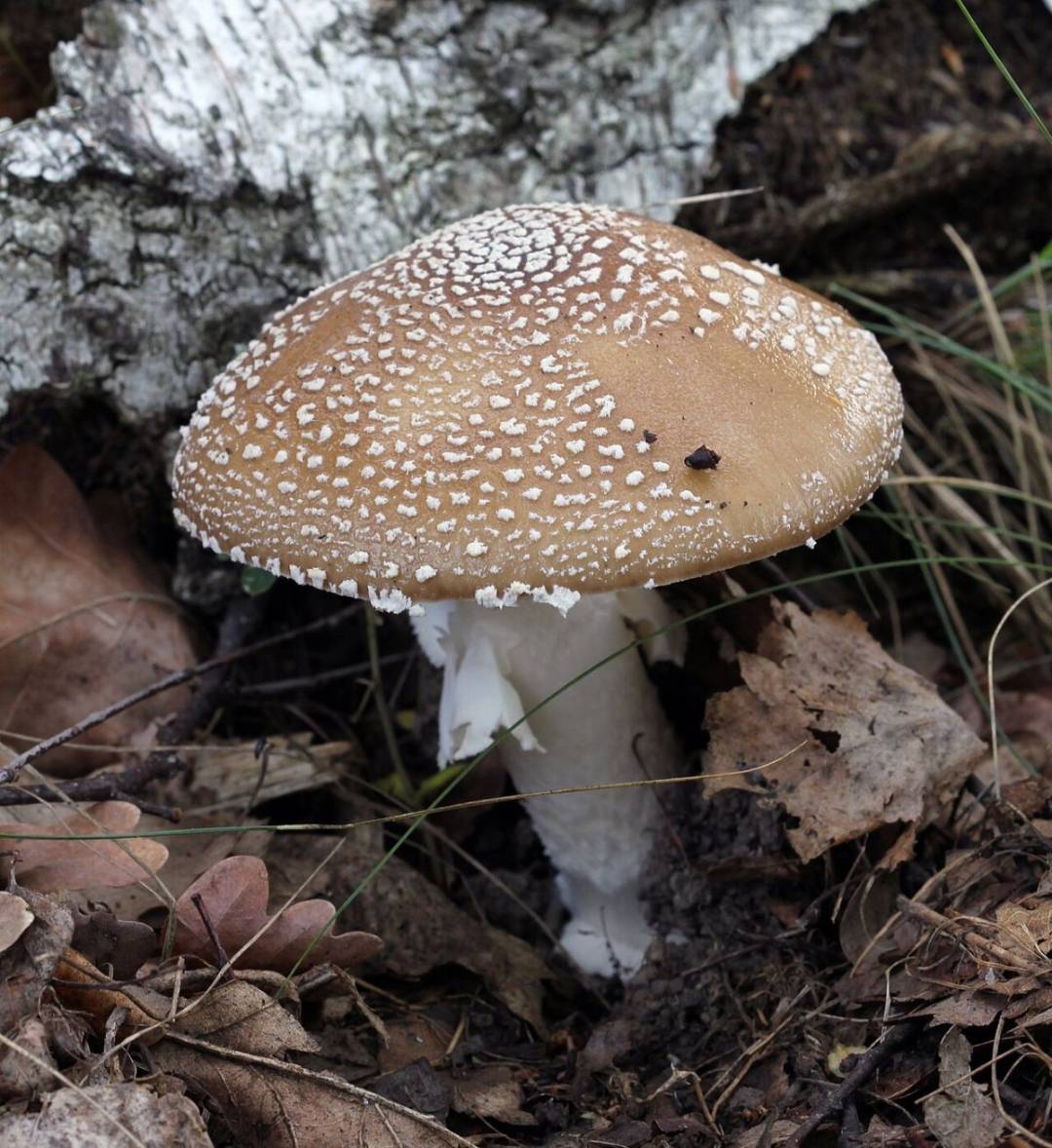
It contains the same substances and causes more intense poisonings.3
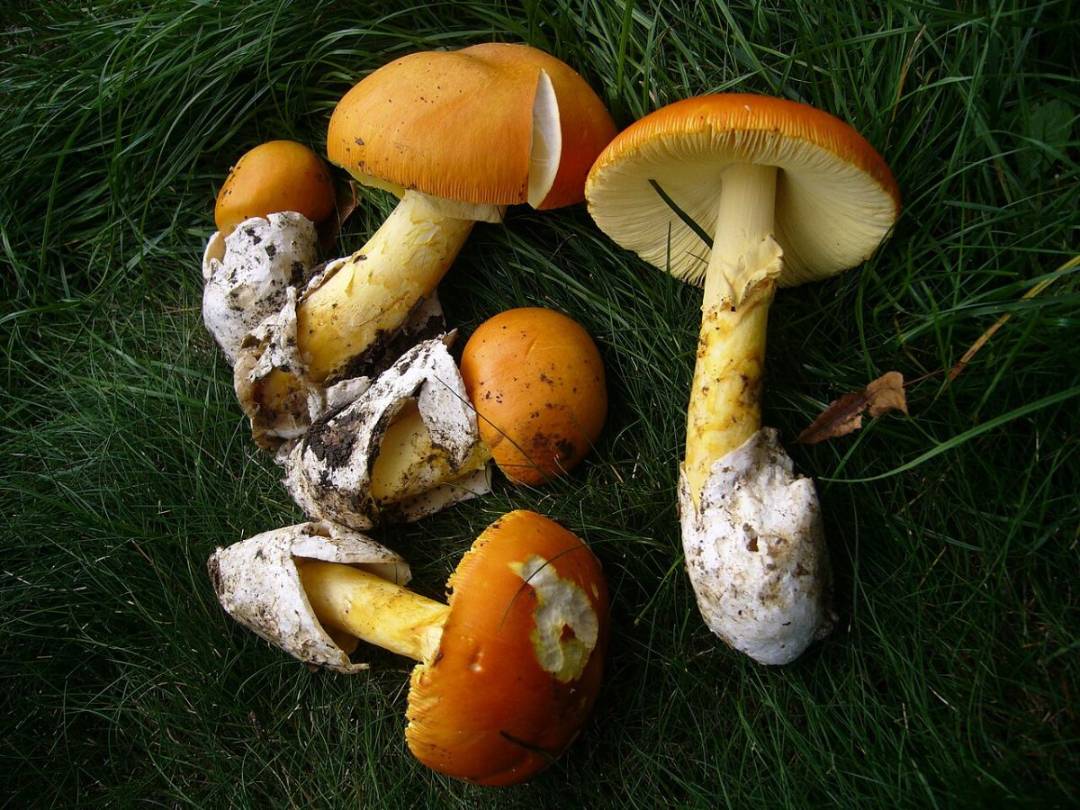
Edible and highly prized. From it comes the name "falsa oronja" (false Caesar's mushroom): a fly agaric washed by rain can resemble it.
It is not red, but it shares the ring, volva and white gills. It is the one that must always be ruled out.
Gallery
A closer look
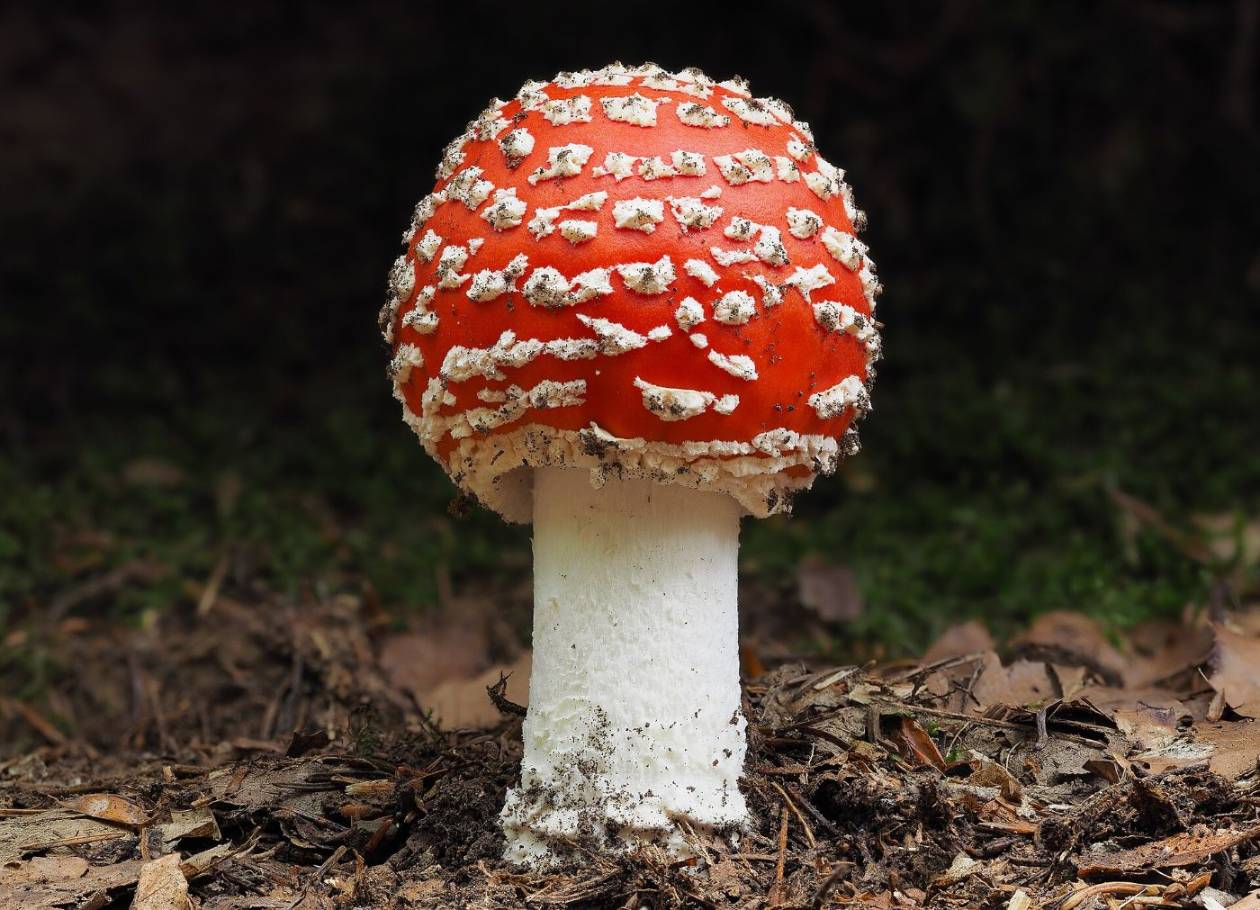
To follow
Books and related medicines
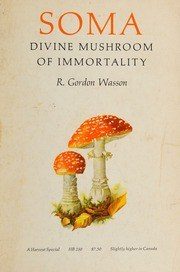 Soma: Divine Mushroom of ImmortalityR. Gordon Wasson · 1968In the APDER library →
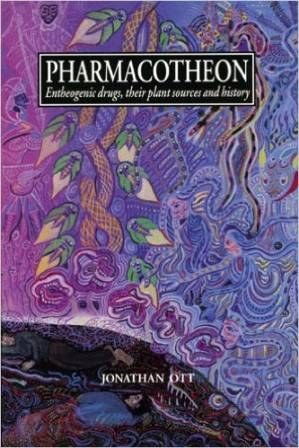 PharmacotheonJonathan Ott · 1993In the APDER library →APDER libraryAmanita muscaria: Herb of ImmortalityAmanita muscaria: Herb of ImmortalityDonald E. TeeterIn the APDER library →
Its closest relative, with the same substances.
MushroomPsilocybin mushroomsPsilocybe spp.Other mushrooms, other chemistry and another experience.
MushroomErgotClaviceps purpureaThe rye fungus from which LSD came.
PreparationSomaDrink of the Vedic hymnsThe enigma Wasson set out to answer.
Sources
Where each piece of information comes from
- Michelot D, Melendez-Howell LM. Amanita muscaria: chemistry, biology, toxicology, and ethnomycology. Mycol Res. 2003;107(2):131-146.
- Saar M. Ethnomycological data from Siberia and North-East Asia on the effect of Amanita muscaria. J Ethnopharmacol. 1991;31(2):157-173.
- Moss MJ, Hendrickson RG. Toxicity of muscimol and ibotenic acid containing mushrooms reported to a regional poison control center from 2002–2016. Clin Toxicol (Phila). 2019.
- Wasson RG. Soma: Divine Mushroom of Immortality. 1968.
- Ordak M, Galazka A, Nasierowski T, et al. Reasons, form of ingestion and side effects associated with consumption of Amanita muscaria. Toxics. 2023;11(4):383.
- Index Fungorum. Amanita muscaria (L.) Lam., 1783; basionym Agaricus muscarius L., 1753. indexfungorum.org.
- Rätsch C. The Encyclopedia of Psychoactive Plants. Rochester: Park Street Press; 2005. Entry "Amanita muscaria".
- Three specimens at different stages, among moss. Holger Krisp · CC BY 3.0
- Agaricus muscarius James Sowerby, Coloured Figures of English Fungi or Mushrooms, plate 286. London, 1803. Public domain
- "Mushroom" Ivan Bilibin. Illustration, around 1900. Public domain
- Map APDER, with data from Natural Earth · public domain
- Molecule drawings APDER
- Panther cap George Chernilevsky · public domain
- Caesar's mushroom Yaqui · CC BY-SA 3.0
- Freshly emerged, with the veil broken into warts. Petar Milošević · CC BY-SA 4.0
- One open specimen and one young one. Holger Krisp · CC BY 3.0
- Coniferous forest with moss, its usual habitat. Ermell · CC BY-SA 4.0
- White gills, ring and bulbous stem. George Chernilevsky · CC BY 4.0
Last reviewed: 23 November 2026. If you spot a mistake, write to us at info@apder.org.