

Plant · Nymphaeaceae · Nile Valley
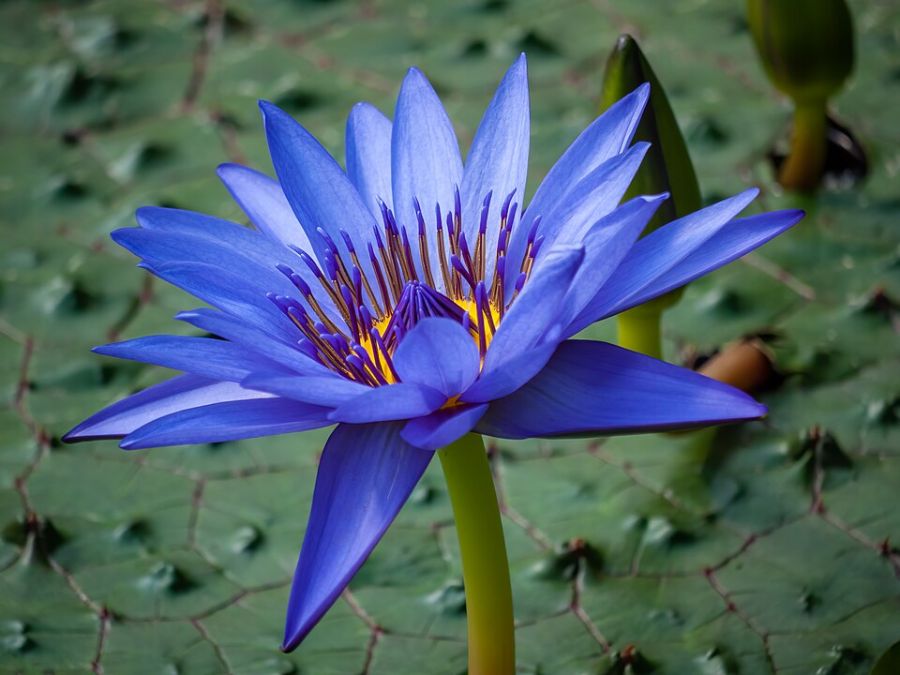
Blue lotus
Nymphaea caerulea Savigny
The blue-flowered water lily seen in the reliefs and papyri of ancient Egypt. Psychoactive effects are attributed to it because of its alkaloids, but the authentic extracts analysed barely contain them, and what is sold today under its name is highly variable.123
Also known asblue lotus · Egyptian blue lotus · blue water lily · sacred lily of the Nile
- What it is
- Perennial aquatic plant with blue flowers, of the water lily family
- Territory
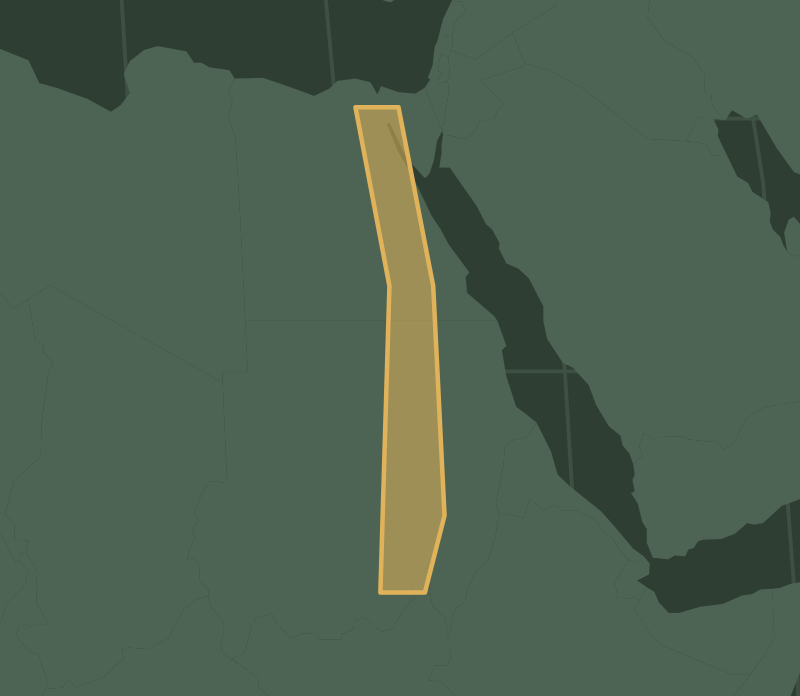
- Nile Valley; today in lakes and rivers on several continents
- Part used
- The flower
- Active principles
- Aporphines, such as apomorphine and nuciferine, disputed
- Onset and duration
- No reliable data
- Who keeps its memory
- Ancient Egypt; it is compared with the Maya use of the water lily
Botany
A water lily that opens in the morning
It is a perennial aquatic plant that grows in rivers and lakes, from sea level up to about 2,700 metres in altitude.2
The flowers open in mid-morning and close in the afternoon. They can be blue, white or pink, although blue is the most common colour.2
Some botanists consider it a variety of Nymphaea nouchali.2
- Family
- Nymphaeaceae
- Habitat
- Fresh waters, rivers and lakes
- Flower
- Blue, white or pink; opens in the morning
- Cycle
- Perennial
Memory and tradition
The flower that is reborn with the sun
Drawings and paintings of the blue lotus appear on Egyptian papyri and in tombs from the 14th century BC, and have been interpreted as a sign of its use in rituals and health practices.2
One of the most cited arguments is an erotic papyrus from Turin, where a lotus appears over a woman's head, perhaps a reference to its use for desire.1 It has also been compared with the use of the water lily among the Maya, who are thought to have used Nymphaea ampla.3
Today it is debated whether those readings are sound. A recent study from the University of California, Berkeley holds that the Egyptian blue lotus and the water lily sold online are different plants, and that how it was consumed may have been misunderstood.4
Over time
The blue lotus appears on papyri and in tombs in Egypt.2
The comparison of the ritual use of water lilies in Egypt and among the Maya is published.3
A review proposes that water lilies are apomorphine-bearing plants used since antiquity.1
An analysis of authentic and commercial extracts finds that the authentic extract contains almost no apomorphine or nuciferine.2
Its names
- blue lotus
- common name, from the colour of its flowers
- Egyptian lotus
- for its place in ancient Egypt
- water lily
- from the Arabic nīlūfar, the name of aquatic lotuses
- Nymphaea
- from the Greek, after the river nymphs
"Lotus" is a name given to very different plants. The water lily should not be confused with the Asian sacred lotus (Nelumbo), which is not the same thing.
Territory and care
A water lily of the Nile, now in many waters
What helps
- Ask which species the product is and where it comes from before trusting its label.
- Prefer study and historical respect to buying extracts.
- Do not take aquatic plants out of their environment to sell them.
What it contains
Aporphines, a clue that does not quite fit
The flowers are said to contain aporphines, such as apomorphine and nuciferine, and it has been proposed that these explain their history as a psychoactive plant.13
In 2023, six authentic extracts of N. caerulea and eleven commercial products were analysed: apomorphine and nuciferine, responsible for psychoactive effects, were practically absent from the authentic extract.2
It was isolated from water lilies and proposed as the basis of their ancient use, but it did not appear in the authentic extract analysed in 2023.[1][2]
Also almost entirely absent from the authentic extract analysed.[2]
The experience
A gentle calm, if there is any effect
Today it is taken, mostly as tea or tincture, to relax and feel a greater spiritual awareness.2
Since analyses do not find the expected alkaloids, part of what is experienced may come from context and expectation rather than from the plant.2
Indicative outline: it changes with the preparation, the amount and the person.
Research
What has been studied
What has been studied is mostly historical and chemical: the archaeology of the lotus, the comparison with the Maya water lily and the analysis of extracts.123
There are no trials in people showing an effect of the blue lotus.
Scope of these dataThe interpretation of the lotus image as a "drug" is a hypothesis. Recent analyses do not confirm it, and the content of commercial products varies greatly.
With care
What it helps to know beforehand
To follow
Books and related medicines
Sources
Where each piece of information comes from
- Bertol E, Fineschi V, Karch SB, Mari F, Riezzo I. Nymphaea cults in ancient Egypt and the New World: a lesson in empirical pharmacology. J R Soc Med. 2004;97(2):84-85.
- Dosoky NS, Shah SA, Dawson JT, et al. Chemical composition, market survey, and safety assessment of blue lotus (Nymphaea caerulea Savigny) extracts. Molecules. 2023;28(20):7014.
- Emboden WA. Transcultural use of narcotic water lilies in ancient Egyptian and Maya drug ritual. J Ethnopharmacol. 1981;3(1):39-83.
- University of California, Berkeley. Investigating the psychedelic blue lotus of Egypt, where ancient magic meets modern science. 13 March 2025. artshumanities.berkeley.edu.
- Blue lotus (Nymphaea caerulea). Ermell · CC BY-SA 4.0
- Map APDER, with data from Natural Earth · public domain
- Molecule drawings APDER
Last reviewed: 24 November 2026. If you spot a mistake, write to us at info@apder.org.