

Cactus · Cactaceae · Northern Mexico and Texas
False peyote
Ariocarpus fissuratus (Engelm.) K.Schum.
A small cactus that barely rises above the ground and looks like a cracked stone, hence its name “living rock”. The Tarahumara called it sunami and considered it more powerful than peyote. It does not contain mescaline, but hordenine and other phenethylamines in small amounts.123
Also calledfalse peyote · living rock · sunami · peyote cimarrón · chautle · dry whiskey · star cactus
- What it is
- Low cactus, shaped like a rosette pressed to the ground
- Territory
- South-western Texas and northern Mexico
- Part used
- Whole plant
- Active principles
- Hordenine and other phenethylamines; no mescaline
- Onset and duration
- No reliable data in the sources consulted
- Who keeps its memory
- Tarahumara and Huichol (related species)
Botany
A living stone
Ariocarpus fissuratus is a small cactus that grows to about 15 cm across and barely rises above the ground.1 It is a succulent rosette plant with a short, unbranched stem growing from a large, fleshy taproot.4
Its tubercles form a cracked surface that blends in with the limestone rock where it lives.5
It is known as "living rock cactus", "false peyote", chautle, "dry whiskey" and "star cactus".6
It is often grown grafted onto a faster-growing columnar cactus, because in the wild it grows very slowly.7
- Family
- Cactaceae
- Diameter
- Up to about 15 cm
- Habitat
- Limestone soils
- Root
- Taproot, large and fleshy
Memory and tradition
Sunami and wild peyote
It is known to have had medicinal and ritual uses; a specimen turned up at the archaeological site of Hinds Cave, in a Middle Archaic context.1
The Tarahumara called it sunami and considered it more powerful than peyote (Lophophora williamsii, "waname"): they used it in a similar way and also to prepare a highly intoxicating drink.8 They also attributed to it the power to protect against thieves.8
Among the Huichol, another Ariocarpus, A. retusus ("tsuwiri"), is the "false peyote".8
Erowid's guide to visionary cacti describes it as a "powerful teacher" that many consider more potent than peyote; this assessment comes from that popular source.9
Over time
Its names
- sunami
- Tarahumara
- peyote cimarrón
- Mexico
- chautle
- Mexican Spanish
- living rock, false peyote
- English
"False peyote" is applied to several species of Ariocarpus and to other cacti that are not Lophophora.8
Territory and care
Texas and the Chihuahuan Desert
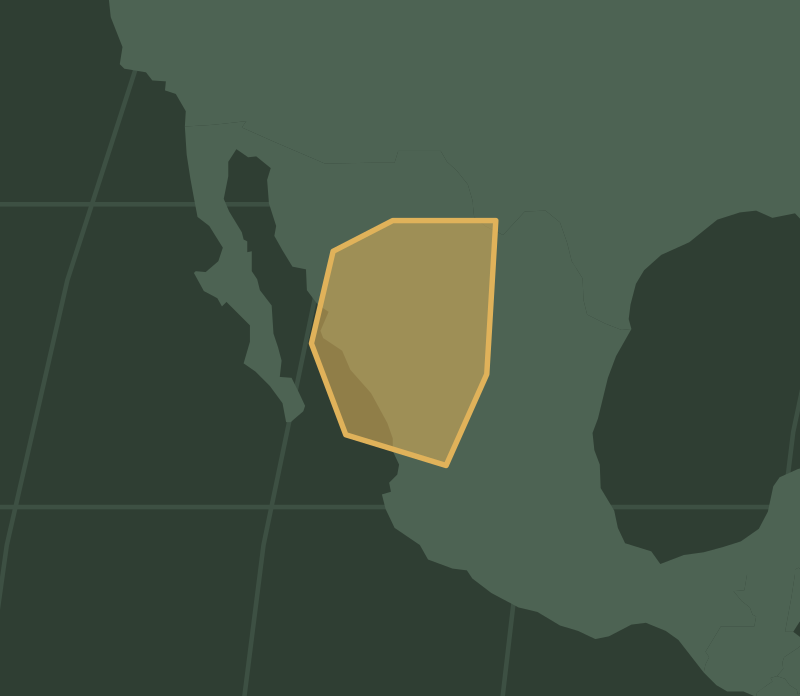
It is widespread in south-west Texas, from Big Bend to the Pecos River, and in the Mexican states of Coahuila, Chihuahua, Durango, Nuevo León, Tamaulipas and Zacatecas.6
The IUCN classes it as of least concern, because it is a widespread species with relatively large populations that are not declining enough to qualify as threatened.4
Even so, it is collected in the wild for local use and sometimes illegally by collectors.4 Other species of the genus are endangered through habitat loss and overcollection.10
What helps
- Do not collect it in the wild.
- Prefer nursery plants of clear origin.
- Respect Tarahumara and Huichol knowledge.
What it contains
Hordenine, not mescaline
It contains small amounts of hordenine and other phenethylamines, but not mescaline, as has sometimes been suggested.1
Britannica notes that Ariocarpus species contain alkaloids, mainly hordenine, in amounts sufficient to be mildly hallucinogenic.10
A study by Bruhn and Bruhn identified known cactus alkaloids in several related Mexican genera, including Ariocarpus.11
The experience
No reliable data
The sources consulted offer no reliable descriptions of its experience, nor data on onset or duration.
Research
What has been studied
Its alkaloid content has been studied within work on Mexican cacti related to peyote.11
Scope of these dataEthnobotanical and chemical studies; no clinical research.
With care
What it helps to know beforehand
To follow
Books and related medicines
Sources
Where each piece of information comes from
- Texas Beyond History. Ariocarpus fissuratus. texasbeyondhistory.net/ethnobot/images/livingrock.html.
- Wikipedia. Ariocarpus fissuratus. en.wikipedia.org/wiki/Ariocarpus_fissuratus.
- Britannica. Living-rock cactus. britannica.com/print/article/344842.
- Plants For A Future. Ariocarpus fissuratus. temperate.theferns.info/plant/Ariocarpus+fissuratus.
- Encyclopedia of Life. Ariocarpus fissuratus. eol.org/pages/588921/articles.
- Wikipedia. Ariocarpus fissuratus (distribution and names). en.wikipedia.com/wiki/Ariocarpus_fissuratus.
- Wikipedia. Ariocarpus fissuratus (cultivation). en.wikipedia.org/wiki/Ariocarpus_fissuratus.
- Living-rocks.com. Ethnobotany (quoting Lumholtz, 1902). living-rocks.com/ethnobotany.htm.
- Erowid. Visionary Cactus Guide: Ariocarpus. taz4.erowid.org/plants/cacti/cacti_guide/cacti_guide_ariocarp.shtml.
- Britannica. Mexican living-rock cactus. britannica.com/plant/Ariocarpus-fissuratus.
- Bruhn, J. G. and Bruhn, C. Alkaloids and Ethnobotany of Mexican Peyote Cacti and Related Species. bibliography.maps.org/resources/download/12011.
- Map APDER, with data from Natural Earth · public domain
- Molecule drawings APDER
Last reviewed: 24 November 2026. If you spot a mistake, write to us at info@apder.org.