

Plant · Solanaceae · Mexico, Central America and the Caribbean
Copa de oro
Solandra spp. Sw.
A climber with enormous yellow flowers, known in Mexico as copa de oro (“golden cup”) and among the Huichol as kieli or kieri. It contains tropane alkaloids and, according to some authors, its ritual use predates that of peyote.12
Also known ascopa de oro · kieli · kieri · tree of the wind · Judas’s purse · tecomaxóchitl · chalice vine · Solandra
- What it is
- A genus of climbers of the nightshade family
- Territory
- Mexico, the Caribbean and South America
- Part used
- Branches, roots and fruits, according to tradition
- Active principles
- Atropine, noratropine, hyoscyamine and tropine
- Onset and duration
- No reliable data
- Who keeps its memory
- Huichol (Wixárika) and other peoples of Mexico
Botany
Climbers with enormous golden flowers
Solandra is a genus of plants of the nightshade family that brings together climbers known as chalice vines, from the tropics and the Caribbean, Mexico and South America.1
They have very large flowers and glossy foliage.1 Ten species are recognised.1
Solandra maxima, the copa de oro, is a vigorous climber with very large yellow flowers, endemic to Mexico and Central America.1
The genus is closely related to Datura and is distinguished by a similar range of tropane alkaloids.3
It contains tropane alkaloids and is a risky plant. It is not for trying out.
- Family
- Solanaceae
- Habit
- Vigorous climber
- Flower
- Yellow, very large
- Species
- Ten recognised
Memory and tradition
The kieri of the Huichol
Solandra grandiflora was (and probably still is) used by the Huichol of Mexico and other peoples of the region, where it is known as “kieli” or “kieri”, and there is archaeological evidence supporting the hypothesis that its use as a hallucinogen predates that of peyote.1
In native traditions a tea is drunk made from the branches, and even more from the roots and fruits, as an intoxicant.1
Peter Furst described the kieri and the Solanaceae in Huichol mythology, and suggested that it might have implications for a religious shift in the Huichol past, from a ritual focus on a nightshade to the peyote cactus.3
In Mexico, all the species of the genus receive popular names such as “tree of the wind” and “Judas’s purse”; the species of ethnopharmacological importance are S. brevicalyx (kieli, kieri), S. guerrerensis (huipatli, hueypahtli, tecomaxóchitl) and S. nitida (cutaquatzitziqui, copa de oro).2
Erowid notes that it has a long history of ritual use, perhaps from prehistoric times, and that it is closely associated with sorcery.4
Over time
Possible ritual use predating that of peyote, according to some authors.14
The Huichol kieri is identified with a Solandra.3
Its names
- kieli / kieri
- Huichol name
- copa de oro
- popular Mexican name
- tecomaxóchitl
- Nahuatl name of the genus
- tree of the wind
- popular name
- Judas’s purse
- popular name
The popular names are applied to the whole genus, and the identification of the exact species has been disputed among authors.23
Territory and care
A genus of the American tropics
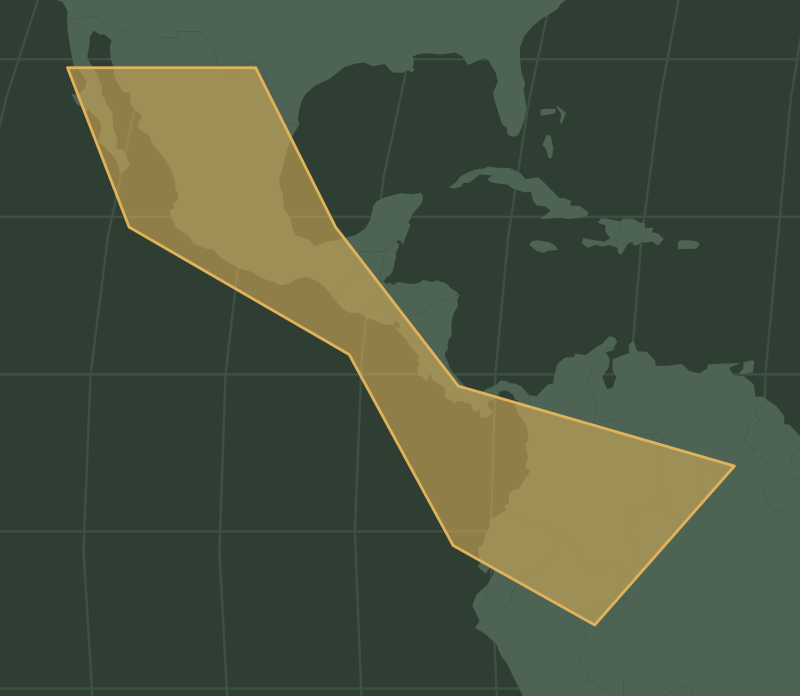
What helps
- Know it as an ornamental plant and as part of Huichol tradition.
- Respect the place of the kieri in Wixárika mythology.
- Do not treat it as a product.
What it contains
Tropane alkaloids
The alkaloids present include atropine, noratropine, hyoscyamine and tropine, with a total content of approximately 0.15% in the leaves.1
Furst points out that the genus has a range of tropane alkaloids similar to that of Datura, above all scopolamine, hyoscyamine and nortropine.3
Present in the leaves.[1]
Present in the leaves.[1][3]
Noted by Furst among the main alkaloids.[3]
The experience
A deliriant, according to the sources
Erowid classifies its effects as deliriant.4
The sources consulted offer no reliable data on timings.
Research
What has been studied
The literature focuses on ethnobotany and on the chemistry of the tropane alkaloids.13
There is a review of the species of ethnopharmacological importance, cited by popular sources.2
Scope of these dataThere are no clinical studies. Almost everything available is ethnobotanical or popular.
With care
What it helps to know beforehand
Like other nightshades with tropane alkaloids, it is a risky plant with unpredictable effects.34
Identifying the species of the genus is difficult even for botanists.2
For the Huichol the kieri has a place of its own in their mythology.3
There are no safety studies.
To follow
Books and related medicines
Sources
Where each piece of information comes from
- Wikipedia. “Solandra”. en.wikipedia.org/wiki/Solandra (accessed 24 November 2026).
- TripSit Wiki. Cup of Gold (extracts from Rätsch). wiki.tripsit.me/wiki/Cup_of_Gold.
- Furst P. Kieri and the Solanaceae: nature and culture in Huichol mythology. Erowid. erowid.org/plants/solandra/solandra_article1.shtml.
- Erowid. Solandra spp. erowid.org/plants/solandra.
- Map APDER, with data from Natural Earth · public domain
- Molecule drawings APDER
Last reviewed: 24 November 2026. If you spot a mistake, write to us at info@apder.org.