

Plant · Fabaceae · Mexico
Colorín
Erythrina americana Mill.
A Mexican tree with bright red flowers and red seeds, put to many different uses: food, ornament, medicine and amulet. Its seeds are toxic because of their alkaloids, and the idea of a visionary use among the Mexica rests mainly on popular sources.145
Also known ascolorín · zompantle · pemoche · tzompāmitl · coral tree · red bean tree · Erythrina americana
- What it is
- A tree of the legume family, 4 to 5 m tall
- Territory
- Mexico
- Part used
- Flower (food), seed and bark (traditional and toxic uses)
- Active principles
- Isoquinoline alkaloids, including beta-erythroidine
- Onset and duration
- Not applicable; the seeds are toxic
- Who keeps its memory
- Peoples of Mexico, including those of Morelos
Botany
A tree with red flowers and seeds
Erythrina americana is a tree native to Mexico that grows to 4 to 5 metres, with pale, brown, smooth bark and spreading, much-branched limbs.2
The genus Erythrina has 115 species spread across the tropical regions of the world, 25 of which are found in Mexico.1
Its flowers form bright red plumes, and its red beans are striking.5
The word “colorín” means a garish colour, “gaudy”, according to Williams (1959).2
The seeds are toxic because of their alkaloids. They are neither food nor medicine.
- Family
- Fabaceae
- Height
- 4–5 m
- Flower
- Bright red, in plumes
- Seed
- Red, toxic
Memory and tradition
The tree of a thousand uses
It is a highly versatile resource in Mexico: it is used as food (the flower), as shade for cacao and coffee, as a living fence and in crafts, such as traditional dance masks.123
The flower is eaten boiled, only the red part, and cooked with egg or tuna in many parts of southern Mexico.2
The ground seeds are used as rat poison, and the bark as fish poison.2
In the 20th century, the biologist Máximino Martínez recorded that it has medicinal uses as an antidote, an anti-inflammatory and a narcotic, and that it caused paralysis.5
The red bean of the colorín is regarded as an amulet of abundance.4 A popular source says that its seeds had entheogenic properties and that the Aztecs consumed them to see the future; this claim could not be checked against an academic source.5
The place name Zumpahuacán, in Mexico, derives from the Nahuatl tzompahuacá, “place of the Erythrina americana”.3
Over time
Máximino Martínez records its medicinal uses.5
A review of the plant as a versatile resource of Mexico is published.1
Its names
- colorín
- garish colour; common name
- zompantle
- also called tzompāmitl in Nahuatl
- pemoche
- regional name
In Morelos and other regions the flower is often called “colorín flower”.4
Territory and care
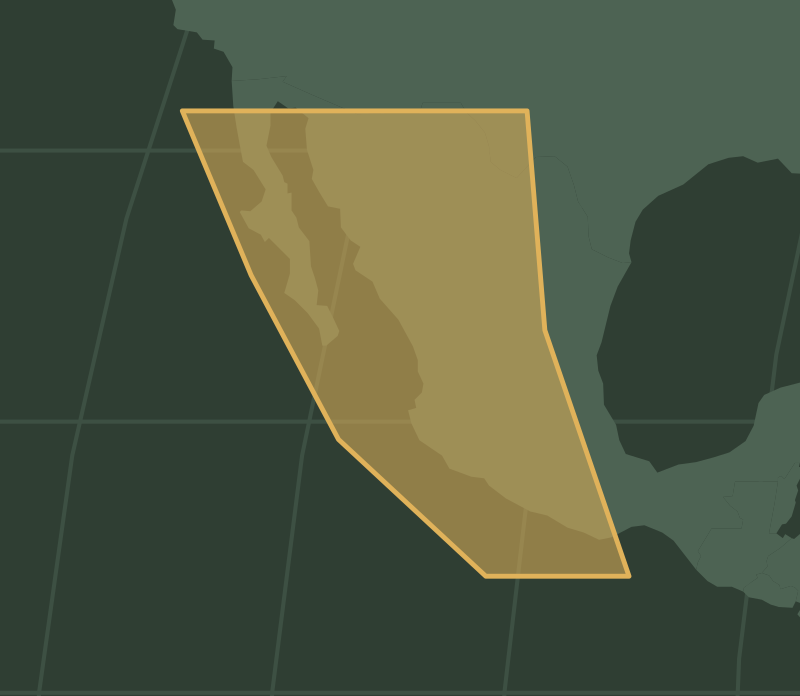
A tree found across most of Mexico
What helps
- Learn about its culinary and ornamental use, which is the most widespread.
- Do not use the seeds as if they were a food or a remedy.
- Respect the local traditions that name it.
What it contains
Isoquinoline alkaloids
The first compounds isolated were isoquinoline alkaloids; among them, beta-erythroidine and its more potent derivative, dihydro-beta-erythroidine, showed curare-like activity.1
The seeds are toxic because of the alkaloids they contain.1
First compound isolated; with curare-like activity.[1]
More potent derivative of beta-erythroidine.[1]
The experience
A plant that is not taken
There is no reliably documented experience in the scientific literature.1
The curare-like properties of its alkaloids explain why it is described as a plant that causes paralysis.15
Research
What has been studied
The 2001 review gathers published and unpublished information on this multipurpose tropical leguminous tree.1
A 2017 UNAM thesis studies a defatted, detoxified meal made from the seeds, because they are a source of protein.6
Scope of these dataThere are studies on chemistry and on uses of the plant; there are no clinical trials.
With care
What it helps to know beforehand
The seeds are toxic because of their alkaloids and must not be consumed.1
In traditional medicine they are applied as a laxative, diuretic, expectorant, anti-asthmatic and antimalarial; this is not a recommendation.1
To make use of them as food, detoxification processes are being studied; this is not done at home.6
Safety evidence is lacking.
To follow
Books and related medicines
Sources
Where each piece of information comes from
- García-Mateos R, Soto-Hernández M, Vibrans H. Erythrina americana Miller (“colorín”; Fabaceae), a versatile resource from Mexico: a review. Economic Botany. link.springer.com/doi/10.1007/BF02866562.
- Wikipedia. “Erythrina americana”. en.wikipedia.org (accessed 24 November 2026).
- Wikipedia. “Bucare” (genus Erythrina). en.wikipedia.com/wiki/Bucare.
- México Desconocido. Las flores del árbol zompantle. mexicodesconocido.com.mx/flores-de-arbol-de-zompantle.html.
- México Desconocido. Colorín, el árbol mágico. mexicodesconocido.com.mx/arbol-colorin.html.
- Harina desengrasada y destoxificada de colorín (Erythrina americana). Thesis, UNAM, 2017. ru.dgb.unam.mx.
- Map APDER, with data from Natural Earth · public domain
- Molecule drawings APDER
Last reviewed: 24 November 2026. If you spot a mistake, write to us at info@apder.org.