

Fungus · Bolbitiaceae · Tropics and subtropics
Copelandia
Panaeolus cyanescens (Berk. & Broome) Sacc.
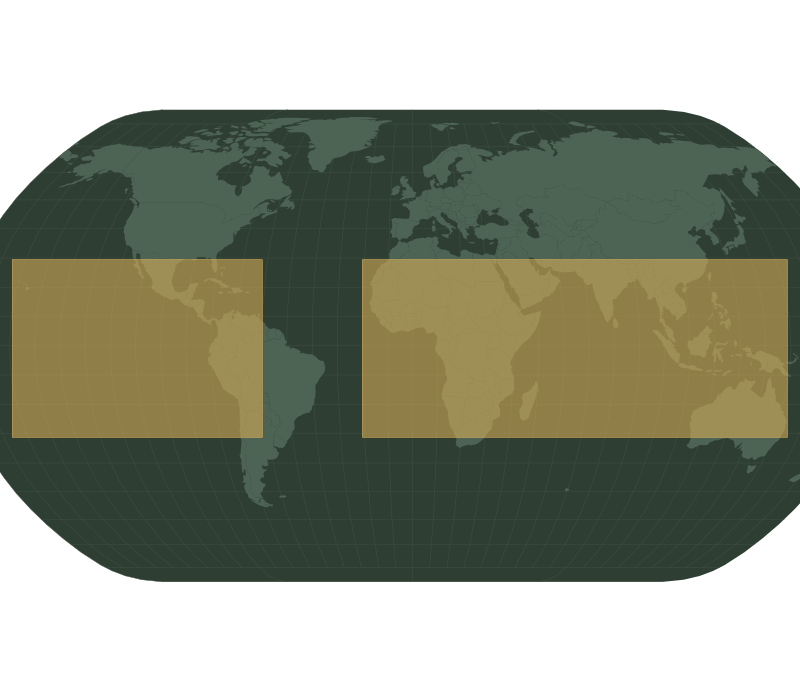
A small, slender mushroom that grows on dung in tropical and subtropical pastures in both hemispheres. It contains psilocin, serotonin and urea in every collection analysed, and is described as psychoactive and potent.123
Also known asCopelandia · Panaeolus cyanescens · Copelandia cyanescens · blue meanie · pan cyan
- What it is
- Small dung mushroom with a black spore print
- Territory
- Tropics and subtropics of both hemispheres
- Part used
- Fruiting body
- Active principles
- Psilocybin, psilocin and baeocystin
- Onset and duration
- No reliable data in the sources consulted
- Who keeps its memory
- No traditional use documented in the sources consulted
Botany
A dung mushroom
Panaeolus cyanescens, also called Copelandia cyanescens, is a mushroom of the Bolbitiaceae family, similar to Panaeolus tropicalis, from which it is distinguished by microscopic features.15
Its cap measures 1.5 to 4 cm, at first hemispherical and later convex or bell-shaped; when young it is light brown and matures to greyish white. The spore print is black and its ecology is saprotrophic.1
It is coprophilous: it lives on dung in tropical and neotropical areas of both hemispheres.3
It was first described in Sri Lanka as Agaricus cyanescens by Berkeley and Broome in 1871, and its nomenclature has been through many twists.6
It should not be confused with Psilocybe cyanescens, although both are abbreviated the same way (P. cyanescens).6
This profile is not an identification guide.
- Family
- Bolbitiaceae
- Cap
- 1.5–4 cm
- Spore print
- Black
- Ecology
- Saprotrophic, on dung
Memory and tradition
A mushroom with few recorded memories
The sources consulted record no documented traditional ritual use for this species.
In 1993, Merlin and Allen studied species of Copelandia and Panaeolus in Hawaii and confirmed the presence of psilocybin and psilocin in several of them.7
The genus Panaeolus includes thirteen psilocybin-producing species, but not all of them contain psilocybin.6
Over time
First description as Agaricus cyanescens (Sri Lanka)
Heim and colleagues report psilocybin in the species
Its names
- Copelandia
- old genus name
- blue meanie, pan cyan
- English
Territory and care
Warm pastures
What helps
- Do not gather it without a local expert.
- Look after the pastures and their wildlife.
- Do not confuse it with other mushrooms.
What it contains
Psilocin, psilocybin and serotonin
A study by Stijve (1992) found psilocin, serotonin and urea in all 70 collections analysed from Australia, Hawaii and Thailand.4
The same work notes that an unusually high psilocin and psilocybin content is reported, and that users described a stronger effect than that of an equal amount of Psilocybe semilanceata.4
Baeocystin, an analogue of psilocybin, has also been detected.7
Precursor of psilocin; present in the species according to the studies cited.[4]
Present in all the collections analysed by Stijve.[4]
The experience
No reliable data
The sources consulted describe it as psychoactive and potent, but without reliable data on onset or duration.14
Research
What has been studied
There have been chemical studies since the 1960s, with analyses of collections from various origins.47
Clinical research on psilocybin mostly concerns other species.
Scope of these dataChemical and ethnobotanical studies; no specific clinical research.
With care
What it helps to know beforehand
Its content varies according to the origin of the collection.4
There are no traditional or clinical data specific to this species.
To follow
Books and related medicines
Sources
Where each piece of information comes from
- Wikipedia. Panaeolus cyanescens. en.wikipedia-on-ipfs.org/wiki/Panaeolus_cyanescens.
- Wikipedia. Panaeolus cyanescens (sample analysis). wikipedia.org/wiki/Panaeolus_cyanescens.
- Wikipedia. Panaeolus cyanescens (habitat). wikipedia.com/wiki/Panaeolus_cyanescens.
- Stijve, T. (1992). Psilocin, psilocybin, serotonin and urea in Panaeolus cyanescens from various origin. Persoonia 15(1): 117–121. repository.naturalis.nl/document/569927.
- Wikipedia. Panaeolus tropicalis. en.wikipedia.com/wiki/Panaeolus_tropicalis.
- Double Blind Mag. Blue meanies mushrooms (Panaeolus cyanescens). doubleblindmag.com/blue-meanies-mushrooms-panaeolus-cyanescens/.
- Merlin, M. D. and Allen, J. W. (1993). Journal of Ethnopharmacology 40: 21–40. bibliography.maps.org/resources/download/20077.
- Healing Maps. Blue Meanie Mushrooms Are Hard to Identify. healingmaps.com/?p=27650.
- Map APDER, with data from Natural Earth · public domain
- Molecule drawings APDER
Last reviewed: 24 November 2026. If you spot a mistake, write to us at info@apder.org.