

Plant · Erythroxylaceae · Andes and Amazon
Coca
Erythroxylum coca Lam.
A shrub cultivated by Andean and Amazonian peoples for millennia for nutritional, medicinal, ceremonial and social purposes. Its leaf, chewed or taken as an infusion, has a history of its own, distinct from that of the isolated alkaloid.1237
Also calledcoca · coca leaf · mama coca · kuka · Erythroxylum coca · Erythroxylum novogranatense
- What it is
- Cultivated shrub of the Erythroxylaceae family
- Territory
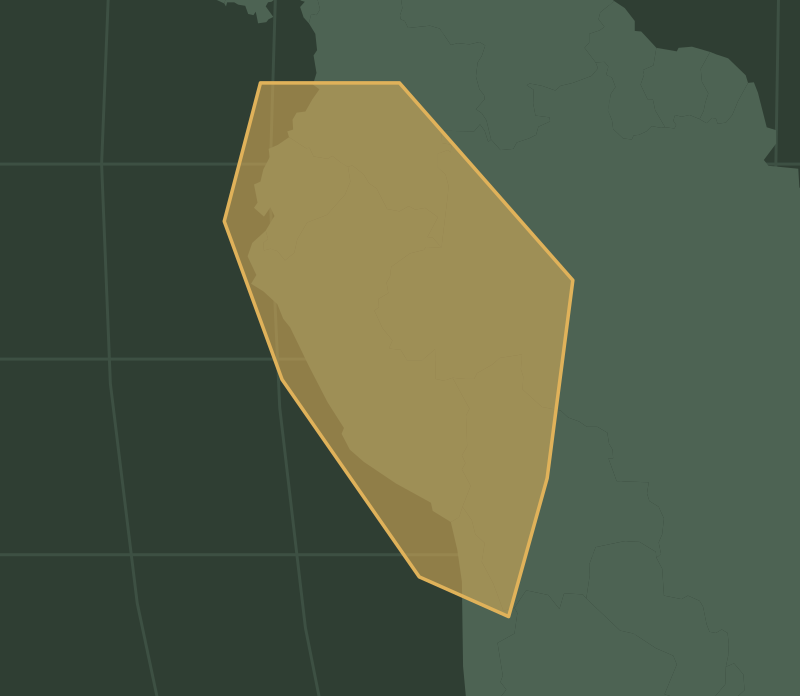
- Andes and Amazon
- Part used
- The leaf
- Active principles
- Tropane alkaloids, including cocaine in the leaf
- Onset and duration
- The effect of the leaf is mild and slowly absorbed
- Who keeps its memory
- Andean and Amazonian peoples
Botany
Four cultivars and two main species
Coca is any of the four cultivated plants of the Erythroxylaceae family: Erythroxylum coca var. coca and var. ipadu, and E. novogranatense var. novogranatense and var. truxillense.5
The genus Erythroxylum includes about 230 species spread across the tropics, and two of them, E. coca and E. novogranatense, are particularly prominent.2 Early botanists believed that all cocas were the same species; it was later seen that there were two domesticated species.4
It is one of the oldest cultivated medicinal plants, with evidence of use going back at least 8,000 years in South America.2
- Family
- Erythroxylaceae
- Cultivated species
- E. coca and E. novogranatense
- Varieties
- Four
- Part used
- The leaf
Memory and tradition
The sacred leaf of the Andes
Coca leaf products are an integral part of the life of Andean peoples, both from a cultural perspective and in traditional medicine.1
Archaeologists have found evidence that coca leaves were chewed on the Pacific coast of present-day Peru before 5000 BC.3
Traditionally, in Andean cultures coca leaves have been used for medicinal, nutritional, religious and social purposes, as a stimulant, remedy, spiritual tool and source of sustenance, chiefly chewed or as an infusion.5
The Spanish disapproved of coca and tried to eradicate it, without success; today chewing is still almost universal in the highlands and not only as an aid to hard work.3
The most common use of coca among Native peoples, both ancient and modern, is chewing the leaves.4
Over time
Oldest evidence of use in South America.2
Chewing on the Peruvian coast.3
The Spanish try to eradicate it without success.3
Its names
- coca
- from Quechua kuka
- chacchar
- to chew the leaf, of Andean usage
- coca leaf
- the leaf, distinct from cocaine
The literature insists on distinguishing the traditional and cultural use of the leaf from the illegal use of cocaine.6
Territory and care
A plant of the Andean slope and the rainforest
What helps
- Always distinguish the leaf from the isolated alkaloid.
- Listen to the peoples who use and cultivate it.
- Seek information from sources that respect its cultural context.
What it contains
Alkaloids in the leaf
The leaves contain cocaine, which acts as a mild stimulant when chewed or taken as an infusion; this traditional use involves slower absorption than that of purified cocaine.5
Lower temperatures appear to have an adverse effect on alkaloid content in all the cultivars studied.2
The biosynthesis of tropane alkaloids in E. coca is a research topic in its own right.2
Present in the leaf; its effect in the chewed leaf is mild and slow.[5]
The experience
A mild stimulant and a companion at work
The leaf is chewed by placing it in the mouth; its use is social, ritual, medicinal and working all at once.4
It is not a visionary experience: it is part of everyday life and of Andean rituals.13
Research
What has been studied
There are reviews of the history and medical significance of the Andean tradition, which examine the toxicology of the whole coca leaf and its past, present and future medicinal applications.1
Plowman's 1984 work on the ethnobotany of coca is a classic reference.8
Another review gathers the traditional uses and possible adverse effects of the forms of use, and underlines the difference between traditional and cultural use and the use of cocaine.6
Scope of these dataThere is a great deal of ethnobotanical and medical literature on the leaf; debates about its regulation are a separate field.
With care
What it helps to know beforehand
To follow
Books and related medicines
Sources
Where each piece of information comes from
- Biondich AS, Joslin JD. Coca: the history and medical significance of an ancient Andean tradition. Emerg Med Int. 2016;2016:4048764. doi:10.1155/2016/4048764.
- Restrepo DA, Saenz E, Jara-Muñoz OA et al. Erythroxylum in focus: an interdisciplinary review of an overlooked genus. Molecules. 2019;24(20):3788. doi:10.3390/molecules24203788.
- JSTOR Daily. What coca means in Peru. daily.jstor.org/what-coca-means-in-peru.
- A review of coca: domesticated species and use. core.ac.uk/download/60545824.pdf.
- Wikipedia. “Coca”. en.wikipedia.org/wiki/Coca (accessed 24 November 2026).
- A review of the coca leaf: traditional uses, adverse effects and legal framework. dialnet.unirioja.es/descarga/articulo/9586014.pdf.
- ICEERS. Coca. iceers.org/en/tag/coca.
- Plowman T. The ethnobotany of coca (Erythroxylum spp.). Advances in Economic Botany. 1984;1:62-111.
- Map APDER, with data from Natural Earth · public domain
- Molecule drawings APDER
Last reviewed: 24 November 2026. If you spot a mistake, write to us at info@apder.org.