

Plant · Acoraceae · Temperate zones of the northern hemisphere
Sweet flag
Acorus calamus L.
A perennial, aromatic wetland herb with a long history in the traditional medicine of India, China and elsewhere. Its rhizomes contain alpha- and beta-asarone, to which most of its effects are attributed, and also its safety limits.124
Also calledsweet flag · calamus · vasambu · shi chang pu · Acorus calamus
- What it is
- Semi-aquatic perennial herb with an aromatic rhizome
- Territory
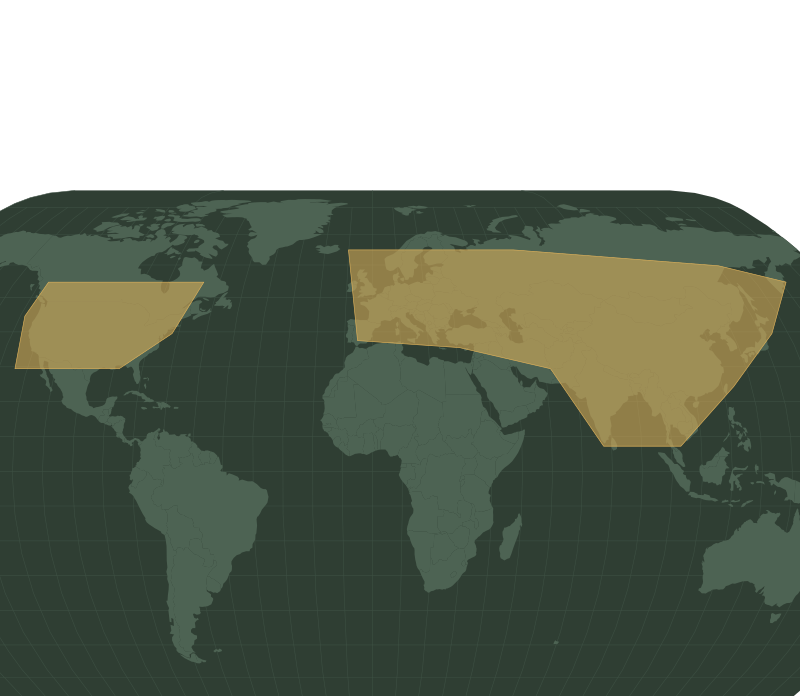
- From the northern temperate zones to the subtropical
- Part used
- The rhizome
- Active principles
- Alpha- and beta-asarone, among other phenylpropanoids
- Onset and duration
- No reliable data in the sources consulted
- Who keeps its memory
- Traditional medicine of India, China, Indonesia and the Americas
Botany
A wetland herb with a creeping rhizome
Acorus calamus L. is a perennial, aromatic, semi-aquatic herb with creeping rhizomes.5 The rhizome is pale yellow to pinkish brown on the outside and white to pink on the inside.4
The genus Acorus consists of perennial herbs distributed from the northern temperate zones to the subtropical, and is used as a traditional folk medicine in China and India.3 Authors divide the genus into two to five species, with phylogenetic relationships that remain unclear.3
There is a tetraploid variety in India with much more beta-asarone (75% to 96%) and a diploid one in North America, which has none.4
- Family
- Acoraceae
- Habit
- Semi-aquatic perennial herb
- Part used
- Aromatic rhizome
- English name
- Sweet flag
Memory and tradition
A root more than two thousand years old
The genus Acorus has been used as a traditional medicinal plant to treat various illnesses for more than 2,000 years.2
Sweet flag has a long history of use and numerous traditional and ethnomedical applications.1 Its history goes back to biblical times.4
In traditional medicine it has been used for digestive disorders, colds, intermittent fevers and asthma, among others.34 In the Americas and Indonesia it was also used for gastrointestinal problems.3
In some places the root is used for intermittent fever, as an antipyretic and cough suppressant, and for stomach pain, gout and rheumatism.5
Over time
It already features in the history of the use of sweet flag.4
The genus Acorus is used as a traditional medicine.2
Its names
- calamus
- common name
- sweet flag
- English name
- vasambu
- Tamil name
- shi chang pu
- Chinese name
- rat root
- popular English name
The rhizomes of A. calamus are considered adulterants of the rhizome of A. tatarinowii in the Chinese herbal market.3
Territory and care
A plant of the water's edge
What helps
- Do not gather it in wetlands without knowing the variety.
- Find out about the variety: the tetraploid has much more beta-asarone.
- Respect its place in the traditional medicines of India and China.
What it contains
Alpha- and beta-asarone
The main bioactive compounds are alpha- and beta-asarone, to which most of the genus's bioactivities are attributed.13 They are, respectively, the trans and cis isomers.4
Among the phenylpropanoids of the rhizome and leaves, asarone and eugenol, together with sesquiterpenoids, are the main effective compounds.6
Predominant compound of the rhizome; genotoxicity and mutagenicity have been described.[1]
Isomer of beta-asarone.[1][4]
The experience
A mild sedative, according to pharmacology
Laboratory studies describe sedative, central nervous system depressant and anticonvulsant effects in the rhizome and in asarone.5
There are no reliable data on the experience of the whole plant.
Research
What has been studied
There are reviews of its traditional uses, its pharmacology and its compounds.123
Antimicrobial activity against bacteria and fungi has been described.7
Scope of these dataMany of its uses have not yet been scientifically validated.[1] Research calls for studies on mechanisms, dosage and safety.[7]
With care
What it helps to know beforehand
Genotoxicity and mutagenicity of alpha- and beta-asarone have been described, which limits its use at high doses.1
The Indian variety has much more beta-asarone than the North American one, and they cannot be told apart by sight.4
The European Commission sets a maximum of beta-asarone in foods and drinks.4
Studies on its safety as a whole plant are lacking.
To follow
Books and related medicines
Sources
Where each piece of information comes from
- An overview on traditional uses and pharmacological profile of Acorus calamus Linn. (Sweet flag) and other Acorus species. Phytomedicine. 2014;21(3):268-276. doi:10.1016/j.phymed.2013.09.020 · pubmed.ncbi.nlm.nih.gov/24200497.
- Ethnic, botanic, phytochemistry and pharmacology of the Acorus L. genus: a review. Molecules. 2023;28(20):7117. doi:10.3390/molecules28207117.
- Feng X-L, Yu Y, Qin D-P, Gao H, Yao X-S. Acorus Linnaeus: a review of traditional uses, phytochemistry and neuropharmacology. RSC Adv. 2015;5:5173-5182.
- Drugs.com. Calamus. drugs.com/npp/calamus.html.
- Study of Acorus calamus Linn.: pharmacology and activities (summary). informahealthcare.com/doi/abs/10.1080/13880200701538724.
- Acorus calamus: distribution, ethnopharmacology and phytochemistry. J Clin Med. 2020;9(4):1176. mdpi.com/2077-0383/9/4/1176.
- Acorus calamus: review of pharmacological activities. eurekaselect.com/article/152936.
- Map APDER, with data from Natural Earth · public domain
- Molecule drawings APDER
Last reviewed: 24 November 2026. If you spot a mistake, write to us at info@apder.org.