

Plant · Asteraceae · Europe and temperate regions
Wormwood
Artemisia absinthium L.
A bitter perennial herb, used as a medicine since the Ebers Papyrus and famous for giving its name to absinthe. Its reputation for producing unique effects is attributed to thujone, although science disputes this.13
Also calledajenjo · ajenjo común · wormwood · absinthe · hierba santa · artemisa amarga
- What it is
- Aromatic, very bitter perennial herb
- Territory
- Temperate regions of the world; supply from eastern Europe
- Part used
- The aerial parts
- Active principles
- Essential oil rich in thujone
- Onset and duration
- No reliable data on the plant on its own
- Who keeps its memory
- Traditional European and Mediterranean medicine
Botany
A silvery, bitter herb
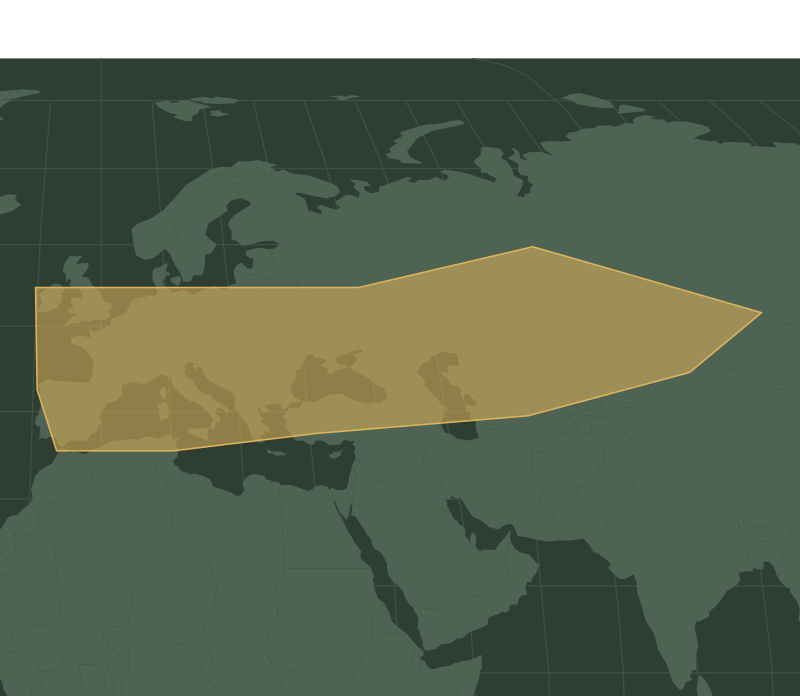
It is a perennial herb up to one metre tall, of the aster family.2 It grows in the temperate regions of the whole world, and the bulk of the commercial supply comes from eastern and south-eastern Europe.2
The aerial parts are used.2 Its essential oil, between 0.2% and 1.5%, contains thujone, and also chrysanthenyl acetate and linalyl acetate.2
- Family
- Asteraceae
- Habit
- Perennial herb up to 1 m
- Part used
- Aerial parts
- Taste
- Very bitter
Memory and tradition
From Egyptian papyri to the green hour
The medicinal use of wormwood is documented since the Ebers Papyrus, whose copies go back to 1550 BC.4 For centuries, drinks made with wormwood were used against infections, above all parasitic infections of the digestive tract.4
In medieval Europe it was described as "the most important master against all exhaustions".5
Absinthe, a bitter liqueur made with wormwood and other herbs, was invented in Switzerland in 1797.4 It was one of the most popular alcoholic drinks in late nineteenth-century Europe.1 French soldiers returning from the campaigns discovered it as a tasty substitute for their wormwood medicine.1
At the beginning of the twentieth century it was banned in several countries because of its supposed unique adverse effects, which were christened "absinthism".1 The ban lasted almost a century, and absinthe has since returned.1
Over time
The Ebers Papyrus records the use of wormwood.4
Absinthe is invented in Switzerland.4
Absinthe is one of the most popular drinks in Europe.1
It is banned in several countries.1
It is produced again after the restrictions are reviewed.1
Its names
- ajenjo
- name of the plant in Spanish
- absenta
- the liqueur; it comes from its scientific name
- wormwood
- English name
- "the green hour"
- nickname of absinthe, for its colour and for the hour at which it was drunk
Wormwood is the plant and absinthe is the drink that contains it; they are not the same thing.1
Territory and care
A plant of roadsides and waste ground
What helps
- Choose wormwood of known origin, not unlabelled commercial blends.
- Do not trust internet "absinthe essences" of uncertain content.
- Respect the European tradition of using it with care and in small amounts.
What it contains
Thujone, the disputed molecule
Thujone is the main monoterpene in wormwood oil; the alpha and beta forms are its principal components.1
For a long time the particular effects of absinthe were attributed to thujone, but one theory proposes that its content in traditional absinthe was overestimated, and several independent studies have supported it.13
Main component of the essential oil, in alpha and beta forms.[1][2]
Another component of the essential oil.[2]
Present in the essential oil.[2]
The experience
Between myth and data
Absinthe had a reputation for producing unique effects, which were not explained by its alcohol alone.3 But it has been argued that traditional absinthe contained little or no thujone.3
A study on whether thujone caused "absinthism", with symptoms such as hallucinations, insomnia and convulsions, concluded that nineteenth-century absinthes meet current limits and that thujone plays no role, or a very small one.2 Another paper points out that it cannot be shown that the drink was epileptogenic, or that "absinthism" can be clearly distinguished from chronic alcoholism.1
There are no reliable data on onset or duration for the experience of the plant on its own.
Indicative outline: it changes with the preparation, the amount and the person.
Research
What has been studied
The literature focuses on history, the chemistry of the oil and the toxicology of thujone.1
A historical review considers absinthe an example of how herbal tonics were used to treat infections before their efficacy was demonstrated in vitro and in vivo.4
Scope of these dataThere is a great deal of chemistry and history, and little clinical study of the plant as such.
With care
What it helps to know beforehand
Wormwood oil contains thujone, a monoterpene that is toxic at high doses, and for that reason it is best not to take it concentrated.6
Pregnant women should avoid wormwood oil because of possible exposure to traces of thujone.6
One risk for consumers is herbal products sold without control, such as the absinthe essences sold online.1
"Absinthism" as a syndrome in its own right in the nineteenth century is now questioned.1
To follow
Books and related medicines
Sources
Where each piece of information comes from
- Padosch SA, Lachenmeier DW, Kröner LU. Absinthism: a fictitious 19th century syndrome with present impact. Subst Abuse Treat Prev Policy. 2006;1:14. pmc.ncbi.nlm.nih.gov/articles/PMC1475830.
- Southern Cross University. Artemisia absinthium (monograph). scu.edu.au.
- Erowid. The Absinthe Enigma. erowid.org/chemicals/absinthe/absinthe_writings4.shtml.
- Artemisia absinthium and absinthe in the history of medicine. Sci. mdpi.com/2413-4155/7/4/186.
- Szopa A. Artemisia absinthium L.: History. encyclopedia.pub/entry/history/show/3916.
- Evergreen State College. Thujone. sites.evergreen.edu/plantchemeco/?p=521.
- Map APDER, with data from Natural Earth · public domain
- Molecule drawings APDER
Last reviewed: 24 November 2026. If you spot a mistake, write to us at info@apder.org.