

Molecule · Psychoactive
Bufotenine
5-hydroxy-N,N-dimethyltryptamine (5-HO-DMT)
Bufotenine is a tryptamine derived from serotonin that occurs in the skin of some toads, in certain fungi and in plants such as Anadenanthera, with a long history of entheogenic use in South America. Its psychoactivity in humans is debated, and the Colorado River toad is a different matter: its secretion is rich above all in 5-MeO-DMT.134
Also called5-HO-DMT · dimethylserotonin · cebilcine · mappine
- What it is
- Natural tryptamine
- Territory
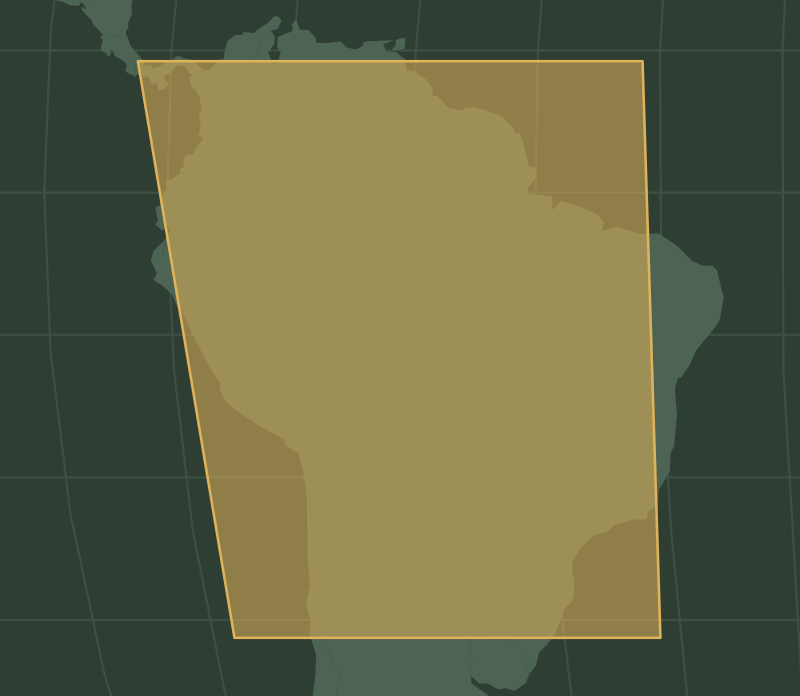
- South America, Mexico and elsewhere
- Source
- Toads, Anadenanthera seeds, fungi
- Mechanism
- Serotonergic (5-HT2A)
- Onset and duration
- Varies by route
- Who keeps its memory
- South American snuff traditions
The substance
A tryptamine related to serotonin
It is a derivative of DMT and of the neurotransmitter serotonin; an alkaloid found in some toads, fungi and plants, and present in small amounts in the human body.7
The name comes from the toad genus Bufo, and it is found in the skin and eggs of several species.17
The seeds of Anadenanthera colubrina and A. peregrina contain it, and they appear to have a long history of entheogenic use in South America.47
Descriptive entry: no extraction or doses.
- Class
- Tryptamine
- Sources
- Toads, plants, fungi
- Relative
- 5-MeO-DMT
- Isolation
- 20th century
Memory and history
From the toads of the 20th century to South American snuff
It was first isolated from toad skin during the First World War, by the Austrian chemist Handovsky, at the University of Prague.26
Its structure was confirmed in 1934 in Heinrich Wieland's laboratory in Munich.6
Toad venom extracts containing bufotenine have been used in traditional medicines, such as the Chinese ch'an su.1
The toad was a recurring image in Mesoamerican art, although the hypothesis of its ritual use needs ethnohistorical evidence.16
In 1983 Albert Most published a pamphlet on the Sonoran Desert toad that spread its recreational use.6
Over time
Handovsky isolates it
Its structure is confirmed
5-MeO-DMT is isolated from Anadenanthera seeds
Its names
Context and care
Origin and context
What helps
- Seeking information from reliable sources.
- Telling research, experience and regulated use apart.
- Respecting legal and clinical frameworks.
Chemistry and mechanism
Serotonin receptors
It shares its structure with psilocin, 5-MeO-DMT and DMT.2
5-MeO-DMT is demethylated to bufotenine, an active metabolite that acts on the 5-HT2A receptor with roughly ten times greater affinity.3
Bufo venoms also contain cardiac glycosides similar to digoxin, and ingesting them can be fatal.6
The experience
What is described
Ott states that it is often said to lack visionary activity, although there are five published reports of human pharmacology.8
The publication on the intranasal, sublingual, rectal, pulmonary and oral routes of bufotenine was in the Journal of Psychoactive Drugs, 2001.8
Research
What has been studied
The link with schizophrenia is now considered a practically abandoned concept.5
There are few published data on human pharmacology.8
Scope of these dataBasic pharmacology and isolated psychonautic studies.
With care
What it helps to know beforehand
To follow
Books and related medicines
Sources
Where each piece of information comes from
- Wikipedia. 5-HO-DMT. en.wikipedia.com/wiki/5-HO-DMT.
- Wikipedia (user draft). Bufotenine. wikipedia.com/wiki/User:Pszewczy.
- Science.gov. Sample records for bufotenine. science.gov/topicpages/b/bufotenine.
- Wikipedia (archive). Bufotenin. webcf.waybackmachine.org/web/20211013034104/https://en.wikipedia.org/wiki/Bufotenin.
- Wikipedia. Talk on Bufotenin (2020). wikipedia.com/wiki/Talk:Bufotenin/Archives/2020/February.
- Wikidoc. Bufotenin. wikidoc.org/index.php/Bufotenin.
- Wikiwand. Bufotenin. wikiwand.com/en/articles/Bufotenin.
- Ott, J. Pharmanopo-Psychonautics: bufotenine. Journal of Psychoactive Drugs, 2001. taz4.erowid.org/archive/sonoran_desert_toad/ott.htm.
- Map APDER, with data from Natural Earth · public domain
- Molecule drawings APDER
Last reviewed: 24 November 2026. If you spot a mistake, write to us at info@apder.org.