

Plant · Solanaceae · Europe and Siberia
Black henbane
Hyoscyamus niger L.
A poisonous nightshade with yellow flowers veined in purple, which European history places between medicine, poison and the imagination of witches. It is a very risky plant that should not be handled lightly.123
Also known asblack henbane · henbane · beleño negro · beleño · hierba loca · Hyoscyamus niger
- What it is
- Poisonous herb of the nightshade family
- Territory
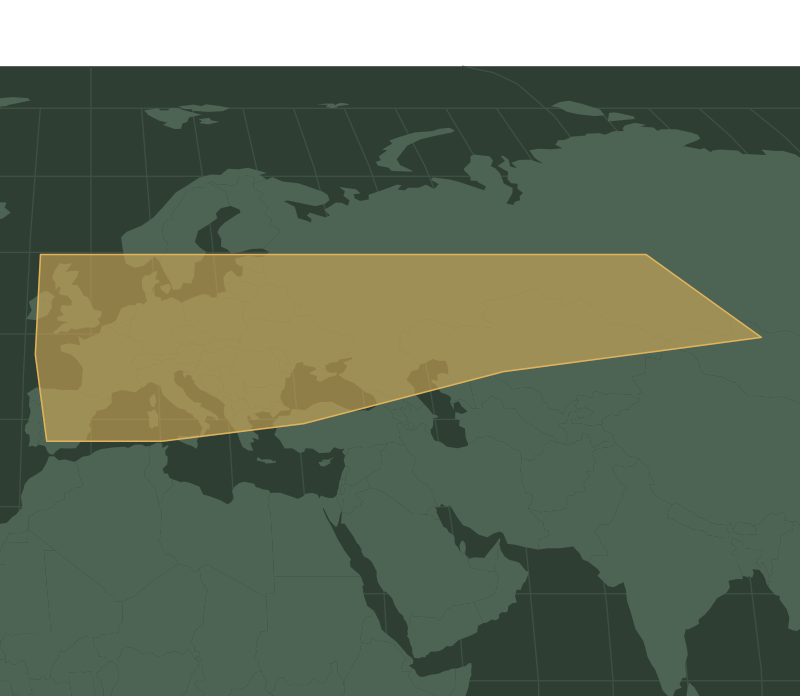
- Temperate Europe and Siberia; naturalised in Britain and Ireland
- Part used
- Leaves, seeds and root, all containing alkaloids
- Active principles
- Hyoscyamine, atropine and scopolamine
- Onset and duration
- No reliable data
- Who keeps its memory
- Folk and medical traditions of Europe
Botany
Yellow flowers with purple veins
Black henbane is a poisonous plant of the tribe Hyoscyameae of the nightshade family.6 It is native to temperate Europe and Siberia, and is naturalised in Britain and Ireland.5
A distinctive feature of the species is its pale yellow, bell-shaped flowers with purple veins.1
The genus Hyoscyamus comprises some twenty species, all of which contain powerful narcotic tropane alkaloids, including scopolamine and hyoscyamine.1
The whole plant contains tropane alkaloids and is poisonous. It is not to be handled, tasted or identified on your own.
- Family
- Solanaceae
- Flower
- Pale yellow, bell-shaped, with purple veins
- Genus
- About 20 species
- English name
- Henbane
Memory and tradition
The herb that gives visions and madness
The history of henbane, like that of mandrake and the thorn apples, goes back at least to 4000 BC across southern and central Europe and Eurasia.1
The species most used for magical and medicinal purposes in Europe were Hyoscyamus niger and H. albus.1
In Europe, where it is native, its effects were used in mystical aspects of religious ceremonies.3 It is credited with properties such as visual hallucinations and the sensation of flying.5
Henbane seeds have been found in a Viking grave near Fyrkat, in Denmark, which indicates that the Vikings knew it.5
In the Middle Ages it held an unstable place: a medicinal resource, a poisonous danger and a plant surrounded by an aura of occult associations.4 There was a recognised use to relieve pain and as a sedative.7
The study of witches' herbs shows the great importance, often misunderstood and vilified, of these plants.2
Over time
Its history is traced in southern and central Europe and in Eurasia.1
A medicinal, poisonous plant tied to the imagination of witches.47
Its names
- beleño
- Spanish name
- henbane
- English name
- "mad plant"
- one etymology links it to an Indo-European root meaning "mad"
Another etymology relates it to a Germanic root meaning "vision" or "hallucination".5
Territory and care
A plant of roadsides and ruins
What helps
- Learn about it through its history, without consuming it.
- Keep it away from children and animals.
- Do not repeat the myths about witches as if they were facts.
What it contains
Tropane alkaloids
The leaves, seeds and roots contain alkaloids: hyoscyamine, atropine, tropane and scopolamine.8
The best-known alkaloids are hyoscine, hyoscyamine and atropine.3
Main alkaloid; in its racemic form it is called atropine.[3][8]
Anticholinergic with psychoactive effects.[1][3]
The experience
Delirium and a sensation of flying
The effects described include visual hallucinations and a sensation of flying.5 In large amounts, the sources speak of madness and coma.1
It is an anticholinergic poisoning, and science describes it more as a risk than as an experience people seek.8
Research
What has been studied
There is a descriptive review of the plant and its toxicity, which places it as a medicine of traditions and as a cause of poisoning.8
The history of Europe's witches' herbs is covered in a 2020 review.2
Scope of these dataIts chemistry and toxicity are well known; there is little clinical evidence on the plant as a medicine.
With care
What it helps to know beforehand
To follow
Books and related medicines
Sources
Where each piece of information comes from
- USDA Forest Service. Henbane, black henbane (Hyoscyamus spp.). fs.usda.gov/wildflowers/ethnobotany/Mind_and_Spirit/henbane.shtml.
- Fatur K. «Hexing herbs» in ethnobotanical perspective: a historical review of the uses of anticholinergic Solanaceae plants in Europe. Economic Botany. 2020. link.springer.com/10.1007/s12231-020-09498-w.
- Evergreen State College. Hyoscyamus niger. sites.evergreen.edu/plantchemeco/?p=464.
- McIntosh MA. Witches' herb: henbane, healing and hallucination in the medieval imagination. Brewminate. brewminate.com.
- Wikipedia. «Hyoscyamus niger». en.wikipedia.org (accessed 24 November 2026).
- Wikipedia. «Henbane». wikipedia.org/wiki/Henbane.
- Brewminate. Medicinal applications: pain relief, sedation. brewminate.com.
- Black henbane and its toxicity – a descriptive review. Avicenna J Phytomed. 2014;4(5):297-311. pmc.ncbi.nlm.nih.gov/articles/PMC4224707.
- USDA Forest Service. Witchcraft and psychoactive plants. fs.usda.gov/wildflowers/ethnobotany/Mind_and_Spirit/witchcraft.shtml.
- Map APDER, with data from Natural Earth · public domain
- Molecule drawings APDER
Last reviewed: 24 November 2026. If you spot a mistake, write to us at info@apder.org.