

Plant · Solanaceae · India
Ashwagandha
Withania somnifera (L.) Dunal
A key medicinal plant of Ayurveda, native to India and now used all over the world. It is not a psychedelic: it is included here for its place among the plants of consciousness, sleep and vitality in traditional Indian medicine.12
Also known asashwagandha · Indian ginseng · winter cherry · Withania somnifera · bufera
- What it is
- Perennial shrub of the nightshade family
- Territory
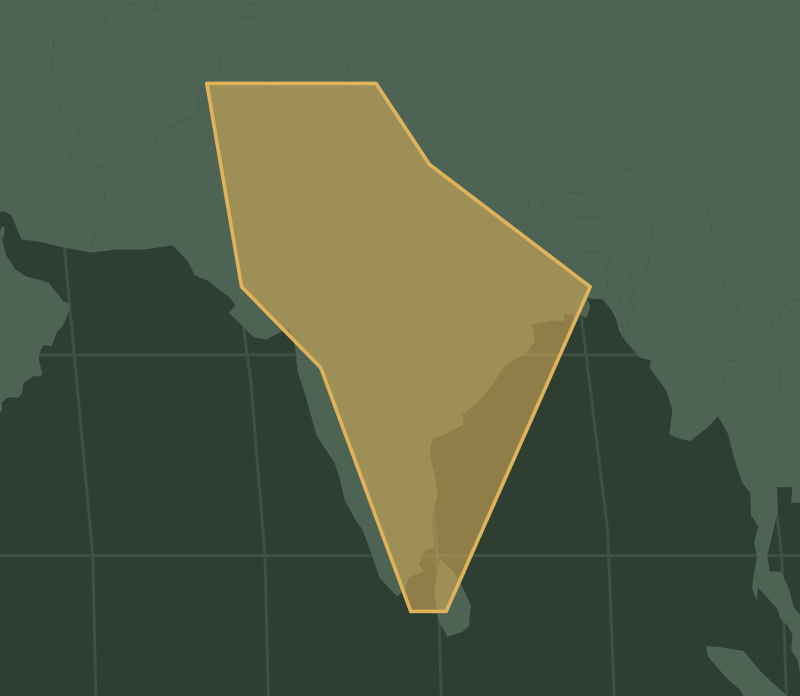
- India; also cultivated in other countries
- Part used
- The root (mula)
- Active principles
- Withanolides, among others
- Onset and duration
- Not applicable: it is not an acute-acting plant
- Who keeps its memory
- Ayurvedic medicine of India
Botany
A shrub with a highly prized root
Withania somnifera (L.) Dunal is a well-known perennial shrub of the nightshade family.3 It is a key medicinal plant native to India.1
Its root is the part mainly used, the mula, which Ayurveda recommends for health and healing, with many simple and compound formulations.3
Two species of Withania are cultivated on a large scale in India: W. somnifera and W. coagulans.1
- Family
- Solanaceae
- Habit
- Perennial shrub
- Part used
- Root (mula)
- Other names
- Indian ginseng, winter cherry
Memory and tradition
The smell of the horse, and sleep
In Ayurveda, the traditional medicine of India, ashwagandha holds a place of honour.4 Its Sanskrit name means "the smell of the horse", alluding to the belief that it gives the strength and stamina of a stallion.4
The species name, somnifera, is said to have been coined for its popular use to "induce sleep" in Ayurveda.3
It is a rasayana herb that has long been used traditionally.2 It is also known as Indian ginseng, for its restorative properties, winter cherry and poison gooseberry.1
Over time
It has been used in traditional Indian medicine since ancient times.3
Its medical use is reported over centuries.2
Its names
- ashwagandha
- Sanskrit: "the smell of the horse"
- Indian ginseng
- for its restorative properties
- winter cherry
- English name of the fruit
- rasayana
- Ayurvedic category of herbs of renewal
The exact course of its medical use is unknown.2
Territory and care
A plant from India, now global
What helps
- Choose products of known origin that have been analysed.
- Learn about its Ayurvedic context, not only its use as a supplement.
- Consult a healthcare professional before taking it alongside other treatments.
What it contains
Withanolides
It is a main source of pharmaceutically active compounds called withanolides.6
It has been noted that the mechanism by which the plant acts has not been clarified.1
The plant's main compounds.[6]
The experience
Not a journeying plant
It has no psychedelic effect. It is taken as a traditional tonic, mainly the root.3
Its traditional use links it with stress, sleep and vitality.23
Research
What has been studied
There are reviews that gather in vitro, in vivo and clinical studies on its extracts, with effects described in many systems.2
A 2025 review considers it potentially useful for healthy ageing.4
Scope of these dataThere is a great deal of research, but the reviews themselves call for deeper clinical and toxicological studies for safe use.[2]
With care
What it helps to know beforehand
Detailed toxicological analyses are still pending for its safe use.2
It is a plant that varies according to origin and preparation; choose trustworthy products.
Anyone taking medication should check with a professional.
The mechanism of its action has not been clarified.1
To follow
Books and related medicines
Sources
Where each piece of information comes from
- Molecules. 2023;28(3):1208. Biodiversity, biochemical profiling, and pharmaco-commercial applications of Withania somnifera: a review. mdpi.com/1420-3049/28/3/1208.
- Paul S, Chakraborty S et al. Withania somnifera (L.) Dunal (Ashwagandha): a comprehensive review on ethnopharmacology, pharmacotherapeutics, biomedicinal and toxicological aspects. Biomed Pharmacother. 2021. doi:10.1016/j.biopha.2021.112175 · pubmed.gov/34649336.
- Review of the traditional uses of ashwagandha in Indian medicine (Joshi, 2021; text at scribd.com/document/547937081).
- Review of ashwagandha and healthy ageing. Biogerontology. 2025. doi:10.1007/s10522-025-10320-0.
- Recent advancements in extraction techniques of Ashwagandha. communities.acs.org.
- Bhat JA, Akther T, Najar RA, Rasool F, Hamid A. Withania somnifera (L.) Dunal (Ashwagandha): current understanding and future prospect as a potential drug candidate. Front Pharmacol. 2022;13:1029123.
- Map APDER, with data from Natural Earth · public domain
- Molecule drawings APDER
Last reviewed: 24 November 2026. If you spot a mistake, write to us at info@apder.org.