

Cactus · Cactaceae · Western Andes of Peru
Peruvian torch
Echinopsis peruviana (Britton & Rose) Friedrich & G.D.Rowley
A fast-growing columnar cactus from the western slopes of the Peruvian Andes. It is known in English as "Peruvian torch" and is grouped with San Pedro among the mescaline cacti of the Andes, although its content varies greatly and the data are contradictory.123
Also known asPeruvian torch · antorcha peruana · Trichocereus peruvianus · Echinopsis peruviana
- What it is
- Andean columnar cactus, relative of San Pedro
- Territory
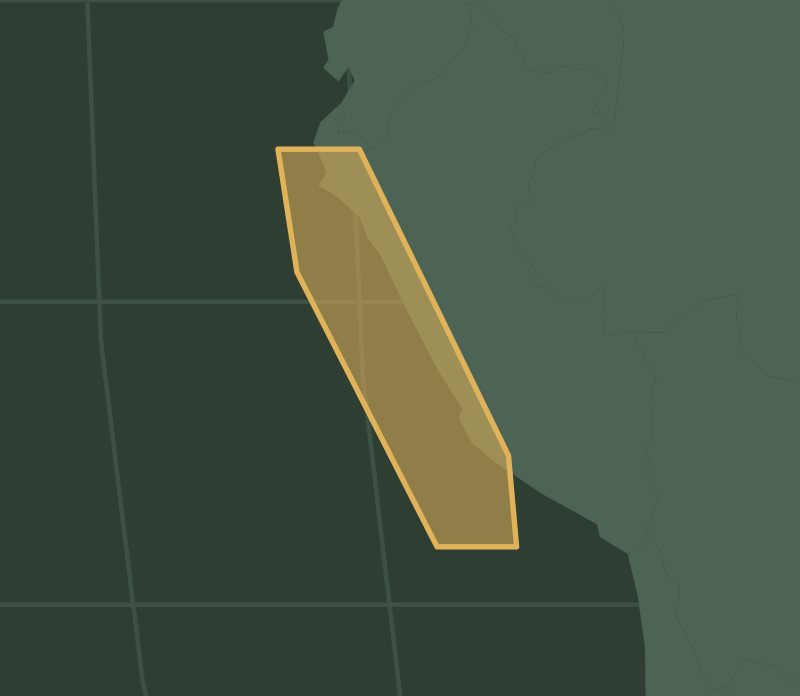
- Western slopes of the Andes, Peru
- Part used
- Stem
- Active principles
- Mescaline (variable content)
- Onset and duration
- No reliable data in the sources consulted
- Who keeps its memory
- Andean healers (curanderos) of northern Peru, around San Pedro
Botany
A torch cactus
Echinopsis peruviana (synonym Trichocereus peruvianus) is a fast-growing columnar cactus native to the western slopes of the Andes of Peru, at roughly 2,000 to 3,000 m above sea level.1
The part of the genus Echinopsis that used to be called Trichocereus brings together the Andean columnar cacti grouped as "San Pedro".24
The boundaries between cultivated columnar cacti remain unresolved, and a nursery name is not the same as a botanical identification.5
- Family
- Cactaceae
- Habit
- Columnar, fast-growing
- Altitude
- 2,000–3,000 m
- Origin
- Western Andes of Peru
Memory and tradition
A cactus in the shade of San Pedro
The sources consulted do not record a traditional use of this species distinct from that of San Pedro; the documented uses refer to the group of Andean columnar cacti.34
On the north coast of Peru, healers (curanderos) use San Pedro to diagnose and cure illness, in a practice tied to the social structure of the community.6
According to ICEERS, the San Pedro ceremony is more than 3,000 years old and possibly as much as 8,000.7
Over time
Its names
- Peruvian torch
- Spanish
- Peruvian torch
- English
- Trichocereus peruvianus
- scientific synonym
"San Pedro" also covers related mescaline-containing cacti: the name can refer to a plant, a cultivar, a preparation or a ritual category.5
Territory and care
The western slopes of the Andes
What helps
- Distinguish it from other columnar cacti with a reliable identification.
- Prefer cultivated specimens over wild harvesting.
- Respect the context of the Andean healers (curanderos).
What it contains
Mescaline, but not always
It is one of several Andean Echinopsis species in which the presence of mescaline has been reported.1
Some studies found no mescaline in wild Peruvian specimens of this species.1
An analytical study of 14 Echinopsis taxa and cultivars found mescaline in all of them, with a wide range of concentrations; the relationship between that content and actual shamanic use is unclear.8
The experience
No reliable data of its own
The sources consulted offer no reliable descriptions of the experience with this particular species, nor of its onset or duration.
Research
What has been studied
Its mescaline content has been studied within analytical work on Echinopsis.8
Botanical identification remains an open problem in the group.5
Scope of these dataChemical and botanical studies; no specific clinical research.
With care
What it helps to know beforehand
To follow
Books and related medicines
Sources
Where each piece of information comes from
- Wikipedia. Echinopsis peruviana. en.wikipedia-on-ipfs.org/wiki/Echinopsis_peruviana.
- Wikipedia. Psychoactive cactus. wikipedia.org/wiki/Psychoactive_cacti.
- ICEERS. San Pedro: Basic Info (other species of the genus). iceers.org/?p=5495.
- Wikipedia. Trichocereus macrogonus var. pachanoi. wikipedia.org/wiki/Huachuca.
- LILA visionary.art. Echinopsis pachanoi (taxonomy and names). visionary.art/pharmakon/plants/echinopsis-pachanoi/.
- Dobkin de Ríos, M. Trichocereus pachanoi—A Mescaline Cactus Used in Folk Healing in Peru. bibliography.maps.org/resources/download/13068.
- ICEERS. San Pedro: Basic Info. iceers.org/san-pedro-basic-info/.
- Ogunbodede, O. et al. (2010). Journal of Ethnopharmacology 131: 356–362. uvm.edu/~dbarring/241/241_PUBS/ogunbodede2010.pdf.
- Map APDER, with data from Natural Earth · public domain
- Molecule drawings APDER
Last reviewed: 24 November 2026. If you spot a mistake, write to us at info@apder.org.