

Mushroom · Amanitaceae · Eurasia
Panther cap
Amanita pantherina (DC.) Krombh.
A mushroom of Eurasia in the same section as Amanita muscaria, with which it shares ibotenic acid and muscimol. It is called "panther cap" and "false blusher" because of its resemblance to another, edible mushroom, the blusher. It is considered both poisonous and psychoactive.123
Also calledamanita pantera · panther cap · panther amanita · false blusher
- What it is
- Mushroom with a cap and ring, of the muscaria section
- Territory
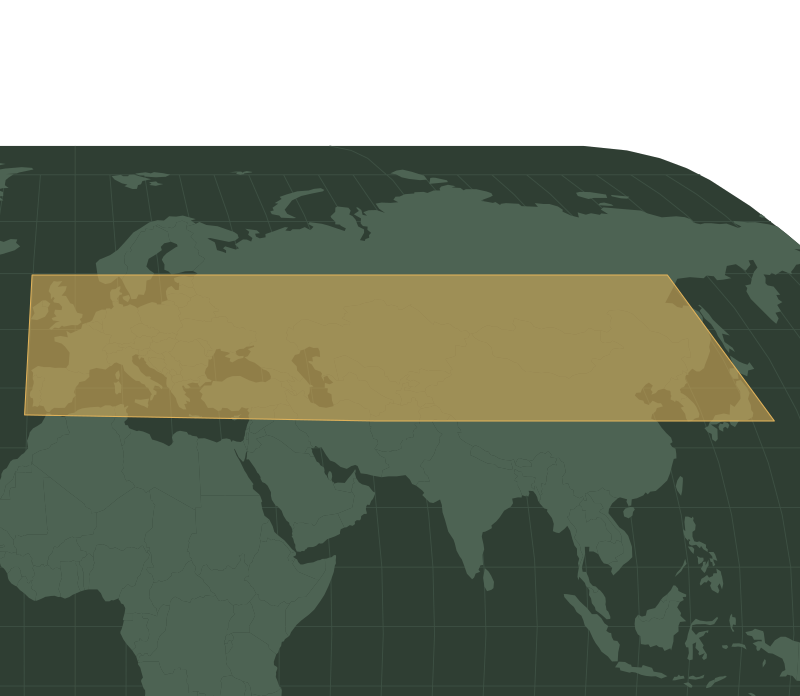
- Eurasia, with introductions elsewhere
- Part used
- Fruiting body
- Active principles
- Ibotenic acid and muscimol
- Onset and duration
- No reliable data in the sources consulted
- Who keeps its memory
- No documented ritual use in the sources consulted
Botany
A relative of the fly agaric
Amanita pantherina is a mushroom of Eurasia called "panther cap", "false blusher" and "panther amanita" because of its resemblance to the blusher (Amanita rubescens).2
It belongs to the section Amanita, together with A. muscaria and its close relatives such as A. gemmata, A. farinosa and A. xanthocephala.1
Its features include free gills, a ring and volva on the stem and a white spore print; it is mycorrhizal.2
It is thought to have reached South Africa together with trees imported from Europe and Asia.2
This entry is not an identification guide: several amanitas are toxic and are mistaken for one another.
- Family
- Amanitaceae
- Spore print
- White
- Ecology
- Mycorrhizal
- Distribution
- Eurasia
Memory and tradition
In the shadow of the fly agaric
The sources consulted do not document a specific ritual use of this mushroom by any particular people; the written tradition revolves around Amanita muscaria, used ritually by Siberian shamans from at least the seventeenth to the nineteenth centuries.4
Erowid groups the two together as the most common psychoactive amanitas and notes that their intoxication is very different from that of psilocybin mushrooms.5
Today it is sold in the wellness and ethnobotanical sector, with a legal status that changes from one country to another; popular sources mention it without guarantees.6
Over time
Its names
- amanita pantera
- Spanish
- panther cap, false blusher
- English
Territory and care
Forests of Eurasia
What helps
- Do not identify it without a local mycology expert.
- Be aware of the risk of confusion with edible mushrooms.
- Do not collect in protected areas.
What it contains
Ibotenic acid and muscimol
It contains ibotenic acid and muscimol, two psychoactive compounds; ibotenic acid is considered responsible for its toxicity.3
Both were also isolated from A. strobiliformis and from A. pantherina.7
Muscimol derives from ibotenic acid by decarboxylation when it is dried or heated.76
In A. pantherina, stizolobic and stizolobinic acids have also been isolated, with little-known pharmacology.7
Erowid states that in North America the average potency of A. pantherina is higher than that of A. muscaria, although with limited data.5
Decarboxylation product of ibotenic acid; identified as the main cause of the psychoactive effects.[6]
Compound credited with the toxicity of the mushroom; precursor of muscimol.[3]
The experience
A different intoxication
Erowid notes that amanita intoxication is very different from that of psilocybin mushrooms.5
There are no reliable data on onset or duration in the sources consulted.
Research
What has been studied
The chemistry and pharmacology of ibotenic acid and muscimol have been studied since the 1960s.78
Studies on human use refer mainly to A. muscaria.
Scope of these dataChemistry and pharmacology; no specific clinical trials.
With care
What it helps to know beforehand
It is both poisonous and psychoactive; ibotenic acid is associated with its toxicity.3
Its resemblance to an edible mushroom gave rise to the name "false blusher".2
Its potency varies and the data are limited.5
There are no traditional or clinical data specific to this species.
To follow
Books and related medicines
Sources
Where each piece of information comes from
- Wikipedia. Amanita muscaria (section Amanita). wikipedia.org/wiki/Fly_agaric.
- Wikipedia. Amanita pantherina. wikipedia.org/wiki/Panther_cap.
- Wikipedia. Amanita pantherina (compounds and toxicity). en.wikipedia.org/wiki/Amanita_pantherina.
- Hartmann, M. et al. Accidental use of psychotropic Amanita (history of A. muscaria in Siberia). bibliography.maps.org/resources/download/20545.
- Erowid. Psychoactive Amanita: Basics. erowid.org/amanitas/amanitas_basics.shtml.
- Rentry. Panther Fly Agaric: Botanical Profile and Psychoactive Chemistry (popular source). rentry.co/kegck9u7.
- Ott, J. Pharmacotheon (excerpt). erowid.org/amanitas/amanitas_info_ott.shtml.
- Catalfomo, P. and Eugster, C. H. Bulletin on Narcotics. unodc.org/unodc/en/data-and-analysis/bulletin/bulletin_1970-01-01_4_page005.html.
- Map APDER, with data from Natural Earth · public domain
- Molecule drawings APDER
Last reviewed: 24 November 2026. If you spot a mistake, write to us at info@apder.org.