

Molecule · Psychoactive
Psilocybin
4-hydroxy-N,N-dimethyltryptamine phosphate
Psilocybin is a tryptamine found in mushrooms of the genus Psilocybe and in others. Hofmann isolated it in 1958. In the body it is converted into psilocin, which activates 5-HT2A serotonin receptors. After decades of pause, it is being studied in depression, anxiety and addictions, with phase 3 trials.1344
Also known aspsilocybin · psilocin (active metabolite) · Indocybin (historical Sandoz trade name)
- What it is
- Fungal psychedelic tryptamine
- Territory
- Psilocybe mushrooms from around the world
- Source
- Mushrooms or synthesis
- Mechanism
- Prodrug of psilocin; 5-HT2A agonist
- Onset and duration
- Several hours
- Who keeps its memory
- Mazatec, Mixtec and other peoples; clinical research
The substance
A prodrug of psilocin
When swallowed, psilocybin is metabolised into psilocin, the active form of the compound; intact psilocybin is only weakly active.45
Alkaline phosphatases and esterases dephosphorylate it in the gut and liver.5
Psilocybin mushrooms have been used in religious rituals for centuries, perhaps millennia.1
The MAO inhibitors that the mushroom itself produces could intensify the effects of psilocin.5
Descriptive profile: no doses and no cultivation.
- Class
- Tryptamine
- Sources
- Psilocybe mushrooms
- Isolation
- 1958
- Active metabolite
- Psilocin
Memory and history
Wasson, María Sabina and Hofmann
Around 1952, Robert Gordon Wasson became interested in the work of Schultes and travelled to Mexico with his wife, Valentina Pavlovna.2
In 1955, Wasson took part in a velada with the Mazatec wise woman María Sabina in Huautla de Jiménez, Oaxaca.23
Without her consent, Wasson revealed Sabina’s identity and location, and the popularity of his account brought a wave of Westerners to Oaxaca that disrupted the community.2
Roger Heim grew the mushrooms in France and sent a sample of Psilocybe mexicana to Hofmann, who characterised psilocybin by chromatography and devised a synthesis that Sandoz marketed as Indocybin.23
Hofmann isolated it in 1958.357
Over time
Wasson takes part in a velada
Hofmann isolates psilocybin
Vollenweider shows the role of 5-HT2A
Johns Hopkins publishes its study of mystical experience
Its names
Context and care
Origin and context
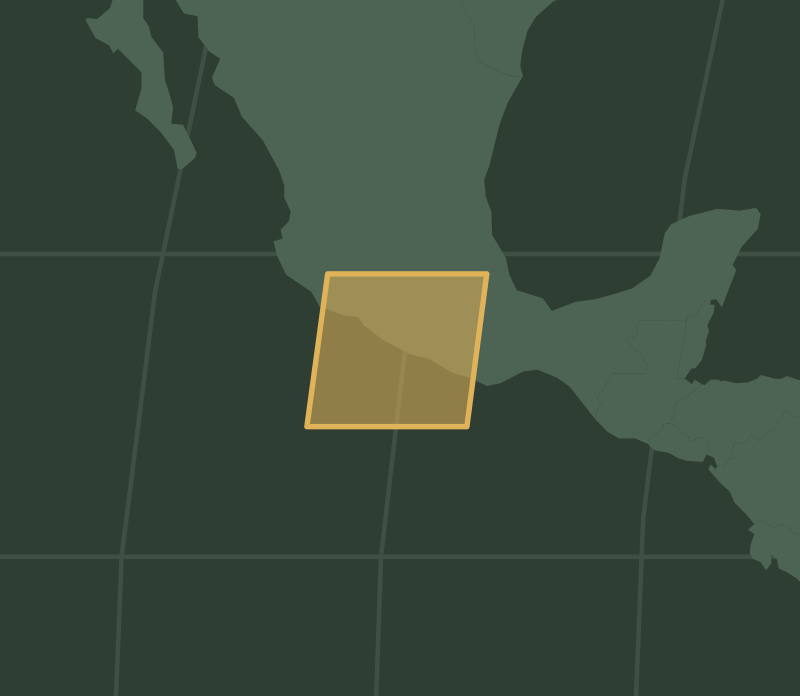
Around 1952, Robert Gordon Wasson became interested in the work of Schultes and travelled to Mexico with his wife, Valentina Pavlovna.2
What helps
- Seeking information from reliable sources.
- Telling research, experience and regulated use apart.
- Respecting legal and clinical frameworks.
Chemistry and mechanism
Serotonin 5-HT2A
Psilocin is a partial agonist of the 5-HT2A receptor; psilocybin itself is not.3
It binds with moderate affinity to other serotonin receptors, and less so to D3 and α2-adrenergic receptors.3
The psychotomimetic effect is blocked by 5-HT2A antagonists such as ketanserin.1
Brain occupancy of 5-HT2A by psilocin correlates with the intensity of the experience.3
The experience
What is described
The Johns Hopkins studies found that it produces experiences that volunteers rated, after fourteen months, among the most meaningful of their lives.6
Research
What has been studied
A double-blind phase 2 trial, the largest to date, found fewer depressive symptoms at three weeks with a 25 mg dose of synthetic psilocybin plus psychotherapy.4
COMPASS Pathways reported significant improvements in two phase 3 trials in treatment-resistant depression.7
Two crossover trials in depression and cancer-related anxiety (NYU and Johns Hopkins) found large and lasting reductions.7
A review found no serious adverse events in current studies, although safety questions remain.1
Scope of this evidencePhase 2 and 3 trials in depression, end-of-life anxiety and addictions.
With care
What it helps to know beforehand
The effect depends on preparation, support and integration.
Questions remain about safety and usefulness.1
Nausea is common with mushrooms.5
To follow
Books and related medicines
Sources
Where each piece of information comes from
- Review of psilocybin and depression, PubMed Central. pmc.ncbi.nlm.nih.gov/articles/PMC8538432.
- Psilocybin and Hallucinogenic Mushrooms. Cambridge Core. cambridge.org/core/product/140D11EABA6F8494D7B0A68A6582DAC1.
- Cayman Chemical. Rediscovering Psilocybin and Its Therapeutic Potential. caymanchem.com/news/rediscovering-psilocybin-and-its-therapeutic-potential.
- American Society for Microbiology. Psilocybin and Mental Health. asm.org/articles/2023/february/psilocybin-and-mental-health-the-magic-in-the-mush.
- PowerPak. Course on psilocybin. powerpak.com/course/print/121140.
- MoreBlossom. Psilocybin: Research journey. moreblossom.com/compounds/psilocybin/timeline.
- MoreBlossom. Psilocybin. moreblossom.com/compounds/psilocybin.
- Map APDER, with data from Natural Earth · public domain
- Molecule drawings APDER
Last reviewed: 24 November 2026. If you spot a mistake, write to us at info@apder.org.