

Mushroom · Hymenogastraceae · Mexico
Pajaritos
Psilocybe mexicana R.Heim
A mushroom of damp meadows in southern Mexico, described by Roger Heim in 1957. It forms sclerotia, hardened masses of mycelium. The Mazatec tradition of Oaxaca has known it since long before science described it.123
Also calledpajaritos · hongos mexicanos · teotlaquilnanácatl · she-to · to-ska · Psilocybe mexicana · Psilocybe galindoi
- What it is
- A mushroom of damp meadows that forms sclerotia
- Territory
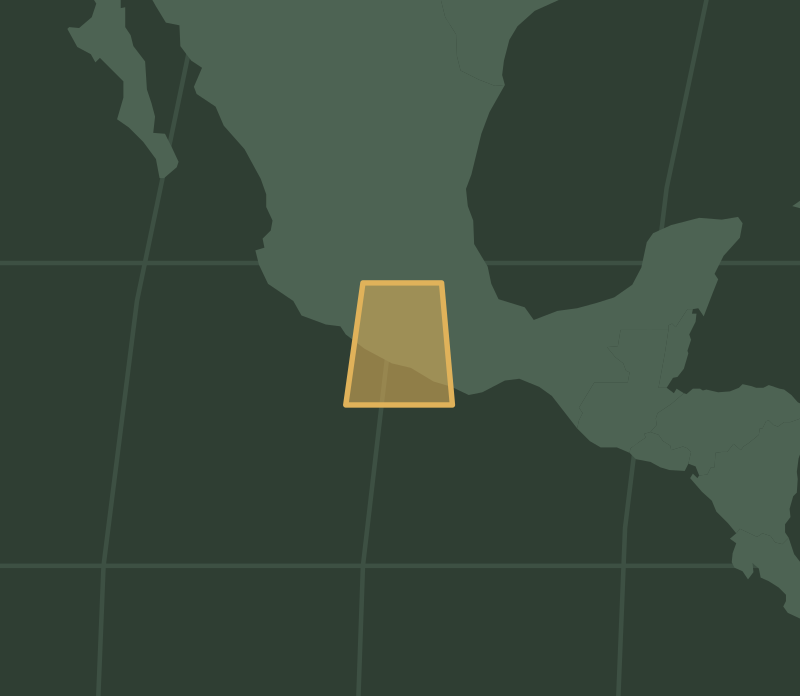
- Southern Mexico, mainly Oaxaca
- Part used
- Fruiting body and sclerotium
- Active principles
- Psilocybin
- Onset and duration
- No reliable data in the sources consulted
- Who keeps its memory
- Mazatec, Chinantec, Nahua, Mixtec
Botany
The mushroom of the meadows
Psilocybe mexicana was described by the French botanist Roger Heim in 1957.1 Its cap is conical or umbonate, with adnate gills.1
"Meadows with springs" are its characteristic habitat.2
It can form sclerotia, a dormant form of the organism; it shares this with P. tampanensis and, to a lesser degree, P. cinctulus.13
In 1957, Singer clarified that Schultes had collected two different mushrooms, Panaeolus and Psilocybe mexicana, and that the latter is the one that matches the description of "cuspidate".24
This profile is not an identification guide.
- Family
- Hymenogastraceae
- Cap
- Conical or umbonate
- Habitat
- Damp meadows
- Sclerotia
- Yes
Memory and tradition
Teonanácatl, the flesh of the gods
The Nahuatl name "teotlaquilnanácatl" is applied to sacred mushrooms such as P. mexicana and P. caerulescens.5
She-to and to-ska are epithets that the Mazatecs and Chinantecs apply to Psilocybe mexicana.4
According to Wasson, nine indigenous peoples of Mexico use or used sacred mushrooms; among them the Mazatecs, Mixtecs and Nahuas.5
The use of sacred mushrooms by the Mazatecs of Oaxaca became known to the world in 1957, when Gordon Wasson published his experience in the magazine Life.6 The publicity drew many curious visitors to Huautla de Jiménez.6
Wasson and his wife Valentina Pavlovna collected P. mexicana during a trip through Mexico between 1953 and 1955, which included their visit to María Sabina.3
María Sabina later regretted having introduced the practice to Wasson; according to Wikipedia, the visitors completely changed the social dynamics of the Mazatec community.7
Over time
The Wassons' journey through Mexico
Heim describes P. mexicana; Wasson's article in Life
Its names
- pajaritos
- Mexican Spanish
- she-to, to-ska
- Mazatec and Chinantec
- teotlaquilnanácatl
- Nahuatl
"Pajaritos" is also used for other mushrooms in the region; here it refers to Psilocybe mexicana.
Territory and care
Southern Mexico
What helps
- Do not collect in communities without their permission.
- Do not buy mushrooms of uncertain origin.
- Respect the sacred nature of the Mazatec tradition.
What it contains
Psilocybin
It is a mushroom of the group that contains psilocybin.3
It forms sclerotia, like P. tampanensis.3
Characteristic psychoactive compound of the genus Psilocybe.[3]
The experience
A ritual experience
The sources consulted mainly describe the Mazatec ceremonial context, not a systematic experience, and give no reliable data on onset or duration.
Research
What has been studied
It is one of the most studied species in Mexican ethnomycology, since the work of Schultes, Wasson, Heim and Singer.245
Clinical research with psilocybin concerns above all the compound, not this species.
Scope of these dataMuch studied in taxonomy and ethnomycology.
With care
What it helps to know beforehand
It is sacred knowledge of indigenous communities; the fame of 1957 brought a great deal of pressure.67
Some Mexican mushrooms are in danger.8
To follow
Books and related medicines
Sources
Where each piece of information comes from
- Wikipedia. Psilocybe mexicana. wikipedia.org/wiki/Psilocybe_mexicana.
- Singer, R. Mycologia 50 (1958). On Psilocybe mexicana. bibliography.maps.org/resources/download/14868.
- Double Blind Mag. Psilocybe mexicana: History and Biology. doubleblindmag.com/mushrooms/types/psilocybe-mexicana/.
- Allen, J. W. Mushroom Pioneers, ch. 3: Rolf Singer and the misidentification of teonanácatl. erowid.org/library/books_online/mushroom_pioneers/mushroom_pioneers9.shtml.
- Allen, J. W. Sacred Mushroom Studies vol. III. bibliography.maps.org/resources/download/16393.
- A study of the use of Psilocybe among the Zapotecs of the Central Valleys (Oaxaca). pmc.ncbi.nlm.nih.gov/articles/PMC12125594/.
- Wikipedia. R. Gordon Wasson. wikipedia.com/wiki/Gordon_Wasson.
- Chacruna. Psilocybin Mushrooms in Mexico in Danger of Extinction. chacruna.net/psilocybin_mushrooms_extinction_mexico/.
- Map APDER, with data from Natural Earth · public domain
- Molecule drawings APDER
Last reviewed: 24 November 2026. If you spot a mistake, write to us at info@apder.org.