

Molecule · Psychoactive
Harmine and harmaline
β-carbolines (7-methoxy-1-methyl-β-carboline)
Harmine and harmaline are β-carboline alkaloids found in Syrian rue and in the vine Banisteriopsis caapi, the basis of ayahuasca. They reversibly inhibit monoamine oxidase A, which allows DMT to be active orally in ayahuasca.123
Also known asharmine: telepathine · banisterine · yageine · harmaline · harmala alkaloids
- What it is
- β-carbolines that inhibit MAO-A
- Territory
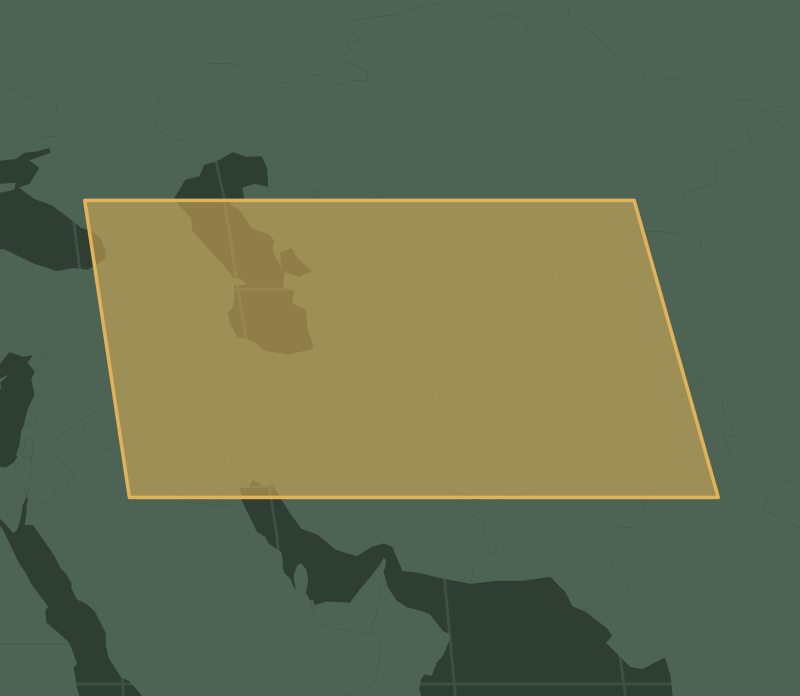
- Central Asia, the Middle East and the Amazon
- Source
- Syrian rue and Banisteriopsis caapi
- Mechanism
- Reversible inhibitor of MAO-A (RIMA)
- Onset and duration
- Several hours
- Who keeps its memory
- Amazonian peoples and Middle Eastern traditions
The substance
Harmala alkaloids
They are found in the seeds of Peganum harmala (Syrian rue) and in Banisteriopsis caapi, as well as in tobacco leaves and coffee beans.1
They include harmine, harmaline, harmalol and tetrahydroharmine, with similar structures.1
In the ayahuasca vine, concentrations range from 0.31 to 8.43% for harmine, 0.03 to 0.83% for harmaline and 0.05 to 2.94% for tetrahydroharmine.6
In ayahuasca, the bark of B. caapi is usually combined with leaves of Psychotria viridis, which provide the DMT.5
Descriptive entry: no preparation or doses.
- Class
- β-carboline
- Sources
- Syrian rue and B. caapi
- Mechanism
- Reversible MAOI-A
- Brew
- Ayahuasca
Memory and history
Telepathine: one molecule with several names
Harmine was first isolated and named by the German chemist Julius Fritzsche, from Syrian rue.3
Telepathine was believed to be the active constituent of B. caapi and a new compound, but it was soon seen to be the harmine already known from Syrian rue.6
It was also called banisterine and yageine.23
Over time
Fritzsche isolates harmine
It is identified with the telepathine of ayahuasca
Its names
Context and care
Origin and context
Harmine was first isolated and named by the German chemist Julius Fritzsche, from Syrian rue.3
What helps
- Seeking information from reliable sources.
- Telling research, experience and regulated use apart.
- Respecting legal and clinical frameworks.
Chemistry and mechanism
A reversible inhibitor
Harmine reversibly inhibits MAO-A, but not MAO-B; harmaline is also a RIMA.25
In Syrian rue seeds, extracts potently and reversibly inhibited human MAO-A; the inhibition was attributed to harmaline and harmine.4
This effect allows DMT and other tryptamines to be taken orally.6
Carbon-11 harmine is used in positron emission tomography to study MAO-A.5
The experience
What is described
In general they are not used as hallucinogens on their own, although there are reports of this.6
At high doses they are purgative.1
Research
What has been studied
Their effects on cognition and their pharmacological potential are being investigated.7
Uses in Parkinson's disease are cited, without a solid source.1
Scope of these dataBasic pharmacology; preclinical studies.
With care
What it helps to know beforehand
To follow
Books and related medicines
Sources
Where each piece of information comes from
- Wikipedia. Harmala alkaloid. wikipedia.org/wiki/Harmala.
- Wikipedia. Harmine. wikipedia.org/wiki/Harmine.
- Wikipedia. Harmine (history). en.wikipedia.org/wiki/Harmine.
- Herraiz, T. et al. β-Carboline alkaloids in Peganum harmala and inhibition of human MAO. Food and Chemical Toxicology, 2010. pubmed.ncbi.nlm.nih.gov/20036304/.
- Wikiwand. Harmine. wikiwand.com/en/articles/Harmine.
- Wikidoc. Harmala alkaloid. wikidoc.org/index.php/Harmala_alkaloid.
- ESTHER. Harmine. bioweb.supagro.inrae.fr/ESTHER/inhibitor/Harmine.
- Map APDER, with data from Natural Earth · public domain
- Molecule drawings APDER
Last reviewed: 24 November 2026. If you spot a mistake, write to us at info@apder.org.