

Preparation · Sacred drink · Iran and Central Asia
Haoma
Planta no identificada con certeza
Haoma is both a ritual drink of great importance in Indo-Iranian culture and a deity. In the Avesta, three chapters of the Yasna and some fragments of the Yashts deal with it. Scholars are not sure which plant it was, or whether it was the same as the Vedic soma: several candidates have been proposed, among them ephedra.123
Also known ashaoma · hōm · hom · parahaoma · sauma · soma (Vedic)
- What it is
- Ritual drink and Zoroastrian deity
- Territory
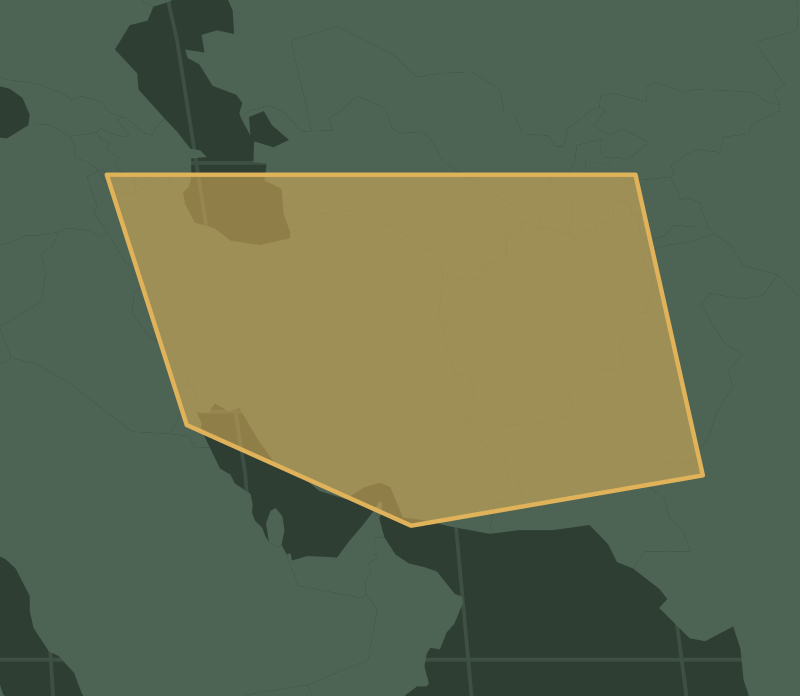
- Iran, Central Asia, the Indo-Iranian world
- Part used
- Stalks of a plant; identity debated
- Active principles
- Not determined; depends on the identification
- Onset and duration
- Not applicable: there is no clearly described use
- Who keeps its memory
- Zoroastrian communities
The plant
A plant under debate
Both the Avestan haoma and the Sanskrit soma come from the Proto-Indo-Iranian *sauma; the root of haoma, hu-, and that of soma, su-, suggest "to press" or "to crush".3
Many of the physical attributes of the plant described in the Avesta match the plant used in present-day Zoroastrian practice.3
Most proposals have relied on linguistics alone, on comparative pharmacology or on ritual use; rarely have all three been considered together.4
Studies of its identity have proposed, among others, Ephedra, Peganum harmala (Syrian rue), the sacred lotus, hemp and a sugar cane; mushrooms have also been proposed.5
A text from Iranica notes that what is attributed to haoma/soma in the Avesta and the Vedas must be explained by the (psycho)pharmacological properties of that plant.1
A historical entry; the botanical identity is a hypothesis, not a fact.
- Status
- Drink and deity
- Central text
- Yasna and Hōm Yašt (Y. 9–11)
- Most frequently cited candidate
- Ephedra
- Others
- Syrian rue, mushrooms, hemp
Memory and tradition
Drink, plant and god
It is the only deity with a Yasht that does not also have a day of the month dedicated to it in the Zoroastrian calendar.3
According to Zoroastrian tradition, Zoroaster received his revelation on the bank of a river while preparing parahaoma.2 In the hymns, Haoma appears to Zoroaster as a "beautiful man", who asks him to gather and press haoma to purify the waters.2
Haoma is a symbol of immortality, purity and connection with the divine in Zoroastrian rituals.6 The role of haoma has evolved and remains relevant in contemporary Zoroastrian practice.6
The Hōm Yašt is the main Avestan source that gives clues about haoma/soma.1
Some argue that there was no ritual time for fermentation or distillation, and that there is no textual evidence of such a process.1
In the 18th century, after Anquetil-Duperron translated the Avesta, several scholars looked for a botanical equivalent of haoma.5
Over time
Anquetil-Duperron brings the Avesta to the West
Wasson proposes the fly agaric
Flattery and Schwartz propose Syrian rue
Its names
- haoma, hōm
- Avestan and Middle Persian
- soma
- Sanskrit
- parahaoma
- present-day ritual mixture
Territory and care
An Indo-Iranian world
What helps
- To know it as a living religious symbol.
- To respect the Zoroastrian tradition.
- To stay humble in the face of historical uncertainty.
What it contains
Depending on the plant
If it was Ephedra, the content would be stimulant alkaloids; if it was Syrian rue, β-carbolines such as harmine and harmaline.48
In 1989 David Flattery proposed that the true plant was Syrian rue and that ephedra would be only the secondary ingredient of the parahaoma mixture.48
Wasson and O'Flaherty ruled out ephedra because they did not see Zoroastrian priests become intoxicated.4
A study of the Vedic Atirātra suggests the use of soma as a drink that keeps priests awake.9
The experience
What the texts say
The Avestan texts give almost no detail about the drug and its effects: there are only about four references, according to a summary by Flattery.8
There are no reliable data on onset or duration.
Research
What has been studied
It is the subject of a long debate in history, botany and religious studies.6
A recent ethnobotanical review argues for ephedra, on account of its historical importance and psychotropic properties.6
Ephedra was considered dominant until a 1989 study partly called it into question.13
Scope of these dataPhilological, historical and ethnobotanical study; identity still open.
With care
What it helps to know beforehand
To follow
Books and related medicines
Sources
Where each piece of information comes from
- Encyclopaedia Iranica. Haoma i. iranicaonline.org/articles/haoma-i.
- New World Encyclopedia. Haoma. newworldencyclopedia.org/entry/Haoma.
- Wikipedia. Haoma. en.wikipedia.com/wiki/Haoma.
- Wikidoc. Botanical identity of Soma-Haoma. wikidoc.org/index.php/Botanical_identity_of_Soma-Haoma.
- Wikipedia. Botanical identity of soma–haoma. en.wikipedia.com/wiki/Botanical_identity_of_Soma-Haoma.
- Zarei Karyani, T., Yousefzadi, M. and Sheikhakbari-Mehr, R. Haoma: unveiling the mysteries of Iran's sacred Zoroastrian botanical wonder. ethnobotanyjournal.org/index.php/era/article/view/6824.
- Electronic Journal of Vedic Studies. Discussion of BMAC and soma/haoma. hasp.ub.uni-heidelberg.de/journals/ejvs/article/download/788/10446/23246.
- Watkins. Soma/haoma and harmel. sjsu.edu/faculty/watkins/soma.htm.
- Encyclopaedia Iranica. Soma and the Atirātra ritual. iranicaonline.org/?p=3214.
- Map APDER, with data from Natural Earth · public domain
- Molecule drawings APDER
Last reviewed: 24 November 2026. If you spot a mistake, write to us at info@apder.org.