

Plant · Passifloraceae · Mexico, Central America and the Caribbean
Damiana
Turnera diffusa Willd. ex Schult.
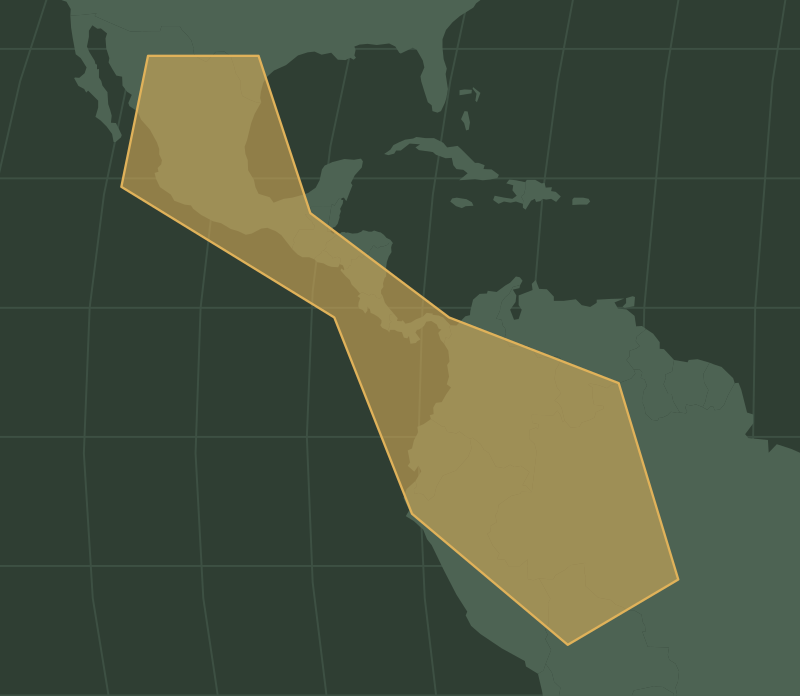
An aromatic shrub of semi-arid areas of Mexico, Central America, the Caribbean and South America, among the most prized plant aphrodisiacs. Most of its effects have been studied only in the laboratory or in animals.12
Also known asdamiana · oreganillo · bourrique · damiane · Turnera diffusa
- What it is
- Aromatic shrub of the passionflower family
- Territory
- Semi-arid areas of Mexico, Central America, the Caribbean and South America; southern Texas
- Part used
- The leaf
- Active principles
- Flavonoids, phenols, terpenoids and caffeine, among others
- Onset and duration
- No reliable data
- Who keeps its memory
- Yucatec Maya and peoples of Mexico
Botany
A shrub of dry areas
Turnera diffusa is a shrub native to southern Texas, Mexico, Central America, South America and the Caribbean.3 In the Americas it is distributed across semi-arid areas.4
It is the most representative species of its genus.4 Of the 135 accepted species of Turnera, half a dozen are used in traditional medicine, above all this one.1
It has been placed in the family Passifloraceae.13 Its aroma is reminiscent of chamomile, because of the plant’s aromatic compounds.3
- Family
- Passifloraceae
- Habit
- Aromatic shrub
- Habitat
- Semi-arid areas
- Part used
- The leaf
Memory and tradition
An aphrodisiac of the Mexican tradition
It is one of the most prized aphrodisiac plants.1 In Mexico it appears in botanical and medical sources as an aphrodisiac and also as a diuretic and for stomach ache, dyspepsia and other ailments.2
The ethnobotany of the Yucatec Maya records it among their plants.5
It is an ingredient of a traditional Mexican liqueur that is sometimes used in place of triple sec in margaritas; folklore says it was used in the “original margarita”.3
It was included in several patent medicines of the 19th century, such as Pemberton’s French Wine Coca.3
In folklore it was believed to be an aphrodisiac, hence an old binomial synonym, Turnera aphrodisiaca.3
Over time
It forms part of patent medicines such as French Wine Coca.3
Review of the ethnobotany, phytochemistry and bioactivity of the genus Turnera.1
Review of the bioactivity of the genus over the last ten years.4
Its names
- damiana
- common name
- oreganillo
- popular Mexican name
- bourrique
- name used in the Bahamas
Part of the plants and seeds sold as T. diffusa are in fact T. ulmifolia, the “false damiana”.3
Territory and care
A plant of semi-arid areas
What helps
- Prefer material whose origin and species are clear.
- Be aware that “false damiana” is frequently sold.
- Learn about its place in the traditional medicine of Mexico.
What it contains
Flavonoids and other compounds
In the genus Turnera, 22 flavonoids, maltol glucoside, phenols, seven cyanogenic glycosides, monoterpenoids, sesquiterpenoids, triterpenoids, fatty acids and caffeine have been found.1
The flavonoid apigenin stands out as an exception, having been identified in animal experiments as an anxiolytic active compound.1
Identified in animal experiments as an anxiolytic compound.[1]
Found in the genus Turnera.[1]
The experience
What is not known
The activities described come above all from the laboratory, cell cultures or animals.1
There are no reliable data on the onset or duration of effects in people.
Research
What has been studied
Anxiolytic, antibacterial, antidiabetic, antioxidant, adaptogenic, anti-obesity, antispasmodic, cytotoxic, gastroprotective, hepatoprotective and aphrodisiac activities have been demonstrated experimentally in the genus, almost always in chemical, cell or animal assays.1
A study with healthy volunteers evaluated the anti-obesity activity of an herbal preparation containing other ingredients, damiana among them.1
A 2023 review calls for more clinical trials to support the laboratory results.4
Scope of these dataThere is a great deal of laboratory research and very few clinical trials.
With care
What it helps to know beforehand
The effects described come from the laboratory and do not equate to an effect in people.14
It contains cyanogenic glycosides, among other compounds.1
“False damiana”, of different chemistry, is often sold.3
Clinical trials and toxicity studies are lacking.
To follow
Books and related medicines
Sources
Where each piece of information comes from
- Szewczyk K, Zidorn C. Ethnobotany, phytochemistry, and bioactivity of the genus Turnera (Passifloraceae) with a focus on damiana — Turnera diffusa. J Ethnopharmacol. 2014;152(3):424-443. doi:10.1016/j.jep.2014.01.019.
- USDA Phytochemical Database. Ethnobotanical plant Turnera diffusa. phytochem.nal.usda.gov/ethnobotanical-plant-turnera-diffusa.
- Wikipedia. “Turnera diffusa”. en.wikipedia.org (accessed 24 November 2026).
- Bioactivity of the genus Turnera: a review of the last 10 years. Pharmaceuticals. 2023;16(11):1573. pmc.ncbi.nlm.nih.gov/articles/PMC10675026.
- Ankli A, Sticher O, Heinrich M. Medical ethnobotany of the Yucatec Maya: healers' consensus as a quantitative criterion. Econ Bot. 1999;53:144-160.
- Antioxidant and trace element content of damiana under wild and cultivated conditions in semi-arid zones. Ind Crops Prod. 2012;37:321-327.
- Map APDER, with data from Natural Earth · public domain
- Molecule drawings APDER
Last reviewed: 24 November 2026. If you spot a mistake, write to us at info@apder.org.