

Cactus · Cactaceae · Northern Mexico
Peyotillo
Pelecyphora aselliformis Ehrenb.
A tiny cactus from northern San Luis Potosí whose tubercles are arranged like the scales of a pine cone. In 1972 peyote-type alkaloids, including mescaline, were identified in it, something not previously described in a North American cactus other than Lophophora.12
Also calledpeyotillo · peyote hachón · Pelecyphora aselliformis · hatchet peyote
- What it is
- Small spherical cactus with flattened tubercles
- Territory
- Northern San Luis Potosí, Mexico
- Part used
- No documented traditional use is recorded in the sources
- Active principles
- Peyote-type alkaloids; mescaline identified in 1972
- Onset and duration
- No reliable data in the sources consulted
- Who keeps its memory
- No people documented in the sources consulted
Botany
A cactus of scales
Pelecyphora aselliformis was described by Ehrenberg and grows in the north of San Luis Potosí, in Mexico.3
It belongs to the Mexican cacti that have been grouped under the name ‘peyote’ because of their resemblance to true peyote, Lophophora williamsii.4
The Indigenous peoples of Mexico also call cacti of other genera ‘peyotl’: Ariocarpus, Aztekium, Epithelantha, Obregonia or Pelecyphora.4
- Family
- Cactaceae
- Size
- Small, globular
- Origin
- San Luis Potosí, Mexico
- The name ‘peyote’
- Applied because of resemblance
Memory and tradition
One more ‘peyote’
The sources consulted do not document any specific ritual use of peyotillo by a particular people.
They do record that the Indigenous peoples of Mexico designate several cacti as ‘peyotl’ in addition to Lophophora, among them the genus Pelecyphora.4
This practice of calling different plants peyote makes it hard to attribute ancient uses to a particular species.
Over time
Its names
- peyotillo
- Spanish
- peyote
- generic name applied to several cacti
‘Peyotillo’ literally means ‘little peyote’; it should not be confused with true peyote (Lophophora williamsii).
Territory and care
San Luis Potosí
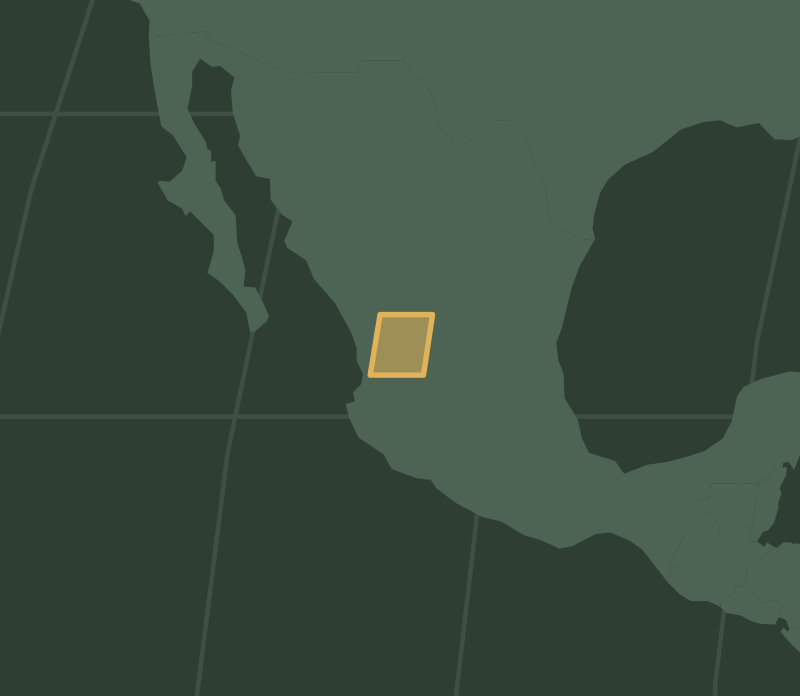
The sources place the plant in the north of San Luis Potosí, in Mexico.3
The sources consulted provide no reliable data on its conservation status.
What helps
- Do not collect it in the wild.
- Prefer nursery plants of clear origin.
- Do not treat it as a substitute for peyote.
What it contains
Peyote-type alkaloids
A study published in Science in 1972 identified peyote alkaloids in this species, including mescaline; it was the first report of these alkaloids in a North American cactus other than Lophophora.1
The study by Bruhn and Bruhn (1973) found N,N-dimethyl-3-hydroxy-4,5-dimethoxyphenethylamine as the main alkaloid.2
In 1994 ten alkaloids were identified in extracts of three Mexican ‘peyotes’, among them Pelecyphora aselliformis.4
The experience
No reliable data
There are no reliable descriptions of an experience with this cactus in the sources consulted.
Research
What has been studied
Scope of these dataChemical studies; no clinical research.
With care
What it helps to know beforehand
It is not peyote, even though it shares alkaloids.4
No reliable data in the sources consulted.
Data on traditional use, safety and experience are lacking.
To follow
Books and related medicines
Sources
Where each piece of information comes from
- Neal, J. M., Sato, P. T., Howald, W. N. and McLaughlin, J. L. (1972). Peyote Alkaloids: Identification in the Mexican Cactus Pelecyphora aselliformis Ehrenberg. Science 176: 1131–1133. scilit.net/publications/415883981a8e89a96760a94a3a7bbc04.
- Bruhn, J. G. and Bruhn, C. (1973). Alkaloids and Ethnobotany of Mexican Peyote Cacti and Related Species. Economic Botany 27: 241–251. dx.doi.org/10.1007/BF02872994.
- MAPS. Bruhn and Bruhn, full text. bibliography.maps.org/resources/download/12011.
- Starha, R. (1994). Alkaloids of three «Peyote» cacti. Physica-Chemia 141(2): 71–74. erowid.org/references/refs_view.php?ID=7124.
- Map APDER, with data from Natural Earth · public domain
- Molecule drawings APDER
Last reviewed: 24 November 2026. If you spot a mistake, write to us at info@apder.org.