

Molecule · Psychoactive
4-AcO-DMT
4-acetoxy-N,N-dimethyltryptamine (psilacetin)
4-AcO-DMT, or psilacetin, is a semi-synthetic tryptamine related to psilocybin. Albert Hofmann and Franz Troxler patented it in the early 1960s. In 2024 a study in mice confirmed that the body converts it into psilocin, as happens with psilocybin.12
Also known aspsilacetin · O-acetylpsilocin · 4-acetoxy-DMT · “synthetic mushrooms” (nickname)
- What it is
- Semi-synthetic psychedelic tryptamine
- Territory
- Laboratory origin, Basel (Switzerland)
- Source
- Chemical synthesis
- Mechanism
- Prodrug of psilocin
- Onset and duration
- Several hours, according to the APDER guide
- Who keeps its memory
- Sandoz, Hofmann and current research
The substance
A laboratory relative of psilocybin
It is an ester of psilocin: where psilocybin carries a phosphate group, psilacetin carries an acetate group. Both protect the same hydroxyl group of psilocin.2
David Nichols proposed it as a useful alternative to psilocybin for pharmacological studies, because both are considered prodrugs of psilocin.1
It is the lower homologue of other 4-acetoxylated tryptamines, such as 4-AcO-MET or 4-AcO-DET.1
Descriptive profile: no doses and no synthesis.
- Class
- 4-substituted tryptamine
- Family
- Psilocin esters
- Metabolite
- Psilocin
- Patent
- Sandoz, 1960s
Memory and history
From the Sandoz patent to the 2024 study
Hofmann isolated psilocybin and psilocin in 1957, and several tryptamines with substitutions at position 4 were described afterwards.4
Psilacetin and other psilocin esters appear in a Sandoz patent signed by Hofmann and Troxler: some sources date it to 1961 and others to January 1963.12
In that patent these esters were described as serotonin receptor antagonists.3
Nichols and Frescas published an improved synthesis in 1999.2
Despite the early patent, its history of use is short, and in recent years it has circulated as a designer drug about which very little is known.14
Over time
Hofmann isolates psilocybin and psilocin
Sandoz patent (Hofmann and Troxler)
Improved synthesis by Nichols and Frescas
It is confirmed in mice to be a prodrug of psilocin
Its names
Context and care
Origin and context
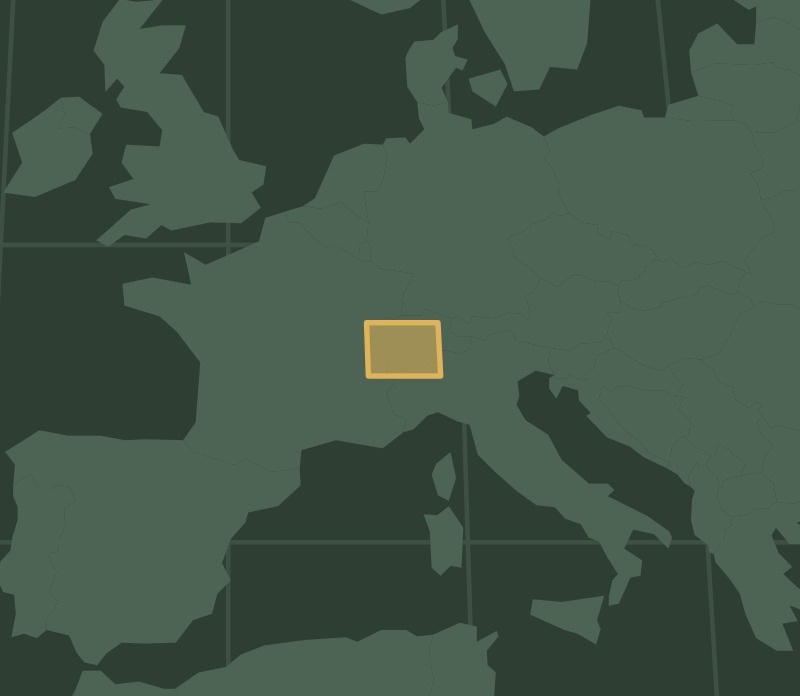
Hofmann isolated psilocybin and psilocin in 1957, and several tryptamines with substitutions at position 4 were described afterwards.4
What helps
- Seeking information from reliable sources.
- Telling research, experience and regulated use apart.
- Respecting legal and clinical frameworks.
Chemistry and mechanism
It is converted into psilocin
A 2024 study in mice provided the first direct proof that psilacetin acts as a prodrug of psilocin in a living organism.2
At equivalent doses, psilocybin produced between 10 and 25% more psilocin at fifteen minutes; overall, exposure from psilacetin was about 70%. The half-life of psilocin was around thirty minutes in both cases.2
Because it ends up as psilocin, it essentially shares the mechanism of psilocybin, although it lacks pharmacology of its own in humans.24
The experience
What is described
Some people report that its subjective effects differ from those of psilocybin and psilocin; these are testimonies, not studies.1
For practical care, APDER’s guide to 4-AcO-DMT brings together interactions, contraindications and what to do if something goes wrong.
Research
What has been studied
Its pharmacology has been little studied: a 2020 paper noted that almost nothing was known about the effects of 4-acetoxylated analogues.4
A 2017 rodent study suggested effects on heroin and nicotine addiction; this is an isolated result in animals.3
The 2024 study suggests that it could make research with psilocin easier.2
Scope of these dataAnimal studies and basic pharmacology; no clinical trials in people.
With care
What it helps to know beforehand
There is very little research in people; almost everything known comes from animals or testimonies.14
It circulates as a designer drug; its purity is not guaranteed outside the laboratory.4
APDER’s guide brings together interactions, contraindications and what to do if something goes wrong.
To follow
Books and related medicines
Sources
Where each piece of information comes from
- Wikipedia. 4-AcO-DMT. wikipedia.org/wiki/4-AcO-DMT.
- Jones, N. T. et al. In vivo validation of psilacetin as a prodrug yielding modestly lower peripheral psilocin exposure than psilocybin. Frontiers in Psychiatry 14, 2024. frontiersin.org/articles/10.3389/fpsyt.2023.1303365/full.
- Psychedelic Review. 4-AcO-DMT. psychedelicreview.com/4-aco-dmt/.
- Klein, A. K. et al. Pharmacology of psilocybin and 4-substituted tryptamines. ACS Pharmacology & Translational Science 4(2), 2021. pmc.ncbi.nlm.nih.gov/articles/PMC8033608.
- Map APDER, with data from Natural Earth · public domain
- Molecule drawings APDER
Last reviewed: 25 November 2026. If you spot a mistake, write to us at info@apder.org.