

Home · Library · Anthropology, ethnobotany and shamanism
The Devil's Book of Culture
History, Mushrooms, and Caves in Southern Mexico
Benjamin Feinberg
An ethnography of the Mazatec highlands after the arrival of the mushroom seekers.
Reference edition
- Publisher
- University of Texas Press
- Publication date
- 2010
- Year of the work
- 2003
- Language
- English
- Print length
- 288 pages
- ISBN-10
- 0292798741
- ISBN-13
- 978-0292798748
- Other editions on record
- English · 2003
Edition synopsis
Since the 1950s, the Sierra Mazateca of Oaxaca, Mexico, has drawn a strange assortment of visitors and pilgrims—schoolteachers and government workers, North American and European spelunkers exploring the region's vast cave system, and counterculturalists from hippies (John Lennon and other celebrities supposedly among them) to New Age seekers, all chasing a firsthand experience of transcendence and otherness through the ingestion of psychedelic mushrooms "in context" with a Mazatec shaman. Over time, this steady incursion of the outside world has significantly influenced the Mazatec sense of identity, giving rise to an ongoing discourse about what it means to be "us" and "them." In this highly original ethnography, Benjamin Feinberg investigates how different understandings of Mazatec identity and culture emerge through talk that circulates within and among various groups, including Mazatec-speaking businessmen, curers, peasants, intellectuals, anthropologists, bureaucrats, cavers, and mushroom-seeking tourists. Specifically, he traces how these groups express their sense of culture and identity through narratives about three nearby yet strange discursive "worlds"—the "magic world" of psychedelic mushrooms and shamanic practices, the underground world of caves and its associated folklore of supernatural beings and magical wealth, and the world of the past or the past/present relationship. Feinberg's research refutes the notion of a static Mazatec identity now changed by contact with the outside world, showing instead that identity forms at the intersection of multiple transnational discourses.
Related reading
- The Way of the ShamanMichael</span><span class="bm-sep"> <span>Harner · 1980
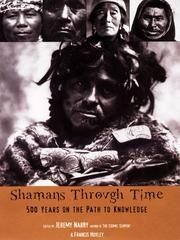
- Shamans Through Time: 500 Years on the Path to KnowledgeJeremy <span>Narby y Francis (eds.)</span><span class="bm-sep"> Huxley · 2001
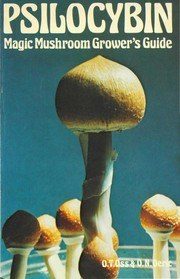
- Psilocybin: Magic Mushroom Grower's GuideO. T. <span>Oss y O. N.</span><span class="bm-sep"> Oeric · 1976
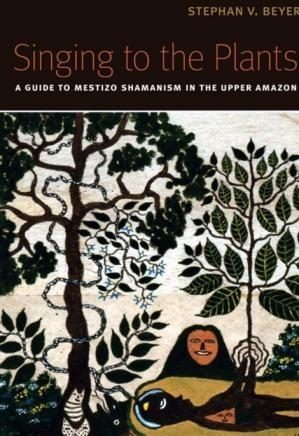
- Singing to the Plants: A Guide to Mestizo Shamanism in the Upper AmazonStephan V.</span><span class="bm-sep"> <span>Beyer · 2009
- Essential Substances: A Cultural History of Intoxicants in SocietyRichard</span><span class="bm-sep"> <span>Rudgley · 1993
- Ayahuasca, la realidad detrás de la realidadJosep Maria</span><span class="bm-sep"> <span>Fericgla · 2018



A suggested reading list compiled by APDER. The heading description is our own; the edition synopsis comes from the bibliographic record. Including a book does not mean we agree with everything in it.