

Home · Library · Anthropology, ethnobotany and shamanism
The Jívaro
People of the Sacred Waterfalls
Michael J. Harner
A classic ethnography of the Shuar and their use of natem and floripondio.
Reference edition
- Publisher
- University of California Press
- Publication date
- 2020
- Year of the work
- 1972
- Edition
- Reprint 2020
- Language
- English
- Print length
- 272 pages
- ISBN-10
- 0520342011
- ISBN-13
- 978-0520342019
- Spanish edition
- Shuar: pueblo de las cascadas sagradas (Abya-Yala, 1978)
- Other editions on record
- English · Berkeley : University of California Press · 1984 | English · Robert Hale Ltd · 1973
Edition synopsis
Only one tribe of American Indians is known ever to have successfully revolted against the empire of Spain and to have thwarted all subsequent attempts by the Spaniards to reconquer them: the Jivaro (hee'-va-ro), the untsuri suarii of eastern Ecuador. From 1599 onward they remained unconquered in their forest fastness east of the Andes, despite the fact that they were known to occupy one of the richest placer gold deposit regions in all of South America. Tales of their fierceness became part of the folklore of Latin America, and their warlike reputation spread in the late nineteenth and early twentieth centuries when Jivaro "shrunken head" trophies, tsantsa, found their way to the markets of exotica in the Western world. As occasional travelers visited them in the first decades of this century, the Jivaro also became known not as just a warlike group, but as an individualistic people intensely jealous of their freedom and unwilling to be subservient to authority, even among themselves. It was this quality that particularly attracted me when I went to study their way of life in 1956-57 and I was most fortunate, at that time, to find, especially east of the Cordillera de Cutucli, a portion of the Jivaro still unconquered and still living, with some changes, their traditional life style. This book is about their culture.
Related reading
- The Shaman and the Jaguar: A Study of Narcotic Drugs Among the Indians of ColombiaGerardo</span><span class="bm-sep"> <span>Reichel-Dolmatoff · 1975
- The Antipodes of the Mind: Charting the Phenomenology of the Ayahuasca ExperienceBenny</span><span class="bm-sep"> <span>Shanon · 2002
- Soma: Divine Mushroom of ImmortalityR. Gordon</span><span class="bm-sep"> <span>Wasson · 1968
- Plant Teachers: Ayahuasca, Tobacco, and the Pursuit of KnowledgeJeremy <span>Narby y Rafael</span><span class="bm-sep"> Chanchari Pizuri · 2021
- Food of the Gods: The Search for the Original Tree of KnowledgeTerence</span><span class="bm-sep"> <span>McKenna · 1992
- Shamanic Voices: A Survey of Visionary NarrativesJoan</span><span class="bm-sep"> <span>Halifax · 1979

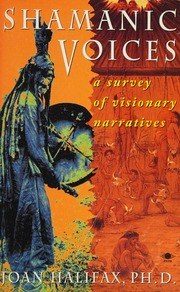
A suggested reading list compiled by APDER. The heading description is our own; the edition synopsis comes from the bibliographic record. Including a book does not mean we agree with everything in it.