

Home · Library · Spirituality and philosophy
Religions, Values, and Peak-Experiences
Abraham H. Maslow
Peak experiences, a key idea in humanistic psychology.
Reference edition
- Publisher
- Penguin (Non-Classics)
- Publication date
- 1994
- Year of the work
- 1964
- Language
- English
- Print length
- 66 pages
- Series
- Compass
- ISBN-10
- 0140194878
- ISBN-13
- 978-0140194876
- Edition title
- Religions, Values, and Peak-Experiences (Compass)
- Other editions on record
- English · Columbus : Ohio State University Press · 1964 | English · Rare Treasure Editions · 2021 | English · 2009 | English · 1976
Edition synopsis
Abraham Maslow (1908-1970) was an American psychologist best known for his conceptualization of a "hierarchy of human needs" and "self-actualization." He (along with Carl Rogers) is considered the founder of humanistic or "Third Force" psychology. He states in the Preface to the 1970 edition, "Since this book was first written, there has been much turmoil in the world and, therefore, much to learn. Several of the lessons I have learned are relevant here, certainly in the sense that they are helpful supplements to the main thesis of the book... Organized Religion, the churches, finally may become the major enemies of the religious experience and the religious experiencer. This is a main thesis of this book." He adds, "I now consider that the book was too imbalanced toward the individualistic and too hard on groups, organizations, and communities. Even within these last six or seven years we have learned not to think of organizations as necessarily bureaucratic... If I were to summarize both the book and my remarks in this Preface in a few words, I would say it this way: Man has a higher and transcendent nature, and this is part of his essence, i.e., his biological nature as a member of a species which has evolved." Here are a few quotations from the book: "The high religions... tends to rest ... its right to exist on the codification and the communication of this original mystic experience or revelation from the lonely prophet to the mass of human beings in general. But it has recently begun to appear that these 'revelations' or mystical illuminations can be subsumed under the head of the 'peak experiences' or 'ecstasies' or 'transcendent' experiences which are now being eagerly investigated by many psychologists." (Ch. III) "(A)ny doctrine of the innate depravity of man or any maligning of his animal nature very easily leads to some extra-human interpretation of goodness, saintliness, virtue, self-sacrifice, altruism, etc.
Related reading
- From Chocolate to Morphine: Everything You Need to Know About Mind-Altering DrugsAndrew <span>Weil y Winifred</span><span class="bm-sep"> Rosen · 1983
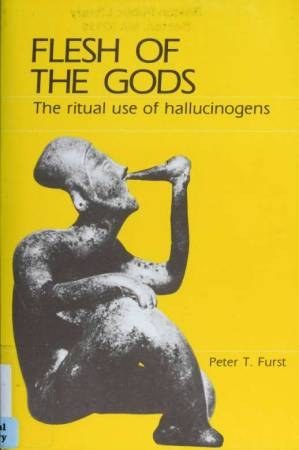
- Flesh of the Gods: The Ritual Use of HallucinogensPeter T. (ed.)</span><span class="bm-sep"> <span>Furst · 1972
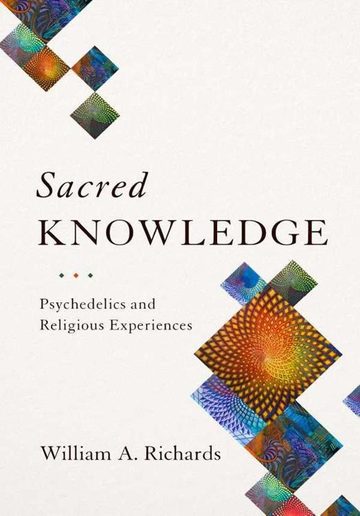
- Sacred Knowledge: Psychedelics and Religious ExperiencesWilliam A.</span><span class="bm-sep"> <span>Richards · 2016
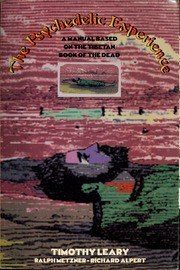
- The Psychedelic Experience: A Manual Based on the Tibetan Book of the DeadTimothy <span>Leary, Ralph Metzner y Richard</span><span class="bm-sep"> Alpert · 1964
- Pharmako/Dynamis: Stimulating Plants, Potions, and HerbcraftDale</span><span class="bm-sep"> <span>Pendell · 2002
- Salvia Divinorum: Doorway to Thought-Free AwarenessJ. D.</span><span class="bm-sep"> <span>Arthur · 2010



A suggested reading list compiled by APDER. The heading description is our own; the edition synopsis comes from the bibliographic record. Including a book does not mean we agree with everything in it.