

Opium in De Quincey, Coleridge and the Romantics.
Reference edition
- Publisher
- Faber & Faber
- Publication date
- 2022
- Year of the work
- 1968
- Language
- English
- Print length
- 388 pages
- ISBN-10
- 0571254160
- ISBN-13
- 978-0571254163
- Other editions on record
- English · Berkeley, University of California Press · 1970 | English · London, Faber · 1968
Edition synopsis
Does the habit of taking drugs make authors write better, or worse, or differently? Does it alter the quality of their consciousness, shape their imagery, influence their technique? For the Romantic writers of the nineteenth century, many of whom experimented with opium and some of whom were addicted to it, this was an important question, but it has never been fully answered. In this study Alethea Hayter examines the work of five writers - Crabbe, Coleridge, De Quincey, Wilkie Collins and Francis Thompson - who were opium addicts for many years, and of several other writers - notably Keats, Edgar Allan Poe and Baudelaire, but also Walter Scott, Dickens, Mrs Browning, James Thomson and others - who are known to have taken opium at times. The work of these writers is discussed in the context of nineteenth-century opinion about the uses and dangers of opium, and of Romantic ideas on the creative imagination, on dreams and hypnagogic visions, and on imagery, so that the idiosyncrasies of opium-influenced writing can be isolated from their general literary background. The examination reveals a strange and miserable region of the mind in which some of the greatest poetic imaginations of the nineteenth century were imprisoned.
Related reading
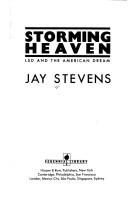
- Storming Heaven: LSD and the American DreamJay</span><span class="bm-sep"> <span>Stevens · 1987
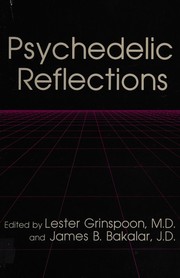
- Psychedelic Reflections<span>James Bakalar Lester Grinspoon</span>
- Mushrooms, Myth and Mithras: The Drug Cult that Civilized EuropeCarl A. P. <span>Ruck, Mark Alwin Hoffman y José Alfredo</span><span class="bm-sep"> González Celdrán · 2011
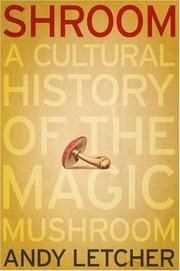
- Shroom: A Cultural History of the Magic MushroomAndy</span><span class="bm-sep"> <span>Letcher · 2006
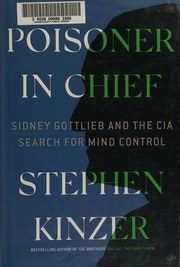
- Poisoner in Chief: Sidney Gottlieb and the CIA Search for Mind ControlStephen</span><span class="bm-sep"> <span>Kinzer · 2019
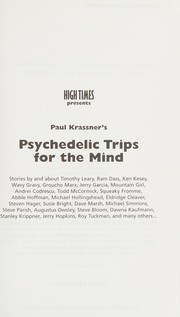
- Paul Krassner's Psychedelic Trips for the Mind<span>Paul Krassner</span>
A suggested reading list compiled by APDER. The heading description is our own; the edition synopsis comes from the bibliographic record. Including a book does not mean we agree with everything in it.