

Political imagination and counterculture in the Spanish Transition.
Reference edition
- Publisher
- ePubLibre
- Publication date
- 2017
- Language
- Spanish
- Print length
- 385 pages
- Other editions on record
- Spanish · Epublibre · 2014 | Spanish · 2014 | Spanish · AKAL · 2017 | Spanish · Bookwire GmbH · 2017
Edition synopsis
Forty years have passed since the elections of 1977, and the myth of the Transition has crumbled. But do we know what it concealed? This book argues that between 1968 and 1986 there existed a citizenry struggling for a real democracy beyond the state and the parties, whose ideas at times recall those of the 15M. In the counterculture, politics and culture were radically united, and democracy was a new sensibility that affected everything: love, work, bodies, public and private space. That creativity was repressed and co-opted: politics and culture were divided and institutionalised through the Constitution of 1978 and the Movida of the eighties. Only in everyday life was the break with Francoism clearer. Although we have forgotten the high personal and social costs of those countercultural struggles, which led to the marginalisation of democratic youth (suicides, prisons, AIDS, heroin), there is a debt of memory to their dreams, which this book studies, drawing on the voices of its protagonists and using literature as a guide to a democracy yet to come.
Related reading
- La médecine psychédélique: le pouvoir thérapeutique des hallucinogènesOlivier</span><span class="bm-sep"> <span>Chambon · 2009
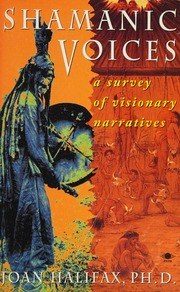
- Shamanic Voices: A Survey of Visionary NarrativesJoan</span><span class="bm-sep"> <span>Halifax · 1979
- Storming Heaven: LSD and the American DreamJay</span><span class="bm-sep"> <span>Stevens · 1987
- Hallucinogens and CulturePeter T.</span><span class="bm-sep"> <span>Furst · 1976
- Der SteppenwolfHermann</span><span class="bm-sep"> <span>Hesse · 1927
- Psychedelics EncyclopediaPeter</span><span class="bm-sep"> <span>Stafford · 1977




A suggested reading list compiled by APDER. The heading description is our own; the edition synopsis comes from the bibliographic record. Including a book does not mean we agree with everything in it.